Grasim Invests ₹3,094 Crore to Expand Lyocell Capacity, Strengthen Sustainable Fibre Leadership
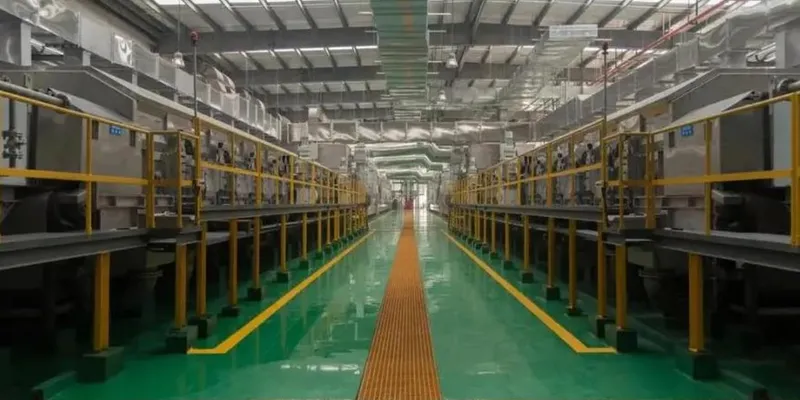
Aditya Birla Group flagship company Grasim Industries has approved a fresh investment of Rs 3,094 crore to expand its Lyocell fibre manufacturing capacity at Harihar in Karnataka, strengthening India’s position in the fast-growing global market for eco-friendly textile materials.
The company will set up a Phase-II Lyocell plant of 110,000 tonnes per annum (TPA) at its Harihar facility in Davanagere district. The expansion will comprise two production lines of 55,000 TPA each, with the first line expected to be commissioned in 2028 and the second by 2030.
The investment comes even as Grasim is already constructing a 55,000-TPA Phase-I Lyocell plant at the same location, scheduled for commissioning by mid-2027. Once both phases are completed, Grasim’s total Lyocell capacity will reach nearly 210,000 TPA, placing it among the world’s largest producers of speciality fibre.
The move reflects the growing global shift towards sustainable and high-performance fibres as apparel brands and textile manufacturers seek alternatives with a lower environmental footprint.
Announcing the investment, Aditya Birla Group Chairman Kumar Mangalam Birla said the project reinforces the group’s strategy of investing ahead of demand in sectors that will shape India’s future industrial value-chain.
“The investment is a vote of confidence in the scale and promise of the Indian market. It aligns with the aspirations of Make in India and helps position the country as a stronger and more-competitive player in the global textile value-chain,” Birla said.
He added that the expansion would take Grasim’s overall cellulosic fibre capacity beyond 1 million tonnes per annum, further consolidating its position as a global leader in manmade cellulosic fibres.
Lyocell is increasingly emerging as a preferred fibre for apparel, home textiles and technical textile applications because of its durability, comfort and environmentally-efficient manufacturing process. Produced through a closed-loop system that recycles solvents, the fibre is widely regarded as one of the more sustainable alternatives available to the textile industry.
Vadiraj Kulkarni, Business Head, Grasim Pulp & Fibre, said the investment would strengthen the company’s presence in the high-value speciality fibre segment and support the transition towards lower-impact textile materials.
The expansion is also expected to increase the share of speciality products—including Lyocell, Modal, dope-dyed and recycled fibres—in Grasim’s portfolio to about 35% by 2030.
Industry observers view the investment as part of a broader transformation underway in the global textile sector, where sustainability, traceability and environmentally responsible manufacturing are increasingly becoming key drivers of demand and investment decisions.