Good Fashion Fund Boosts Indian Textile SME Sustainability
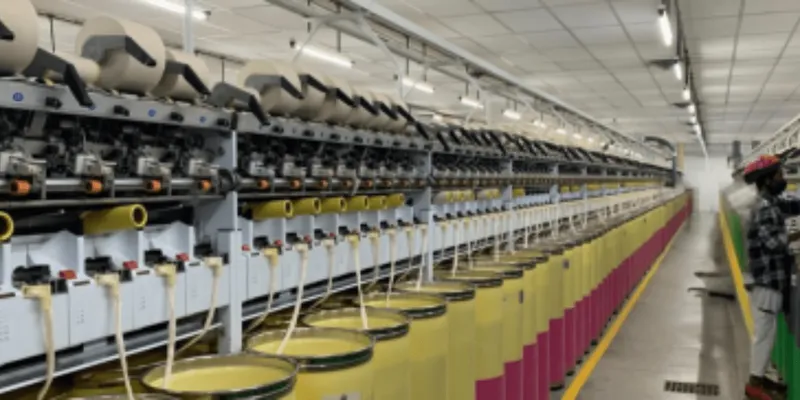
The Good Fashion Fund (GFF), managed by FOUNT, has confirmed measurable sustainability and financial gains from its 2023 investment of USD 2.5 million in India’s Sri Kannapiran Mills Limited (SKML). The funding supported modernizing key equipment across two spinning units—KG Naidu and Balaji Mill—and a denim weaving unit, KG Fabriks.
Following site visits and assessments in Q1 and Q2 2025 by GFF and third-party experts like Bureau Veritas, Fairwear Foundation, GlobalCAD, and adelphi Consult, the results have been documented in a comprehensive industry-first case study. The evaluation highlights major strides in energy savings, reduced material waste, and better social standards, especially in Tier 2 and Tier 3 factory environments.
The investment enabled SKML to replace outdated equipment, some over 25 years old, with energy-efficient machinery including rotor spinning machines, auto-doffers, high-speed winders, and weaving systems. This led to a significant boost in production efficiency and sustainability. As of March 2025, SKML’s energy mix improved substantially—58.1% solar, 20.7% wind, and reduced reliance on natural gas and grid energy.
Srihari Balakrishnan, Managing Director of SKML, noted:
“Without the Good Fashion Fund, we may not have moved forward with these upgrades so confidently. We’re now seeing benefits across cost savings, product quality, and worker well-being.”
Left to right; Mr. Jayaraj (SKML), Mr. Ravi Kumar (Fairwear), Mr. David Varghese (Fairwear), Mr. Gurunathan (SKML), Mr. Krishnakumar (SKML), Mr. Srihari Balakrishnan (SKML), Mr. Seenivasahan (SKML, Ms. Sruthi Ramesh (GFF), Mr. Bob Assenberg (GFF), Mr. Jayanth Kashyap (GFF), Dr. Jürgen Hannak (adelphi Consult). Not in picture – Mr. Rakesh Vazirani (Bureau Veritas), Mr. Jagadish VP (Bureau Veritas), Mr. Sudalaimuthu VS (Bureau Veritas)
Key verified results for 2024 include:
- Energy savings: Up to 59% reduction, equaling 886,439 kWh annually
- Waste reduction: 95% less cotton waste, saving 4,756 kg yearly
- CO₂ savings: ~1,272 tons annually
- Financial savings: $140,000 from spinning and $115,000 from weaving efficiency
- Production gain: Fabric output rose to 220,000 meters monthly
Social outcomes included safer working conditions via automation, improved grievance mechanisms, and enhanced data systems for ESG monitoring.
GFF monitoring and verification team at KG Naidu and Balaji Mill
Bureau Veritas’ Head of Decarbonization, Rakesh Vazirani, remarked that SKML’s systematic use of data and teamwork drove the project’s success.
The GFF case study, developed with GlobalCAD and adelphi Consult, is among the first public records showing successful impact investment in India’s undercapitalized Tier 2 and 3 textile units. The findings offer a replicable model for factories aiming to modernize sustainably.
Bob Assenberg, Co-Founder of FOUNT and GFF Director, praised SKML’s leadership and adaptability:
“This case reinforces our belief that catalytic finance must reach deeper into the supply chain. Sri Kannapiran Mills exemplifies how progress stems not only from new technology but from strategic, adaptable decision-making.”
The SKML success story will shape the design of Good Fashion Fund 2.0, aiming for deeper alignment between brand sustainability targets and manufacturing realities.