Global Price Decline, Rising Arrivals May Weigh on Indian Cotton Prices
Lower global prices, increasing new-crop arrivals and muted mill demand put pressure on domestic cotton rates, while deficient rainfall may reduce the 2026-27 crop
Indian cotton prices are facing near-term pressure from easing global prices, rising arrivals of the new crop and subdued buying from mills. At the same time, expectations of lower cotton production due to a decline in acreage and deficient rainfall could provide some support to prices over the longer term.
The December cotton futures contract on the InterContinental Exchange (ICE), New York, has declined in recent weeks and is hovering around 80.13 cents per pound, compared with a peak of 93 cents per pound at the end of August.
Domestic Cotton Prices Decline
Trade sources said the weaker global price trend has pushed domestic cotton prices down to around ₹64,500-65,500 per candy of 356 kg, from recent highs of around ₹70,000.
Cotton Corporation of India auction prices for the 2025-26 crop have also declined by around ₹1,200 per candy over the past two days. Falling cottonseed prices are adding further pressure to raw cotton prices.
Cottonseed prices have declined by around ₹300-400 per quintal to approximately ₹4,600-4,700, according to Ramanuj Das Boob, a sourcing agent in Raichur.
“Buyers are very slow, and there’s not much demand for bales from mills, as most of them have stocks for about 1-1.5 months,” he said.
Das Boob added that multinational companies and resellers are also selling cotton at around ₹64,500-65,500 per candy.
New Crop Arrivals Expected to Increase
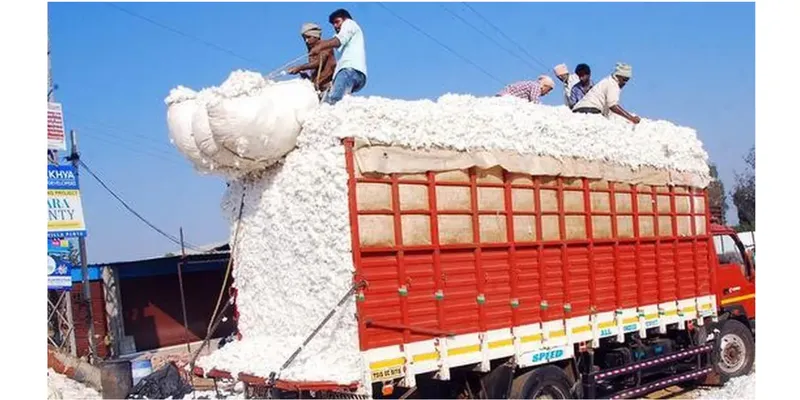
Daily arrivals of the new cotton crop are currently estimated at around 50,000-55,000 bales, with each bale weighing 170 kg. Arrivals are expected to increase further next month.
“New season arrivals are gathering pace and are expected to increase sharply during October, which may keep near-term pressure on domestic cotton prices. However, relatively limited old-crop outside spinning mills may provide some support,” said Anand Popat of CotYarn Trade Link in his weekly newsletter.
Popat said the Indian cotton market is entering a supply-driven phase, with new crop arrivals, mill buying and government policy on duty-free imports likely to influence the next movement in prices.
“The Indian market is entering a supply-driven phase. The pace of new crop arrivals, mill buying and government policy on duty-free imports will be the key factors influencing the next price direction,” Popat said.
2026-27 Cotton Crop May Decline
While near-term market conditions are being shaped by increased supplies and subdued demand, the size of the 2026-27 cotton crop is expected to be lower than last year.
Atul S Ganatra, CMD, Radhalakshmi Group, estimates that the crop could decline by around 10 per cent from the previous year. The estimate is based on a survey of the standing crop after discussions with 50 members across all 10 cotton-growing states.
Ganatra attributed the expected decline partly to deficient rainfall. He said that due to El Nino, India received less rain from June to September this year.
Lower rainfall could reduce water availability for farmers for subsequent pickings, potentially affecting overall cotton production.
With new-crop arrivals expected to accelerate in October while mill buying remains subdued, domestic cotton prices could continue to face pressure in the near term. The expected reduction in crop size, limited old-crop availability outside spinning mills and government policy on duty-free imports remain important factors for the market.