Global Nonwoven Geotextiles Market Projected to Reach USD 11.4 Billion by 2033
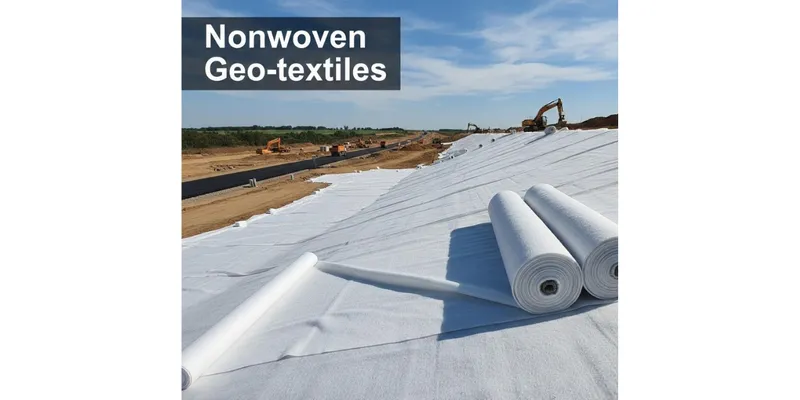
The global nonwoven geotextiles market was valued at USD 6.2 billion in 2024 and is projected to reach USD 11.4 billion by 2033, according to a Growth Market Report. The market is forecast to grow at a compound annual growth rate (CAGR) of 7.1% during the period, supported by rising infrastructure investment and expanding use in environmental and engineering applications.
In the world of infrastructure, some of the most critical components remain unseen. Beneath highways, rail tracks, drainage systems, and coastal defenses lies a silent performer—nonwoven geotextiles. These engineered fabrics may not grab headlines, but they hold together roads, protect soil, filter water, and extend the life of billion-dollar projects.
As global infrastructure demand surges, the Nonwoven Geotextiles Market is evolving from a niche industrial segment into a strategic pillar of sustainable development. This article explores the market through technical, economic, environmental, and regional lenses—designed to expand your knowledge wallet with insights that go beyond surface-level statistics.
What Are Nonwoven Geotextiles?
Nonwoven geotextiles are permeable synthetic fabrics made primarily from polypropylene or polyester fibers that are bonded mechanically (needle-punched), thermally, or chemically rather than woven.
Core Functional Capabilities
Nonwoven geotextiles perform four essential engineering functions:
- Separation – Prevents mixing of dissimilar soil layers
- Filtration – Allows water to pass while retaining soil particles
- Drainage – Channels water along the plane of the fabric
- Protection – Shields geomembranes from puncture damage
Their versatility makes them indispensable in road construction, landfills, coastal defense systems, mining operations, and urban drainage networks.
Why the Global Market Is Expanding Rapidly
The Nonwoven Geotextiles Market is expanding due to interconnected global trends:
1. Infrastructure Modernization
Developing nations across Asia-Pacific, Africa, and Latin America are investing heavily in roads, ports, airports, and rail networks. Meanwhile, developed economies are rebuilding aging infrastructure.
Nonwoven geotextiles reduce long-term maintenance costs by improving soil stability and water management—making them cost-efficient in lifecycle terms.
2. Urban Flooding and Climate Adaptation
Extreme rainfall events and rising sea levels are forcing cities to adopt better drainage and erosion-control systems. Nonwoven geotextiles enhance subsurface water management, making them critical in climate-resilient infrastructure.
3. Waste Management and Landfill Engineering
In landfill liners and containment systems, nonwoven geotextiles act as protective and filtration layers. Stricter environmental regulations globally are increasing demand in this segment.
4. Growth in Transportation Networks
Railways and highways rely heavily on soil stabilization layers. As global logistics networks expand, so does the demand for geosynthetic solutions.
Market Segmentation: A Deeper Breakdown
By Material Type
- Polypropylene (PP) – Dominates due to chemical resistance and cost-effectiveness
- Polyester (PET) – Preferred for higher temperature resistance and durability
By Application
- Roads and Highways
- Railways
- Drainage Systems
- Erosion Control
- Landfills
- Mining Infrastructure
Among these, road construction accounts for the largest market share globally due to continuous infrastructure expansion.
Technological Innovations Shaping the Market
Innovation in nonwoven geotextiles is not just about stronger fabrics—it’s about smarter materials.
Key Developments
- High-performance needle-punch techniques improving tensile strength
- Recycled polymer integration reducing carbon footprint
- UV-resistant coatings for longer outdoor exposure
- Sensor-integrated geosynthetics for structural monitoring
Sustainability is increasingly becoming a competitive differentiator.
Sustainability and Environmental Impact
Nonwoven geotextiles contribute to sustainability in multiple ways:
- Extend infrastructure lifespan
- Reduce raw material consumption in road construction
- Improve stormwater management
- Minimize erosion and sedimentation
However, challenges remain regarding polymer waste and end-of-life disposal. Circular economy initiatives and biodegradable research are emerging as future opportunities.
Competitive Landscape
- Fibertex Nonwovens
- TenCate Geosynthetics
- GSE Environmental
- NAUE GmbH & Co. KG
- Propex Operating Company
- DuPont
- Berry Global Inc.
- Freudenberg Group
- Huesker Synthetic GmbH
- SKAPS Industries
- Bonar (Low & Bonar PLC)
- Thrace Group
- Kaytech Engineered Fabrics
- Strata Systems, Inc.
- Maccaferri S.p.A.
- Asahi Kasei Advance Corporation
- Tessilbrenta S.R.L.
- Global Synthetics
- Terram (part of Berry Global)
- TechFab India Industries Ltd.
Key Challenges in the Market
Despite strong growth, several obstacles persist:
- Volatility in raw material prices (polypropylene & polyester)
- Lack of awareness in emerging economies
- Installation errors affecting performance
- Environmental scrutiny over synthetic materials
Education, certification programs, and innovation will determine how effectively the industry overcomes these barriers.
The Future Outlook: Beyond Fabric
According to our Growth Market Report, The next phase of the Nonwoven Geotextiles Market is not just about volume—it’s about intelligence and sustainability.
Future developments may include:
- Biodegradable geotextiles for temporary applications
- Smart fabrics embedded with monitoring sensors
- AI-driven soil compatibility design systems
- Low-carbon manufacturing processes
Infrastructure spending globally is projected to remain strong, particularly in climate-resilient development. As governments prioritize durability and lifecycle efficiency, nonwoven geotextiles are expected to transition from optional enhancement to engineering necessity.
Source:- https://growthmarketreports.com/report/nonwoven-geotextiles-market-global-industry-analysis