Global Machine Vision Market: Key Growth Opportunities
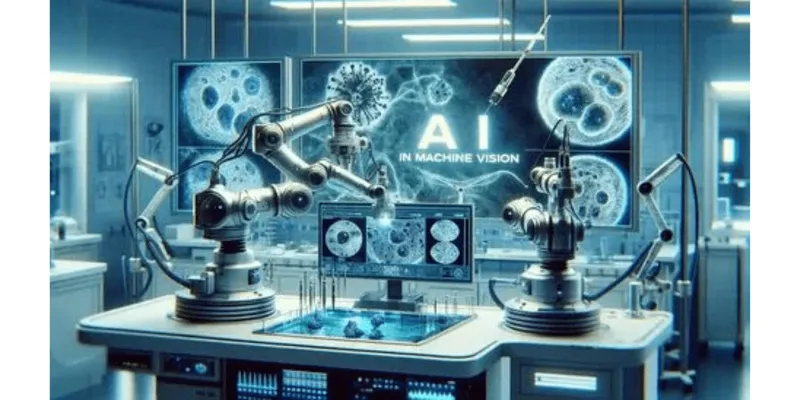
Exploring emerging innovations, regional trends, and high-growth sectors driving the machine vision revolution.
The global machine vision market is witnessing transformative growth, powered by AI integration, automation, and 3D imaging technologies. From manufacturing to healthcare, the technology’s scope continues to expand, unlocking new business opportunities across industries worldwide.
The global Machine Vision Market is undergoing a rapid evolution, fuelled by advances in artificial intelligence (AI), automation, and high-speed imaging. As industries across manufacturing, logistics, healthcare, and automotive sectors embrace smarter production ecosystems, machine vision technology has become a critical enabler of the Fourth Industrial Revolution.
According to Fairfield Market Research, the sector is expanding steadily as more businesses adopt AI-based visual analytics to enhance precision, minimize downtime, and maintain consistent quality control.
Expanding Applications Across Industries
Machine vision is no longer confined to factory inspection lines. Once primarily used for defect detection, it now plays a vital role in diverse fields such as agriculture (crop monitoring), pharmaceuticals (sterile inspection), and food processing (automated sorting and packaging).
With AI-powered cameras and edge computing, real-time decision-making has become possible, reducing human error and improving operational efficiency. From automated optical inspection in electronics to 3D vision systems in autonomous vehicles, its applications continue to grow. This broadening scope creates vast opportunities for both startups and established firms to serve non-industrial sectors with scalable solutions.
Manufacturing Automation: The Core Growth Driver
Manufacturing continues to be the largest revenue contributor to the machine vision market. Vision systems enable continuous quality assurance, crucial in industries such as automotive, electronics, and semiconductors, where micron-level accuracy is essential.
Smart factories are integrating vision systems with robotic arms and programmable logic controllers (PLCs) to enable predictive maintenance and self-optimizing production lines. Companies that design modular, plug-and-play vision solutions for existing manufacturing infrastructure are poised to capture significant market value.
The ongoing shift from 2D to 3D vision inspection is unlocking fresh opportunities in precision measurement, bin-picking, and assembly verification.
Integration with AI, Deep Learning, and Edge Computing
AI and machine vision convergence is redefining industrial automation. Unlike traditional rule-based algorithms, neural networks now enable systems to identify complex visual patterns and adapt to environmental changes.
Deep learning-driven inspection systems outperform human inspectors by accurately classifying defects and acceptable variations. In logistics, AI-based vision automates barcode scanning, parcel tracking, and pallet recognition with high efficiency.
Edge AI, which processes data locally rather than in the cloud, offers low latency and faster responses — essential for real-time safety applications in robotics and autonomous systems. Companies developing lightweight, AI-optimized vision software for edge devices are expected to lead the next growth phase.
Smart Warehousing, Logistics, and Retail
Beyond manufacturing, machine vision is transforming supply chains and logistics. Vision-guided robots streamline picking, sorting, and inventory management, while advanced systems verify shipment accuracy and detect damages.
In retail, computer vision enables automated checkout, shelf tracking, and customer behavior analytics — cutting costs and enhancing operational insight. The surge in global e-commerce is further fueling the need for real-time visual intelligence, making warehouse automation a major growth area for innovators and investors alike.
Healthcare and Life Sciences
The healthcare sector represents one of the most promising segments for machine vision. Applications include medical imaging, surgical robotics, and automated diagnostics.
Vision-assisted AI tools enhance disease detection accuracy and consistency in lab sample analysis. Surgical robots equipped with vision-guided systems provide superior dexterity and safety. Regulatory backing for medical device innovation is paving the way for long-term revenue opportunities for vision technology developers and healthcare manufacturers.
Emergence of 3D Vision and ToF Cameras
The transition from 2D to 3D imaging marks the next major leap. Technologies like Time-of-Flight (ToF) and structured light imaging enable depth perception and spatial awareness, empowering robots to interact intelligently with their surroundings.
These solutions are now essential in autonomous navigation, object recognition, and robotic handling. Companies investing in compact, high-resolution 3D vision cameras integrated with AI are gaining a strong foothold in both industrial automation and service robotics.
The declining cost of 3D sensors is expected to accelerate adoption in consumer electronics, smart farming, and logistics, expanding the overall market landscape.
Business Opportunities for Startups and SMEs
For startups and small enterprises, the most profitable opportunities lie in niche software innovation and industry-specific applications rather than large-scale hardware manufacturing.
Developing cloud-based vision analytics, AI-driven inspection tools, and customized vision modules for sectors like textiles, food processing, or traffic management offers significant potential. Collaborative partnerships between camera manufacturers and AI developers are proving highly effective, delivering end-to-end, interoperable solutions that meet diverse industrial needs.
Regional Growth Dynamics
The Asia-Pacific region dominates the machine vision market, supported by robust manufacturing ecosystems in China, Japan, and South Korea, alongside government incentives for automation and robotics.
North America remains a hub for innovation, driven by a strong network of AI startups, research centers, and automation leaders.
Europe, led by Germany and the Netherlands, focuses on precision manufacturing and sustainable production, especially in automotive and semiconductor sectors. Each region demonstrates distinct strengths — hardware manufacturing in Asia, software innovation in North America, and integration expertise in Europe.
Challenges and Competitive Landscape
Despite significant promise, the market faces hurdles including high installation costs, integration challenges, and a shortage of AI-skilled professionals. However, leading firms continue to invest heavily in R&D to enhance camera resolution, speed, and model accuracy.
Strategic partnerships between software innovators and established manufacturers are reshaping the competitive ecosystem, ensuring continuous innovation in this rapidly advancing field.