Global Feed Packaging Market to Reach USD 30.58 Billion by 2034
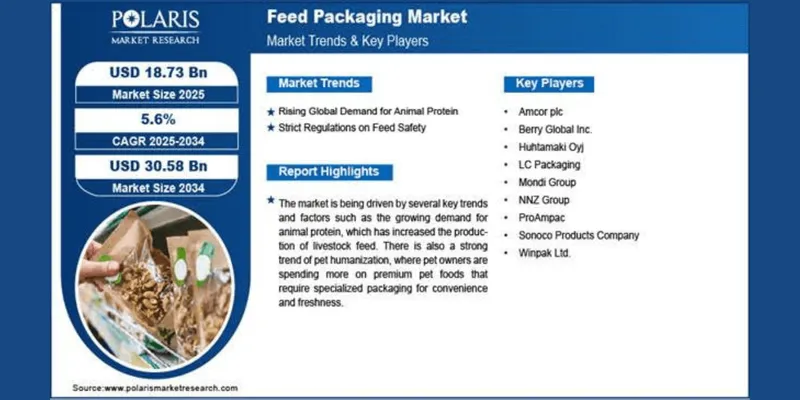
Growing Demand for Quality Animal Feed Drives Packaging Innovation
The feed packaging market is set to reach USD 30.58 billion by 2034 as rising protein demand, safety standards, and premium pet food trends push adoption of durable, efficient packaging solutions.
Feed packaging plays a vital role in animal nutrition and farm operations. It ensures feed stays clean, fresh, and protected from contamination while making storage, transportation, and daily handling more efficient. Effective packaging safeguards feed quality, enabling animals to receive consistent nutrition.
Understanding Feed Packaging
Feed packaging refers to the processes of packing, sealing, and storing animal feed in materials designed to preserve freshness and safety. It protects feed from dust, moisture, and pests while allowing easy stacking, movement, and storage across farms and retail outlets.
Purpose of Feed Packaging
The main objective of feed packaging is to preserve feed integrity. It keeps the product clean, dry, and nutrient-rich. By preventing spoilage, good packaging helps maintain the safety and nutritional value of feed for animals.
Another essential purpose is logistical convenience. Durable bags and containers minimise waste and allow feed to be moved, stored, and transported without damage.
Growing Demand for Feed Packaging
According to Polaris Market Research, the global feed packaging market was valued at USD 17.78 billion in 2024 and is projected to expand at a 5.6% CAGR from 2025 to 2034, reaching USD 30.58 billion by 2034. Key factors driving this demand include:
- Rising consumption of animal protein: Increased intake of meat, dairy, and eggs boosts the need for commercial feed, thereby increasing the requirement for secure packaging.
- Stricter food safety standards: Regulations require feed to remain uncontaminated and fresh, encouraging adoption of tamper-evident, high-quality packaging.
- Growing pet humanisation: Pet owners prefer premium pet foods in resealable and compact packaging, boosting demand for flexible pouches and smaller packs.
Types of Feed Packaging
Different types of packaging are used depending on feed type and storage conditions:
- Plastic Bags: Lightweight, moisture-resistant, and commonly used for small feed packs.
- Woven Polypropylene Bags: Strong and durable, ideal for heavy feed loads, and resistant to tearing.
- Paper Bags: Suitable for dry feed varieties; economical and recyclable, often used for small to medium-sized portions.
- Bulk Containers: Used by large farms and feed mills; bulk bags and silos offer high-volume storage and easy mechanical handling.
Essential Features of Feed Packaging
High-quality feed packaging ensures feed safety while simplifying farm operations. Key features include:
Strength and Durability
Packaging must handle heavy loads during stacking, lifting, and transportation. Strong materials reduce damage and maintain feed quality.
Moisture Protection
Moisture is a major cause of feed spoilage. Water-resistant packaging keeps feed dry and safe.
Safe Packaging Materials
Materials must be safe for animal feed and should not affect taste, smell, or nutrition.
Ease of Handling
User-friendly designs—such as handles or proper bag shapes—help workers transport and store feed more efficiently.
Clear Labelling
Labels should clearly list the feed type, ingredients, weight, and usage instructions to prevent confusion and ensure proper feed selection.
Final Thoughts
Feed packaging ensures feed remains safe, fresh, and easy to manage. Durable, moisture-resistant, and well-labelled packaging reduces waste, prevents spoilage, and supports efficient handling. By maintaining feed quality, proper packaging contributes significantly to animal health and overall farm productivity.