Giriraj Singh Releases ‘India Textiles & Apparel CXO Blueprint 2030’ by CMAI and GATS at Bharat Tex 2026
Report outlines five strategic priorities to support India’s USD 100 billion textile and apparel export target by 2030, with emphasis on circularity, traceability and technology adoption.
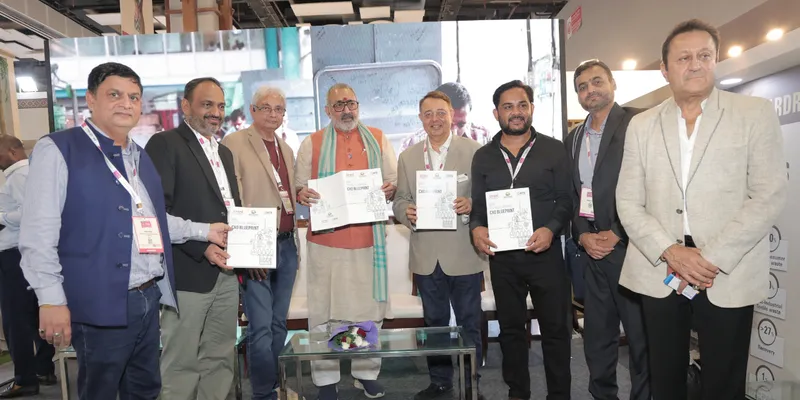
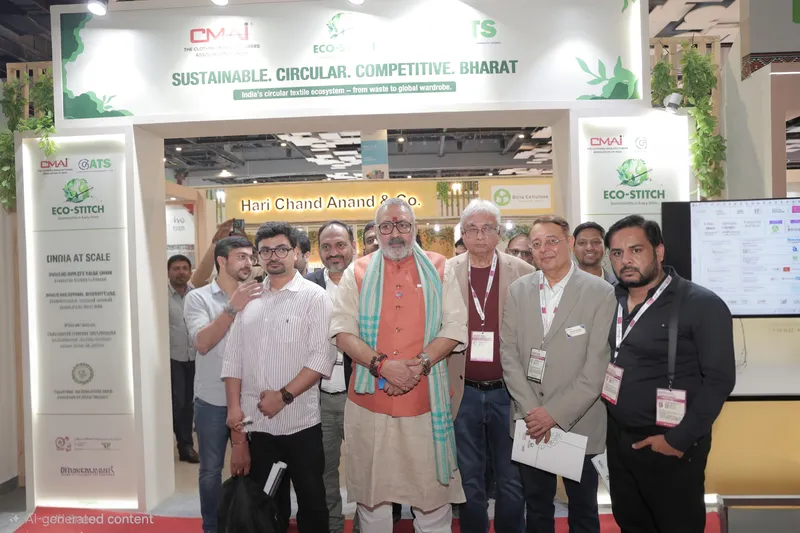
Shri Giriraj Singh, Hon'ble Minister of Textiles, Government of India, officially released the report India Textiles & Apparel CXO Blueprint 2030, jointly developed by the Clothing Manufacturers Association of India (CMAI) and the Global Alliance for Textile Sustainability (GATS), at the Sustainability & Circularity Impact Pavilion (Hall No. 14) during Bharat Tex 2026.
During the report launch, Shri Giriraj Singh Ji observed that the report had been released at an opportune time during Bharat Tex, in the presence of global buyers. He noted that the findings would serve as a valuable guide for India's textile ecosystem and all stakeholders would benefit from its insights to unlock new growth opportunities and enhance the sector's global competitiveness.
Speaking at the launch, Santosh Katariya, President, CMAI, said:
"India has earned global recognition as a manufacturing destination. The next chapter of our growth will depend on how successfully we build capabilities that create greater value for customers and global brands. The India Textiles & Apparel CXO Blueprint 2030 is intended to provide industry leaders with a practical roadmap to strengthen competitiveness through innovation, collaboration, sustainability and execution. Our collective objective is to help Indian enterprises move beyond scale and emerge as trusted global partners."
The India Textiles & Apparel CXO Blueprint 2030 is designed as a strategic roadmap to help Indian textile and apparel enterprises strengthen their global competitiveness as international markets increasingly focus on sustainability, traceability, product innovation and technology-led manufacturing. It is intended to serve as a guide for CXOs, manufacturers, brands, policymakers and ecosystem partners working towards positioning India as a future-ready textile and apparel manufacturing destination.
According to the report, India is currently the world's sixth-largest exporter of textiles and apparel, accounting for approximately 4.1% of global trade while employing nearly 45 million people. Although exports have remained at around USD 40 billion for the past six consecutive years, the report highlights the sector's target of USD 100 billion in exports by 2030 alongside a projected domestic market valued at USD 250 billion. It states that achieving these goals will require a transition from cost competitiveness to capability competitiveness.
The report notes that India's opportunities are supported by evolving global sourcing strategies and new bilateral trade agreements with the EU, UK, UAE, Oman, Australia, New Zealand, along with increasing demand for transparent and sustainable supply chains. It also states that these advantages will translate into export growth only if enterprises develop appropriate products, documentation, traceability systems and operational capabilities.
The Blueprint identifies five strategic priorities for strengthening India's competitiveness over the coming decade:
- Circularity
- End-to-end Traceability
- Resource-efficient Manufacturing
- Product Diversification
- Technology adoption through AI, automation and digital systems
Naveen Sainani, Chairman – ESG Committee & Hon. General Secretary, CMAI, said:
"Sustainability is no longer an aspiration—it is becoming central to business competitiveness. The Blueprint reflects the industry's transition from discussion to implementation by helping enterprises, particularly MSMEs, understand how sustainability, technology and operational excellence can work together to strengthen resilience and unlock new business opportunities. Our focus is on enabling practical action that creates long-term value."
Parvinder Singh, Director, GATS, stated:
"India has one of the world's strongest textile manufacturing ecosystems. The opportunity now is to connect these capabilities through stronger collaboration, knowledge sharing and implementation. The Blueprint encourages enterprises, clusters and institutions to work as an integrated ecosystem where sustainability and competitiveness reinforce each other, helping India build lasting global leadership."
The event was attended by sustainability and industry representatives, including Dr. Naresh Tyagi – Patron-in-Chief, CMAI, and Chief Sustainability Officer, ABFRL; Sunder Belani – Managing Director, Ramsons; Manoj Wanvari – COO, Oterri and Refibre; Rahul Mehta – Chief Mentor, CMAI; Naveen Sainani – Hon. Gen. Secretary & Chairman – ESG Committee, CMAI; Anand Golecha – Chairman, Manufacturers & Productivity Sub Committee & Vendor Souring Fair Sub Committee, CMAI; along with other dignitaries.
Additional Findings from the Report
The report states that:
- Textile and apparel exports have remained around USD 40 billion over the past six years, recording annual growth of 0.8%, compared with 3.5% growth in global trade.
- India accounts for approximately 3% of global apparel exports, compared with Bangladesh – 9.5% and Vietnam – 7.3%.
- India has 83.2% domestic value addition in textile and clothing exports, representing one of the world's deepest integrated value chains.
- The country holds a 12.3% share of global cotton exports and a 10.5% share of global carpet exports.
- More than 52% of India's textile exports originate from 134 product categories where the country has over 10% global export share, indicating opportunities for diversification into higher-growth product segments.
The report also states that an optimised circular textile ecosystem could unlock nearly USD 9.4 billion in value through textile waste recovery, while noting that nearly 50% of India's textile and apparel exports are destined for the US and EU, making compliance with emerging sustainability regulations increasingly significant for exporters.