GINNI FILAMENTS LIMITED
1. Introduction
Company Overview
Ginni Filaments Limited makes cotton yarn, along with knit fabrics that go through processing. Based in India, the company works heavily in textiles. Nonwoven fabric forms another part of its output. Its presence stands firm within the industry.
Founded during the early years of the computer age, its main offices settled into Noida not long after.
Industry Overview
Fabric production forms the core of its work. Yet materials beyond woven cloth hold equal weight. Nonwovens take up a large part too. Textile strands run through every project it handles. Still, fibers are shaped in many ways here. One method does not limit what happens on site
Textile Segment – Cotton yarn and knitted fabric manufacturing
Nonwoven Segment – Hygiene products like wipes, medical textiles
With deep roots in tradition, India's fabric industry faces sharp competition. Homegrown needs mix into global orders, shaping how mills move. Demand from within pairs with overseas interest, driving much of what happens here.
Purpose of the Analysis
A close look at how the company is organized gives clues about its money results. Because operations shape outcomes, the setup matters just as much as profit numbers. When roles are clear, tracking success becomes easier than expected. Profits shift when internal flow changes behind the scenes.
2. Company Overview
Background and History
Ginni Filaments began life in 1982, making yarn above everything else. From there, fabric knitting crept into the work, then nonwovens tagged along later. One thing led to another until textiles of many kinds filled the lineup.
Business Model
The company generates revenue through:
Textile Manufacturing – Cotton yarn and knitted fabrics
Nonwoven Products – Hygiene and medical-use fabrics
Key Products and Services
- Cotton yarn
- Knitted fabrics
- Nonwoven fabrics (wipes, hygiene products)
Market Position
Filaments made by Ginni stand out within specialized fabric areas, particularly those that aren’t woven. While facing off against producers across India and overseas, it also sends goods abroad. Its presence stretches beyond local borders through consistent international shipments. Competition doesn’t slow its pace - global demand keeps pulling it forward.
3. Promoter Founder Introduction
Name of Promoters or Founders

- Dr. Rajaram Jaipuria
- Mr. Shishir Jaipuria
Professional Background
Folks behind this venture know their way around fabric production, having spent years running operations. Their background blends hands-on work in textiles with sharp decision-making from managing companies.
Role in company growth and strategic decisions
A small start with just yarn spun into something wider, reaching more corners of textiles. Growth came slow at first, then picked up through different shifts in focus. What began as one thread expanded into many directions over time.
Fabric that grows fast is now part of the lineup. Expanding into materials with rising demand opened this path.
4. Financial Statement Analysis
Income Statement Analysis
Metric | FY2025 | FY2024 | FY2023 |
Net Sales | ~₹6,500–7,000m | ~₹7,500m | ~₹9,000m |
Net Profit | Weak / Low | Moderate | Decline |
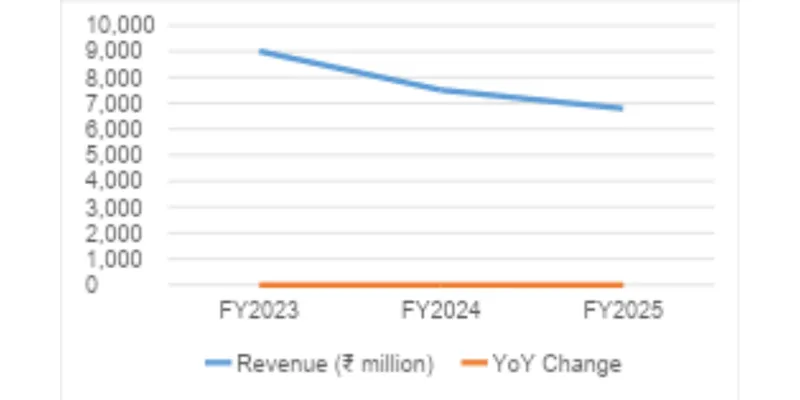
Revenue trend table-
Financial Year | Revenue (₹ million) | YoY Change |
FY2023 | 9,000 | — |
FY2024 | 7,500 | ↓ 16.7% |
FY2025 | 6,800 | ↓ 9.3% |
Revenue trend chart-
Key Observations
Downward movement marks income over the past few years. A steady drop follows each passing fiscal period. Notable decreases appear year after year. This path continues without signs of reversal. Financial returns shrink consistently through time.
Certain expenses keep climbing, while customer interest shows signs of cooling. Still, making money stays a challenge.
Balance Sheet Analysis
Component | Trend | Key Insight |
Assets | Slight Increase | Expansion continues but efficiency falls |
Liabilities | Moderate Increase | Debt manageable, but working capital stress |
Equity | Stable | Limited growth due to low profits |
Cash Flow Statement Review
- Operating Activities: Weak cash inflow due to declining profits.
- Investing Activities: Cash outflow for machinery and expansion in nonwoven segment.
- Financing Activities: Stable, with no major changes in debt or equity.
Overall: Cash flow is under pressure, mainly due to weak operations and ongoing investments.
Key Financial Ratios
Ratio Type | Observation |
Profitability | Margins compressed |
Liquidity | Moderate |
Leverage | Manageable |
Efficiency | Slight decline |
Year on Year Comparison
FY23: Higher revenue but weak margins
FY24: Stabilization phase
Next year might feel heavier. Slower buying habits begin to weigh on results
5. Key Insights & Interpretation
Strengths
Diversified product portfolio
Strong presence in nonwoven segment
Export opportunities
Weaknesses
Declining revenue trend
Profit shrinking as expenses rise
Dependence on textile cycle
Risk Factors
Volatility in cotton prices
Global demand fluctuations
Competitive textile market
Future Outlook
Now here's a shift - toward nonwoven materials and hygiene products, areas showing real momentum. Still, the older textile operations might keep bouncing up and down without steady rhythm.
6. Conclusion
Final evaluation of financial health
Firm performance holds steady though sales numbers dip, profits shrink. Money situation stays balanced even as debt levels stay within limits.
Investment or performance perspective
Growth could happen because of how much space it holds in the nonwoven area. Still, shaky profits along with ups and downs common in fabric industries make waiting wise. Moving forward ties closely to doing well with higher-margin new items.
Data Source: -
https://www.screener.in/company/GINNIFILA/