From Pre-Consumer Textile Waste to Women’s Livelihoods: A Circular Value Chain Model for Sustainable and Inclusive Production in India

Dr. Ela Manoj Dedhia
Managing Trustee & President,
AACHSNN
Curator & Coordinator – Quilting Project
Abstract
The growing volume of pre-consumer textile waste presents both an environmental challenge and an opportunity for sustainable value creation within the textile value chain. Simultaneously, women in underserved communities continue to face limited access to skill development and income-generating opportunities. This paper presents a field-based case study of an initiative led by the Alumni Association of the College of Home Science, Nirmala Niketan (AACHSNN), which integrates pre-consumer textile waste into decentralised, women-led production systems. Through quilting and patchwork workshops conducted across Gujarat and Maharashtra, the initiative demonstrates how discarded materials can be transformed into value-added products. Using a qualitative case study approach, the study analyses training processes, production outcomes, and socio-economic impacts. Findings indicate enhanced technical skills, increased confidence, and emerging livelihood opportunities. The paper proposes a replicable circular value chain model linking industry waste to grassroots production and market-oriented outputs.
Keywords
Textile value chain; pre-consumer waste; circular economy; women’s livelihoods; quilting; decentralised production; sustainable textiles
1. Introduction
The textile industry is a major contributor to global waste, generating substantial volumes of pre-consumer textile waste during manufacturing processes (Ellen MacArthur Foundation, 2017). In India, limited recovery and reuse systems further intensify this challenge.
Increasing attention has been given to the role of recycled and waste-derived materials in textile production systems. Earlier work by Dedhia and Mundkur (2017) highlights the growing recognition of recycled raw materials within textile applications, indicating a shift toward more sustainable material sourcing practices.
At the same time, women in rural and marginalised communities often lack access to structured skill development and income-generating opportunities. Circular economy approaches offer a pathway to address these dual challenges by promoting resource efficiency and inclusive production systems (Bocken et al., 2016).
This paper examines an AACHSNN-led initiative that connects textile industry waste with grassroots women artisans through structured skill development in quilting and patchwork, positioning it within the broader textile value chain.
2. Literature Review
Circular economy approaches in textiles emphasise closing material loops through reuse, recycling, and regeneration (Fletcher, 2014). Pre-consumer textile waste, due to its relatively clean and reusable nature, presents strong potential for value addition (Domenech & Bahn-Walkowiak, 2019).
The increasing relevance of recycled materials in textile systems has been discussed by Dedhia and Mundkur (2017), highlighting the expanding role of alternative raw materials in sustainable production.
Existing research further indicates that:
- Circular systems reduce environmental impact
- Skill-based textile interventions support women’s economic empowerment (UN Women, 2018)
- Decentralised production enables flexible livelihoods (Mezzadri, 2017)
However, there remains limited integration of textile waste utilisation, grassroots skill development, and market linkage within a unified textile value chain framework. This study builds upon earlier material-focused research by extending it into a livelihood-centred circular production model.
3. Methodology
This study adopts a qualitative case study approach (Yin, 2018), focusing on field interventions conducted between January and March 2026.
3.1 Study Locations
- Koth, Gujarat
- Mumbai, Maharashtra
- Karajgoan, Maharashtra
3.2 Participants
The initiative engaged over 50 women, including rural, tribal, and underserved urban participants.
3.3 Data Collection
- Participant observation
- Informal interviews and feedback
- Trainer assessments
- Documentation of products created
3.4 Analytical Approach
A thematic analysis approach was used to evaluate:
- Skill development
- Production outcomes
- Livelihood potential
- Social impact indicators
-800x450.webp?2026-04-28T06:51:00.804Z)
4. Intervention and Implementation
AACHSNN conducted structured quilting and patchwork workshops integrating sustainability with skill development.
4.1 Koth, Gujarat
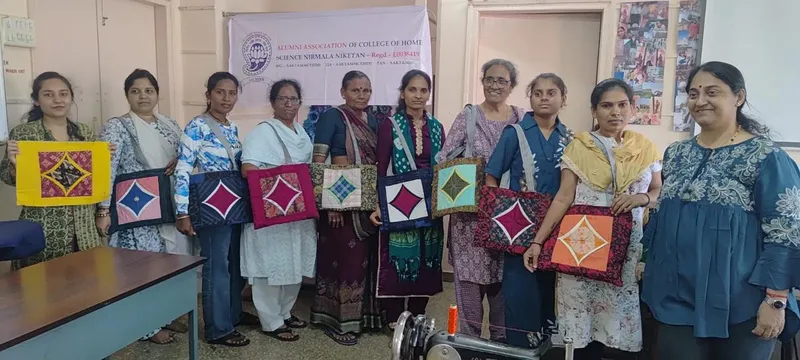
Participants were trained in big-stitch hand quilting and quilt-as-you-go techniques. They created quilted table mats while learning design placement, colour coordination, and finishing.
4.2 Mumbai
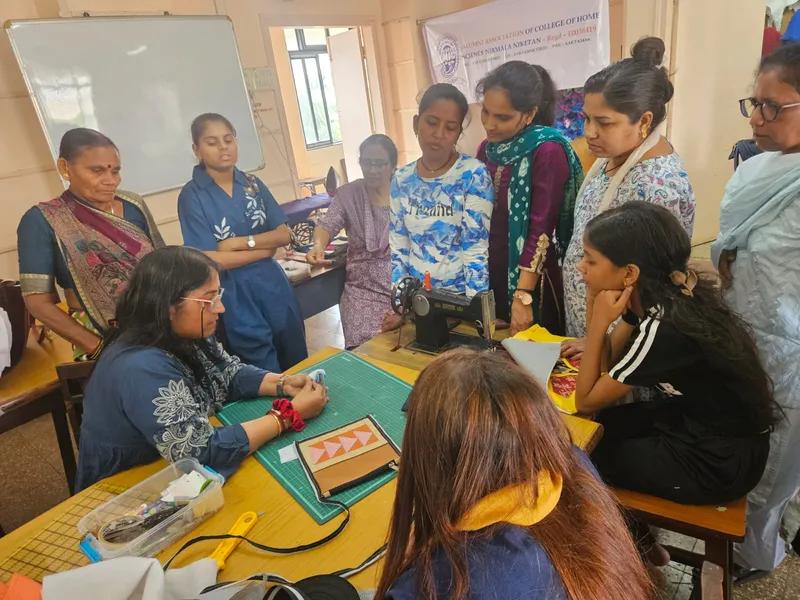
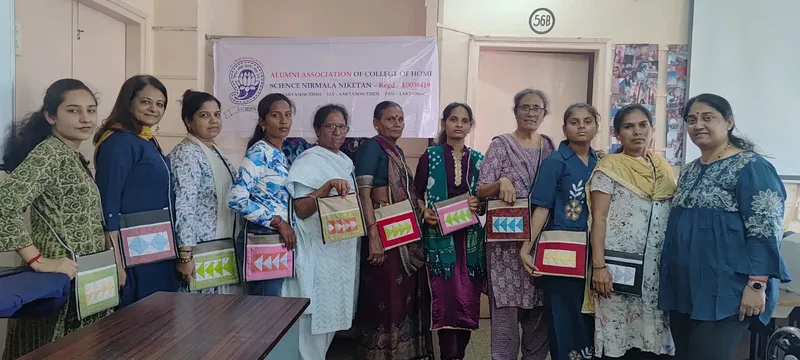
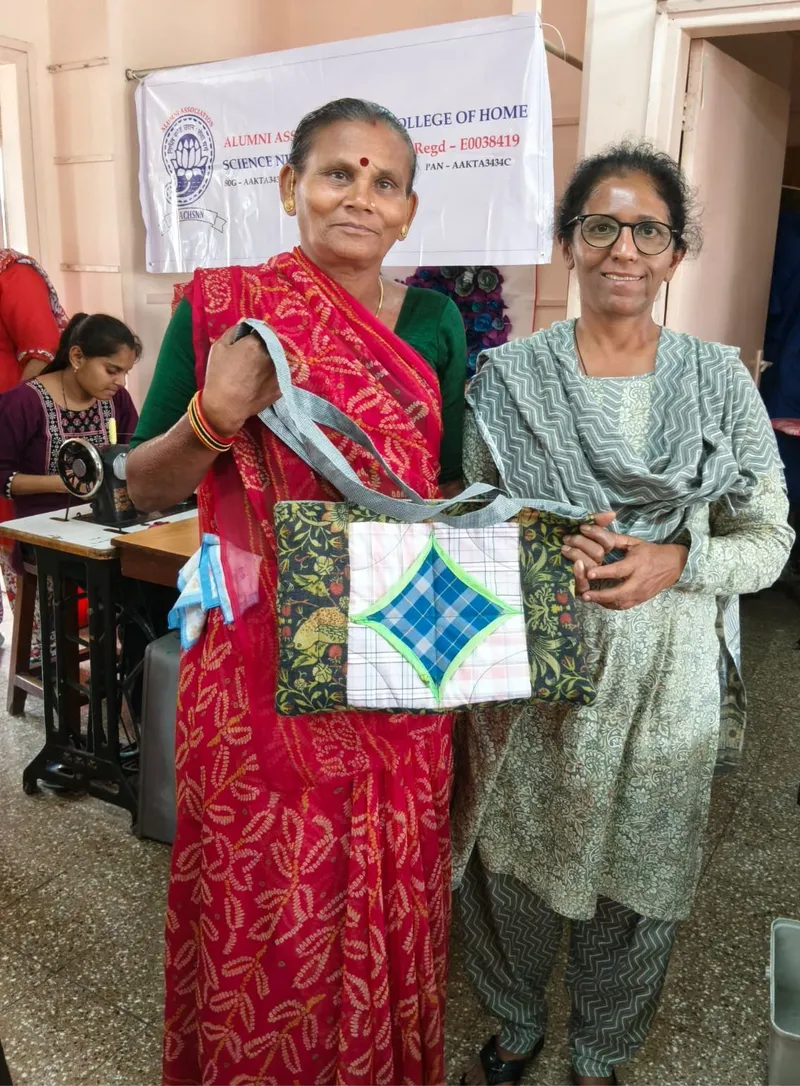
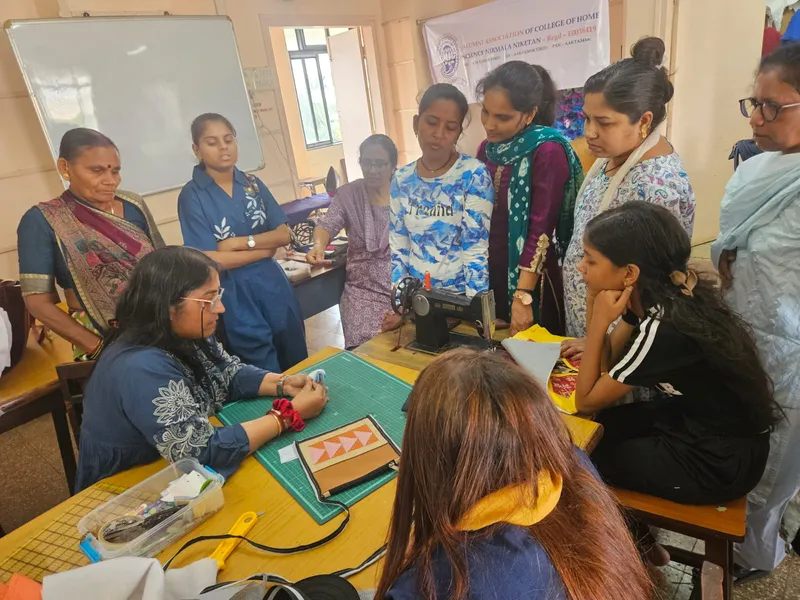
A two-day intensive workshop brought together tribal and underserved urban women. Participants developed quilted tote bags and crossbody mobile bags, integrating technical skills with product development.
4.3 Karajgoan, Maharashtra
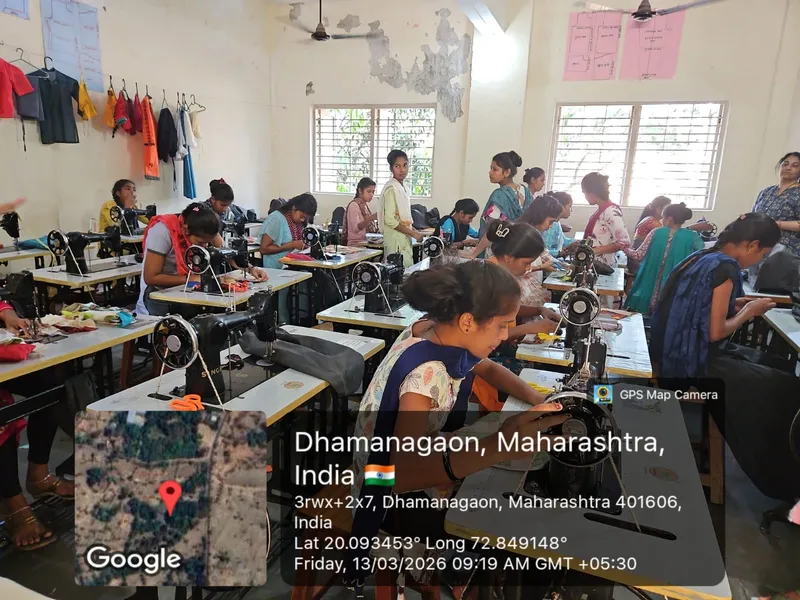
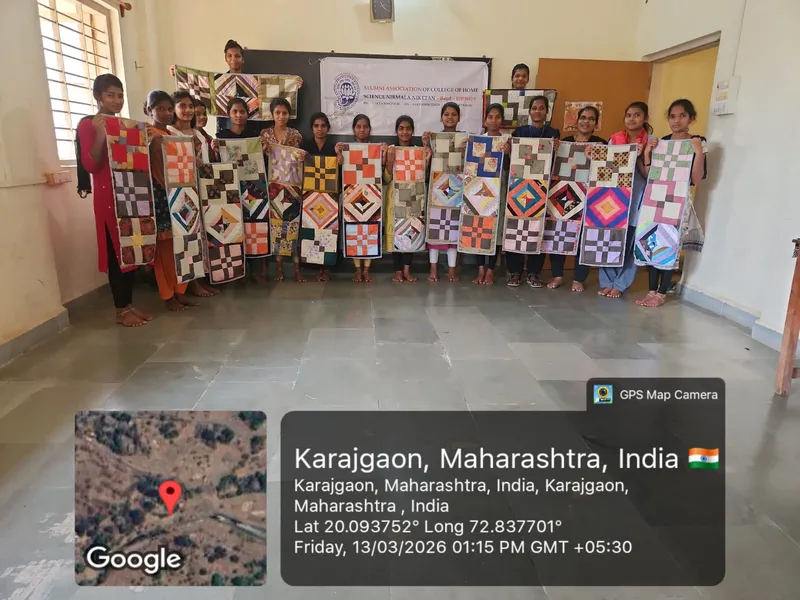
This workshop focused on patchwork design, machine quilting, and modular production. Participants created table runners and hot pads, demonstrating the adaptability of designs across product categories.
5. Results and Discussion
5.1 Skill Development
Participants demonstrated improved technical skills in quilting, patchwork, and finishing techniques.
5.2 Circular Production Practices
The use of pre-consumer textile waste enabled resource efficiency, reduced material costs, and increased awareness of sustainable practices.
5.3 Livelihood and Enterprise Potential
Participants expressed a strong interest in starting home-based production and income-generating activities. Feedback such as “I want to start making products at home and try selling them” reflects emerging entrepreneurial intent.
5.4 Social Impact
The initiative contributed to increased confidence, creative agency, and intergenerational learning, with participants expressing willingness to transfer skills within families and communities.
5.5 Challenges
● Inconsistent supply of textile waste
● Limited access to markets
● Need for advanced training
● Scaling decentralised production systems
-800x1067.webp?2026-04-28T06:52:17.867Z)
6. Contribution to the Textile Value Chain
This initiative demonstrates a localised circular textile value chain model:
- Input: Pre-consumer textile waste from industry
- Process: Skill-based quilting and patchwork
- Output: Value-added, marketable products
- Outcome: Livelihood generation and sustainability
The model highlights how value addition can occur at the grassroots level, extending the lifecycle of textile materials while generating socio-economic impact.
7. Conclusion
The study illustrates the potential of integrating textile waste utilisation with women-centric skill development to create sustainable livelihood ecosystems. The AACHSNN model provides a replicable framework for embedding circular economy principles within the textile value chain.
Future efforts should focus on strengthening market linkages, expanding training programmes, and developing scalable hybrid models for broader impact.
8. Acknowledgements
AACHSNN acknowledges the contributions of:
- Ms Shreedevi Poduval – Trustee & Treasurer; Lead Trainer
- Ms. Noella Dias – Secretary, NNI; Coordinator for Nirmala Niketan Centres
- Ms Niyati Mota – Manager; Assistant Trainer & Social Media Manager
- Mrs. Minal Savla – Trustee & Vice President; Coordinator & Assistant Trainer
- Mrs Sharvari Kalantare – Trustee & Joint Treasurer; Assistant Trainer
- Mr Sameer Panchmatia – Technical Advisor
- Mahavir Textiles and Anveshanam Foundation – Support for pre-consumer fabric waste
-800x600.webp?2026-04-28T06:53:50.424Z)
9. References (APA Style)
- Bocken, N. M. P., de Pauw, I., Bakker, C., & van der Grinten, B. (2016). Product design and business model strategies for a circular economy. Journal of Industrial and Production Engineering, 33(5), 308–320.
- Dedhia, E. M., & Mundkur, S. D. (2017). Recycled raw materials gain recognition in technical textiles. Textile Value Chain.
- Domenech, T., & Bahn-Walkowiak, B. (2019). Transition towards a resource efficient circular economy in Europe. Ecological Economics, 155, 7–19.
- Ellen MacArthur Foundation. (2017). A new textiles economy: Redesigning fashion’s future.
- Fletcher, K. (2014). Sustainable fashion and textiles: Design journeys. Routledge.
- Mezzadri, A. (2017). The sweatshop regime: Labouring bodies and exploitation in garment production in India. Cambridge University Press.
- UN Women. (2018). Turning promises into action: Gender equality in the 2030 Agenda.
- Yin, R. K. (2018). Case study research and applications: Design and methods (6th ed.). Sage Publications.