From Plant to Pants: The Complete Journey of Hemp Denim Workwear Production
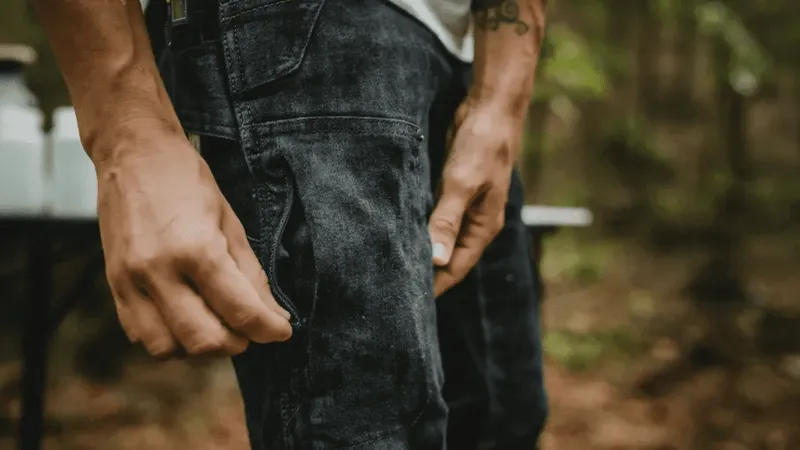
When you think of workwear that can take a beating, denim comes to mind. For decades, cotton denim has been the gold standard for industrial clothing. But there's a more sustainable alternative making waves in the textile world: hemp denim. This isn't just about being eco-friendly for the sake of it. Hemp denim is genuinely tough, breathable, and could be the answer to some of the fashion industry's biggest environmental challenges. Today, the hemp fibre market is valued at $9.11 billion in 2025 and is expected to reach $37.71 billion by 2032, growing at an annual rate of 22.5% (Source: Coherent Market Insights) [1]. This growth reflects increasing demand from the textile industry and rising awareness of sustainability issues.
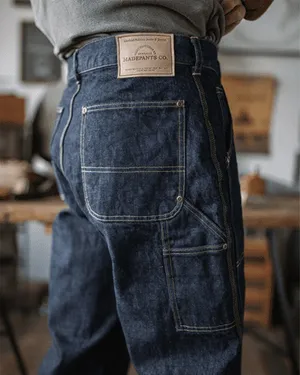
Why Hemp Denim? Understanding the Material
Hemp fibre comes from the Cannabis sativa plant, but before you get any ideas, it contains less than 0.3% THC, so you definitely can't smoke your work jacket. What makes hemp special for workwear is its natural strength. The fibre is three times stronger than cotton, which translates to clothing that lasts longer and handles tough conditions better. The environmental advantages are compelling. Recent studies show that hemp has a 38% lower water requirement, a 60% lower water footprint, an 84% lower irrigation requirement, and a 91% lower irrigated water footprint compared to cotton [2]. Think about those numbers for a moment, especially the irrigation part. In regions facing water scarcity, that difference is massive. Hemp requires approximately 2,000 litres of water per kilogram of fibre, while cotton needs about 10,000 litres [3]. To put this in perspective, a single cotton t-shirt requires 2,700 litres of water to produce, which is the amount an average person drinks in approx 2.5 years. Hemp also grows faster, taking just 90-110 days to mature compared to cotton's 150-180 days [4]. From an environmental standpoint, a hemp field can absorb 22-44 tonnes of CO2 per hectare with one or two crops per year, which equals 3.7 kg of CO2 per kg of fibre produced, while cotton only absorbs 5 tonnes of CO2 per hectare or 1.7 kg per kg of fibre [5]. Hemp doesn't just use fewer resources; it actively improves the environment by enriching soil and preventing erosion with its deep root system.
The Complete Production Journey
Cultivation: Where It All Begins
Hemp cultivation is remarkably low-maintenance. The plant grows densely—up to 150 plants per square meter—which naturally suppresses weeds and reduces the need for herbicides. Unlike cotton, which is pesticide-intensive, hemp requires virtually no pesticides because it naturally resists most pests. India is making strategic moves in this sector, with the Ministry of Textiles forming a committee to recognise hemp fibres as "Allied Fibres" by early 2025. States like Uttarakhand and Uttar Pradesh have already legalised hemp cultivation, with pilot projects underway to expand domestic production.
Retting: Separating the Fibre
After harvesting, the stalks undergo "retting", a process that breaks down the pectin and lignin, binding the valuable bast fibres to the woody core. There are three main methods:
- Field retting involves leaving cut stalks in the field for 14-21 days, allowing natural bacteria, aided by moisture, to break down the binding substances. It's the most organic method, but it depends heavily on weather conditions.
- Water retting submerges hemp bundles in water for about 7–14 days. This produces higher-quality, more uniform fibres but requires careful wastewater management to prevent environmental contamination.
- Mechanical retting uses machines to separate fibres quickly through controlled decay processes. It's faster and more predictable, but it requires an investment in specialised equipment.
Fibre Extraction and Processing
Once retting is complete, the next step is decortication—mechanically separating the outer bast fibre from the inner woody core, known as the hurd. After decortication, the fibres go through scutching and hackling (combing) to remove any remaining woody bits and align the fibres. These steps produce a cleaner, more uniform fibre suitable for textile spinning. One challenge is that hemp fibres, in their raw state, can be up to 1–2 meters long, much longer than cotton fibres, which average 2–5 centimetres. For spinning, hemp fibres are often “cottonized” or shortened to make them compatible with existing cotton-spinning machinery. Specialised machinery has also been developed to handle longer bast fibres more efficiently.
Degumming and Cleaning
Hemp naturally contains lignin, which makes the raw fibre stiff. The degumming process removes this without the harsh chemicals needed for cotton. Hemp has a low lignin content, meaning it can be cleaned with hydrogen peroxide rather than chlorine dioxide, a significant environmental advantage that prevents toxic chemical discharge into waterways.
Spinning and Weaving
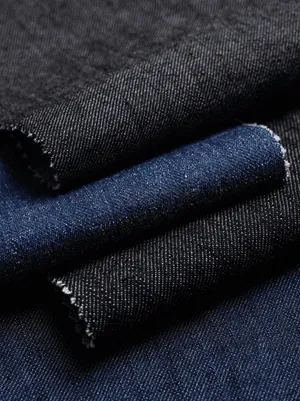
This is where traditional hemp processing has faced challenges. Standard spinning machines are designed for shorter cotton or wool fibres. Hemp's long fibres need specialised equipment. However, innovations in enzymatic processing are reducing costs by 20-30% compared to earlier methods. During spinning, hemp fibres can be used alone or blended with cotton, linen, or even recycled polyester to achieve different textures and properties. For denim specifically, the fibres are spun into yarn and then woven in the characteristic twill pattern that gives denim its diagonal ribbing and durability.
Softening: Making Hemp Comfortable
Raw hemp fabric feels quite stiff and is not ideal for clothing you'll wear all day. Sustainable finishing techniques like enzyme-based softening are being adopted to enhance hemp's comfort properties while maintaining eco-friendly production standards. These biological agents break down remaining lignin and pectin naturally, allowing the fabric to soften without harsh chemicals. Interestingly, hemp fabric continues to get softer with each wash without degrading the fibres, unlike cotton.
Dyeing: Adding Colour Sustainably
Traditional textile dyeing is one of the most water-intensive and polluting stages in fashion production. Hemp denim manufacturers are increasingly adopting low-impact and waterless dyeing techniques to minimise their footprint. One breakthrough is supercritical CO₂ dyeing, pioneered by companies like DyeCoo. This method uses pressurised carbon dioxide instead of water to transfer colour, cutting water usage by up to 75% and reducing chemical waste by nearly 90%. For hemp denim, fibre-reactive dyes are most commonly used. These dyes chemically bond with cellulose fibres, offering vibrant, long-lasting colour with minimal runoff.
Finishing and Garment Construction
After dyeing, hemp denim goes through finishing processes that can include:
- Mechanical softening through tumbling or brushing
- Enzyme treatments for additional softness without weakening fibres
- UV-protective coatings that leverage hemp's natural UV resistance
- Water-repellent finishes using biodegradable compounds
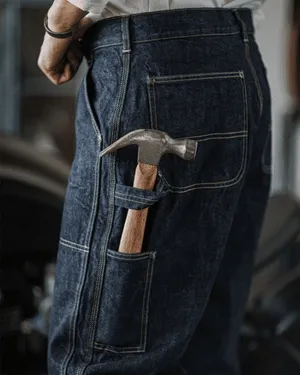
For workwear specifically, the construction focuses on durability features: reinforced stress points, double or triple stitching, bar-tack reinforcements at pocket corners, and strategic placement of seams to avoid chafing. Hemp denim's natural antimicrobial properties mean the garments resist odour better than synthetic alternatives—a real advantage for workwear worn in demanding conditions.
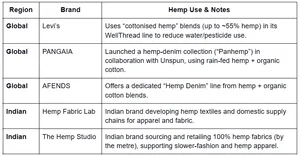
Major Brands Embracing Hemp Denim
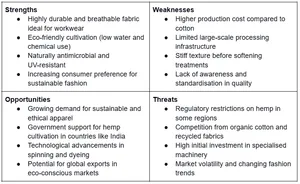
SWOT Analysis
Conclusion
Hemp denim workwear represents the perfect balance of durability, sustainability, and practicality that the industrial clothing sector has been seeking. With the global hemp textile market projected to grow at an annual rate of around 33.5%, and with innovations steadily lowering production costs, hemp is rapidly shifting from a niche alternative to a mainstream material. Challenges such as higher initial costs and limited processing infrastructure are being addressed through government initiatives, technological advancements, and increased adoption by leading brands. For workers who need clothing that withstands tough conditions while reducing environmental impact, hemp denim isn’t just a promising alternative; it’s quickly becoming the future standard for sustainable workwear.
References: [1] https://www.coherentmarketinsights.com/industry-reports/hemp-fiber-market [2] https://agris.fao.org/search/en/providers/122436/records/67599512c7a957febdfd2b29 [3] https://idrawater.org/news/understanding-the-fashion-water-footprint/ [4] https://wetoast.com/blogs/news/5-reasons-hemp-is-the-plant-of-the-future [5] https://hemp-copenhagen.com/pages/sustainability?srsltid=AfmBOoqljDkoOlUEbw-dQCjfxHY-zDdYXKZDDIi82Kn_u4WWkNvLCKXH
- https://hempfoundation.net/the-complete-cycle-of-hemp-clothing-manufacturing/
- https://learn.eartheasy.com/guides/hemp-clothing/
- https://www.textilesphere.com/2019/10/hemp-fiber-processing.html
- https://hempgazette.com/industrial-hemp/hemp-fiber-production/
- https://ecentric.in/pages/why-hemp?srsltid=AfmBOop6eGwpeTybXQPF7WdVe1IORo8wl-RrnVgUoNFroxDRM4zww7tz