From Fabric To Footwear: How Indian Hand Embroidery Is Shaping Bridal Accessories
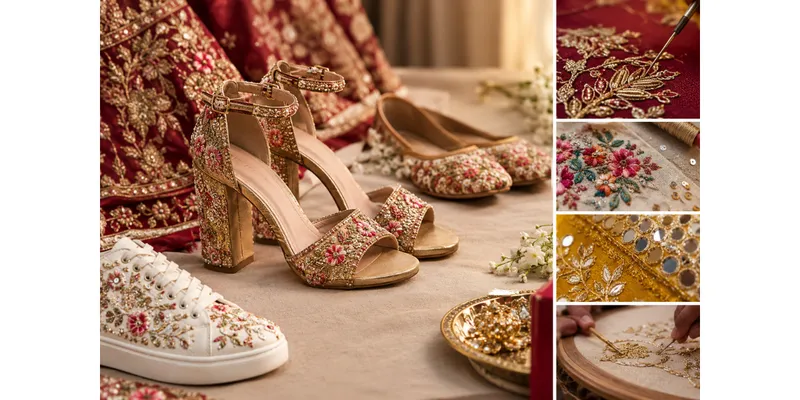
Indian hand embroidery has long brought texture, colour and detail to sarees, lehengas, dupattas and other traditional garments. Today, the same craft vocabulary also appears in bridal shoes, sandals, heels and even wedding sneakers. Adapting embroidery for footwear takes more than copying a motif onto a smaller surface: the design must work with the shoe’s shape, movement and everyday points of contact. Techniques such as zari-zardozi and ari work also show that the relationship between embroidery and footwear has deeper roots than many people realise.
Why Is Indian Hand Embroidery Moving Beyond Bridal Clothing?
Embroidery can connect a bridal outfit with its accessories through colour, motif and texture. A shoe does not need to repeat every detail of a lehenga; one carefully chosen border, floral motif or metallic accent can create a more coordinated look.
India has many regional embroidery traditions, each with its own materials and visual language. The Ministry of Textiles’ handicrafts resource describes zardozi as a craft that uses metallic elements and embellishments, while the Victoria and Albert Museum explains that ari work has a historical connection to footwear and leatherwork. These examples show that craft techniques can travel across product categories when makers adapt them to the object and its use.
Which Indian Embroidery Techniques Work Well On Bridal Footwear?
The right technique depends on the base material, desired appearance and how the wearer plans to use the shoes. Rather than choosing a style only for its shine, consider its texture, weight, placement and how securely the details sit on the footwear.
Technique | Visual Character | Footwear Design Consideration |
Zari-Zardozi | Metallic threads or wires, often with sequins or beads. | Can create a rich bridal finish. Keep raised details secure and consider their position where the shoe bends or rubs. |
Resham Threadwork | Coloured thread used for floral, paisley or other motifs. | Useful for echoing one shade or motif from a lehenga, saree or dupatta without matching every detail. |
Mirror Work | Small reflective pieces set into a decorative pattern. | Adds sparkle, but the design should account for surface contact and secure attachment. |
Ari Work | A hooked-needle technique associated with chain-stitch embroidery. | An example of the historic links between embroidery and footwear; suitability depends on the base material and construction. |
These are design considerations, not fixed rules. The same technique can look very different depending on thread, base fabric, construction and the skill of the maker. Banaras Zardozi, for example, is documented by India’s handicrafts portal across a product range that includes wedding garments, bags, belts and shoes.
What Makes Embroidering Shoes Different From Embroidering Fabric?
Footwear needs to handle movement, pressure and contact with the ground, so the placement of decorative work matters. A motif that looks beautiful across the front of a garment may need simplifying or repositioning on a curved shoe panel.
Designers should consider where the shoe bends, where straps touch the foot and where the upper meets the sole. Raised beads or metal elements may suit a protected decorative area better than a high-friction edge. The goal is to balance detail with secure finishing and a fit that still feels right.
Material choice matters too. Velvet, satin, brocade and textile-based uppers each create a different look and respond differently to stitching and embellishment. Before choosing a pair, ask how the embroidery is attached, how to clean it and whether the style suits the ceremony and venue.
How Can Brides Match Embroidered Shoes With Their Wedding Outfits?
Start with one feature of the outfit, such as its dominant colour, border, threadwork or jewellery tone. Coordinating a single detail often looks more considered than trying to reproduce the entire lehenga design on the shoes.
For a heavily embroidered lehenga, a simpler pair of bridal sandals or heels can balance the look. If the outfit has a cleaner surface, detailed hand-embroidered bridal shoes can add interest without competing with the garment. Gold or silver accents may work with metallic detailing, while coloured thread can echo a border or a smaller shade in the outfit.
Bridal sneakers offer another option for brides who prefer a covered shoe for selected functions, such as a sangeet or reception. They can carry embroidery or colour details too, but the final choice should suit the outfit, venue, fit and the wearer’s comfort preferences. No single footwear style works for every wedding or every foot.
Why Do Custom Details Matter In Bridal Footwear?
Customisation can help bring the outfit and footwear together without forcing the bride to compromise on every practical detail. Depending on the design and maker, choices may include colour, embroidery motif, heel height, strap style and fit.
For brides exploring hand-embroidered wedding footwear, Around Always is one option to consider. The brand offers bridal shoes with customisation options for details such as embroidery, colour and heel height. Brides can review its bridal footwear collection or customisation page to understand the available choices. As with any made-to-order footwear, confirm the design, fit, timeline and customisation limits before placing an order.
How Can You Care For Embroidered Wedding Shoes?
Care starts with checking the maker’s instructions because materials and finishes vary. Keep embroidered footwear away from unnecessary moisture, avoid pulling loose threads or embellishments, and remove surface dust gently with a suitable soft cloth or brush. Do not assume that every pair can tolerate water, strong cleaners or direct heat.
Store shoes in a dry place and use a protective bag or box to prevent snagging. If a thread or bead comes loose, ask a footwear repair professional about the safest repair instead of pulling at the surrounding embroidery. Thoughtful care helps preserve the finish, particularly when the pair has sentimental value after the wedding.
The Bigger Picture: Craftsmanship In Modern Bridal Accessories
Hand embroidery gives bridal footwear a way to carry traditional textile details into a different part of the wedding look. Its success depends on more than decoration: the maker must consider the craft technique, base material, placement, construction and wearer’s needs together.
For brides, the most useful question is not simply which shoes look the most ornate, but which pair complements the outfit and suits the event. A thoughtful combination of craft and function lets embroidered bridal shoes, sandals, heels or sneakers feel personal without taking attention away from the craftsmanship that inspired them.
FAQs
Can Indian Hand Embroidery Be Used On Bridal Shoes?
Yes. Craft references document zardozi across products that include shoes, while ari work also has historic links to footwear. The technique must suit the shoe’s materials and construction.
Which Embroidery Is Best For Bridal Shoes?
There is no single best option. Zari-zardozi adds metallic detail, resham threadwork adds colour, and mirror work adds reflective accents. Suitability depends on placement, weight and finishing.
Are Bridal Sneakers Suitable For Indian Weddings?
They can suit selected functions and personal style preferences. Check that the design complements the outfit and that the shoes fit well for the venue and event.
How Should Bridal Shoes Match A Lehenga?
Use one or two details, such as the outfit’s colour, border or metallic thread, as a guide. Matching every motif is not necessary.
Can I Customise The Embroidery On Wedding Footwear?
Some brands offer custom options. Around Always lists choices that can include embroidery, colour and heel height; confirm availability for the particular style before ordering.