Fixing B2B Sourcing in Vietnam: An Interview with Mikhail Prokudin, Co-Founder of Vietnamia
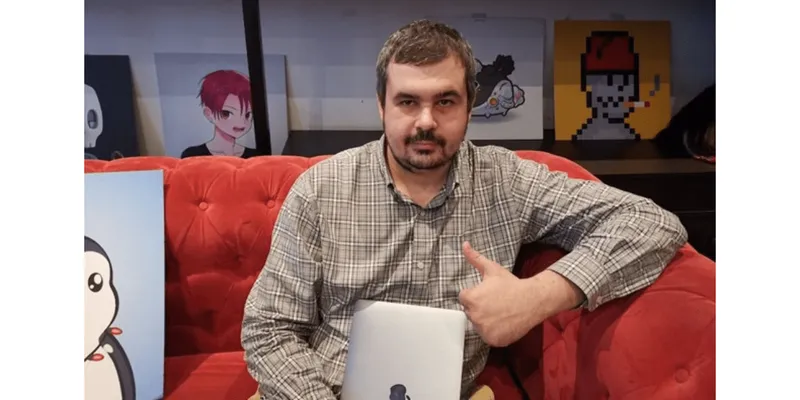
In 1999, Mikhail Prokudin landed in Vietnam not as a founder — but as a teenager, following his family’s move to Vietnam, where they worked in the oil and gas industry. He didn’t arrive chasing factories or business ideas. He arrived with curiosity. While studying at university and teaching himself engineering and 3D modeling late into the night, something began to click. Vietnam wasn’t just a place to grow up — it was becoming a hub for talent, trade, and transformation. Long before “B2B sourcing Vietnam” or “Vietnam supply chain solutions” became a Google search trend, Mikhail was already learning the system — not just how factories operated, but how the entire supply value chain in Vietnam moved: from raw materials to finished goods, from exporters to compliance workflows. He was learning the language of factories before he ever stepped onto a sourcing floor.
“I was still at university when I started working with sourcing companies in Vietnam,” he says. “Rice, seafood, Vietnamese coffee suppliers — I was trying to understand how sourcing worked in Vietnam.” But the real challenge wasn’t finding suppliers. It was communication. “I didn’t know how to speak the business language of local factories — and I made a lot of mistakes.” Those early setbacks would later fuel the creation of Vietnamia — a Vietnam sourcing website built to help global buyers navigate the supply chain in Vietnam without the trial and error of going it alone. It was the start of something more than just product-matching — it was the beginning of a smarter way to handle Vietnam manufacturing sourcing.
Fast forward a decade and he’s co-founder of Vietnamia — the B2B sourcing platform that’s quietly reprogramming how sourcing actually works in this country. But back then? It was just survival. “No one gave you the real prices. Almost no one gave you the real specs. It was all handshake deals and lost-in-translation emails. I had to earn the right to get the truth.” It was the reality behind Vietnam suppliers for export — plenty of opportunity, but no roadmap. Vietnamia was not designed merely as a supplier directory. It is Vietnam's B2B marketplace focused on reducing sourcing risks.
Back then, the problem was basic: factories were built for volume, not transparency. He recalls watching shipments grow — but quality, consistency, and accountability? Not so much. “There were deals made in rooms where no one spoke English, and compliance was just a PDF someone found on Google.” For anyone sourcing factories in Vietnam at that time, there was no easy playbook — just friction and frustration.
Still, he stuck it out. First rice. Then seafood. Then textiles.
“I spent months embedded in textile sourcing warehouses, studying the distinction between genuine cotton-poly blends and the kind of marketing terminology used to obscure material inconsistencies — a lesson in Vietnam’s manufacturing supply chain realities.” But in 2022, something shifted. Mikhail got accepted into Expara Ventures’ accelerator — with a hardware startup no one saw coming. “I wanted to build a real device. Not a prototype. Not a render. Something that could ship.” That meant a crash course in Vietnam’s other factory universe — the one with CNC machines, injection molding lines, and complex DFM (Design for Manufacturing) workflows.
Vietnam went through multiple transitions. Now Vietnam is a great environment to launch an IT startup due to a number of factors. A huge role in this is played by the rapidly growing number of business incubators as well as startup accelerators of foreign and local origins. Among those incubators and accelerators, you can find one that is suitable for your industry and the stage of your startup, because they have different requirements, conditions, and are focused on different market niches.
Launching a startup in Vietnam? Here’s what it takes to join Expara Accelerator.
“Launching a startup in Vietnam? I had no idea what I was doing at first,” Mikhail says. “But the landscape here has changed. It’s no longer just about cheap labor. Vietnam is becoming a serious hub for manufacturing and supply chain solutions.” He applied to the Expara Venture Accelerator with a hardware concept he wanted to bring to life. “I didn’t have experience with incubators or accelerators. I just knew I wanted to build something real — not a render, not a prototype, but a device that could ship. Expara gave me the tools to move fast and build properly.”
“Each year, Expara gets flooded with applicants across different industries — from early-stage startups to established businesses,” he explains. “To get in, you need a registered company, patents for your IP, and a team with a clear execution plan.” He cites Vulcan Augmentics and Exobook as examples of successful hardware startups in the program. “The process starts with a five-minute pitch, then comes the evaluations, mentor sessions, product pivots — months of refining everything. Eventually, they connect you with investors. For anyone thinking of building a startup in Vietnam, especially around manufacturing or supply chain innovation, this ecosystem is finally here and it’s expanding quick.”
Now back to the story of Vietnamia and business here.
Through that project, Mikhail learned the backbone of Vietnam’s electronics manufacturing: how to design for molds, how to negotiate tooling costs, how to communicate in sketches, not paragraphs. And then came June 2023. That’s when the Vietnamia domain was registered. “Every hard lesson we’d learned — from rice containers in 2014 to CNC machines in 2022 — we poured into one product: Vietnamia.” Atomium Studio built it not as a B2B marketplace, but as a sourcing shield — a tool to help other businesses avoid the trial-by-fire that had shaped him. “Our initial mission was to simplify Vietnam B2B sourcing through a reliable platform.”
Changing the playbook for B2B sourcing within Vietnam’s manufacturing ecosystem.
Vietnamia was born out of chaos. But forged in clarity. It’s not just a supplier directory website. It’s a decade compressed into a system. Today, Mikhail still walks factory floors — but now he’s the one asking the hard questions. And getting answers. Thanks to this foundation, its customers rely on Vietnamia to avoid Vietnam’s sourcing risks and unnecessary middleman layers.