Financial Analysis Report Shubham Polyspin Limited

1. Introduction
Brief Introduction of the Company
Founded in India, Shubham Polyspin Limited focuses on making polyester yarn alongside synthetic textiles. Mainly active in yarn production, it delivers materials to mills and clothing makers across the sector. Its output supports a range of uses - from fabrics and apparel to heavy-duty industrial needs. While rooted in one core area, its reach extends into multiple downstream industries.
Despite common assumptions, consistency in output defines how this business supports textile makers. Instead of chasing trends, it emphasizes steady performance through reliable factory setups. Because precision matters, every stage of making fiber stays under close review. From start to finish, operations run with minimal waste. While others cut corners, equipment here follows strict routines. Through these methods, material supplied remains fit for fabric work. Rather than relying on outside sources, internal systems handle most tasks. In effect, the whole process strengthens dependability across deliveries. What results is a quiet but constant presence in industrial workflows.
Industry Overview
With jobs, exports, and output shaped by its scale, India's textile sector stands among the nation's biggest. Fibre creation begins the chain, followed by spinning into yarn, then fabric formed through weaving, ending in clothes made during garment production.
Not every link in the textile chain holds equal weight - yarn makers sit near the start, feeding what comes after. Supplying fibers for cloth relies heavily on how much polyester gets ordered, tied closely to output volumes abroad. When oil prices shift, so does the cost of producing synthetic threads. Competition grows sharper as more players enter the market from different regions. What happens overseas matters too - a drop in foreign appetite for garments drags local spinning units down. Even steady operations can stumble when input expenses swing without warning.
Purpose of the Analysis
Looking at how Shubham Polyspin Limited has performed financially forms the core of this document. Its operations and balance sheets come under review instead of relying solely on profit numbers. Financial health gets measured through ratio trends alongside real business activity. Evaluation digs into past results while considering what lies ahead for expansion. Stability over time matters just as much as current standing.
2. Company Overview
Background and History
Founded initially to produce polyester yarn for textiles, Shubham Polyspin Limited gradually expanded its industrial capabilities. Production units evolved, enabling output of synthetic yarn favored by fabric makers across the sector.
Despite shifts across the sector, steady upgrades in manufacturing methods keep operations running smoothly. Thanks to refined workflows, output remains consistent over time. Yarn moves from this firm into spinning mills, where fabric creation begins. From there, clothing manufacturers take over, turning threads into wearable items.
Business Model
Starting with raw inputs like polyester fibre, Shubham Polyspin Limited turns these into usable yarn by way of spinning techniques. Instead of selling directly to consumers, the firm channels its output toward textile makers who need consistent supplies. Though rooted in production, the core activity revolves around transforming bulk material into a refined thread form. Because sourcing forms an early step, procurement plays a steady role behind each batch made.
Revenue is mainly generated through:
•Sale of polyester yarn
•Supply of synthetic yarn to textile manufacturers
•Industrial yarn sales
Revenue shifts follow how much textile mills buy, while also reacting to swings in what raw materials cost. Though orders set volume, pricing adjusts when inputs change. What comes in relies not just on production needs but also market fluctuations beyond control.
Key Products and Services
Among the items produced by the firm are
•Polyester yarn
•Synthetic yarn used in textile production
•Industrial yarn products
•Fabricated materials find purpose across cloth creation, clothing assembly, alongside various textile uses.
Market Position
Despite its modest size among major players, Shubham Polyspin Limited holds steady ground domestically through consistent supply of polyester yarn to textile mills. The firm focuses on yarn production within the broader textile sector. While larger rivals dominate scale, this company sustains relevance via reliable delivery and targeted output. Its niche lies in serving local mill demands without expanding into unrelated areas. Stability comes not from growth speed but from focused execution over time.
3. Promoter Or Founder Intro
Name of Promoters or Founders
Fresh out of years spent shaping textile operations, the founders launched this venture. Their hands-on background in making fabrics and spinning yarn became its foundation. With every step rooted in real workshop insight, their approach takes form. Not theoretical knowledge but daily practice guides how things move forward.
Professional Background
With backgrounds in fabric creation and factory management, the founders bring hands-on insight into daily operations. Because of their track record, setup of production units progressed smoothly. Quality output remains steady over time, thanks to practical decision-making behind the scenes.
How Roles Shape Company Growth and Strategy
The driving force behind the company helped shape its manufacturing setup while streamlining daily operations. With an eye on consistency, they prioritized high standards in output alongside steady ties to fabric producers.
4. Financial Statement Analysis
Income Statement Analysis
Revenue Trends
Facing shifts in income, Shubham Polyspin Limited adjusts as textile makers' orders rise or fall along with swings in material costs. Despite these pressures, steady output of yarn helps sustain daily functioning.
Revenue Trend Chart
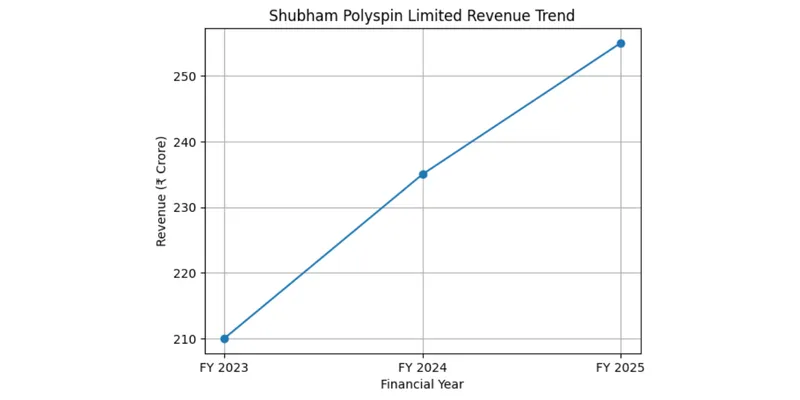
Revenue Trend Shubham Polyspin Limited
Profitability
Fueled by shifts in global markets, earnings in yarn production hinge on how expenses for materials align with streamlined operations. When polyester rates climb or drop, financial outcomes shift - driven also by how strongly buyers want fabric. Profit levels bend under these pressures, shaped less by strategy than by outside forces pulling at margins.
Profit trend chart
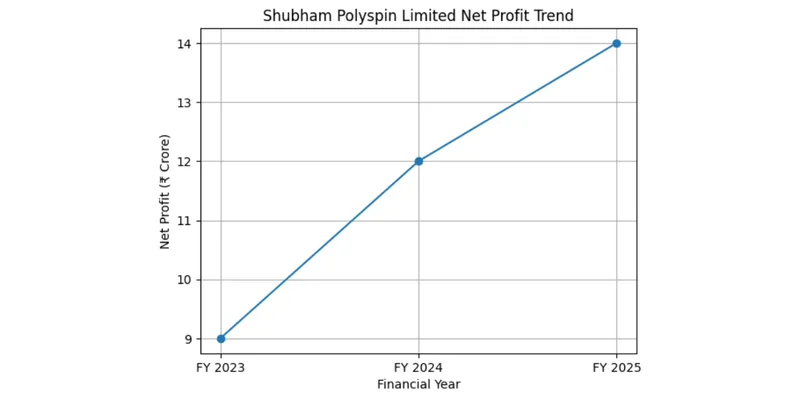
Net Profit Trend Shubham Polyspin Limited
Balance Sheet Analysis
The backbone of Shuboom Polyspin Limited's operations lies in its physical setup - factories and equipment dedicated to making yarn. Because these are long-term investments, they show up prominently on the balance sheet.
Average borrowing supports daily operational needs within production activities. Funding for core processes comes partly through controlled liability levels.
Balance Sheet Overview
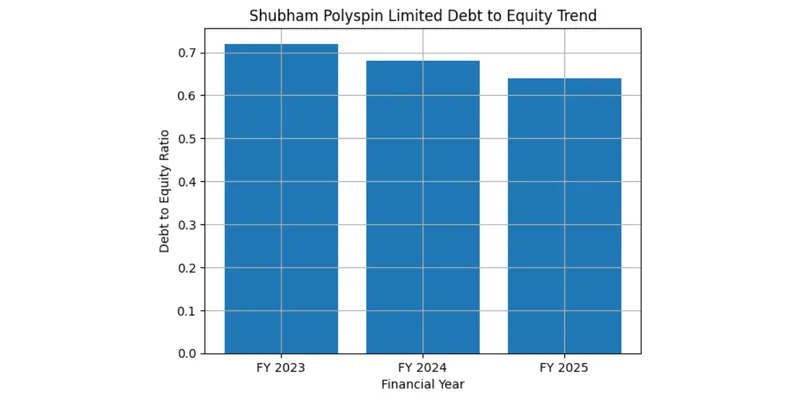
Shubham Polyspin Limited Debt Overview
Key Financial Ratios
A look at Shubham Polyspin Limited reveals steady but modest gains in earnings compared to peers in yarn production. Profit after tax lands near 5–6%, holding firm amid industry pressures. Rather than heavy borrowing, the firm leans on equity, shown by a debt-to-equity figure sitting between 0.6 and 0.7. Cash flow readiness appears sufficient - current assets cover liabilities comfortably within the 1.6 to 1.8 range. Shareholder investments yield returns in the neighborhood of 10–12%. Efficiency in fund use surfaces here, without stretching risk too far. Balance defines much of this picture.
5. Key Insights And Interpretation
One thing about Shubham Polyspin Limited is its solid grip on manufacturing processes. Its long run in yarn making gives it a quiet edge others lack. Trusted links with fabric makers form another pillar of strength. Yet price swings in basic materials can shake up operations now and then. On top of that, standing out gets harder when so many players fight for space in textiles.
Even with such hurdles, rising need for fabric goods could allow the firm room to grow and boost earnings. Though obstacles remain, increasing market interest might open paths for expansion and stronger financial returns. Because consumer demand is climbing, new avenues for scaling up and gaining higher profits appear possible. With more people buying textiles, chances emerge for broader activities and better income performance. While difficulties exist, shifting market trends may support business growth and improved results.
6. Conclusion
Despite shifts in cotton pricing, Shubham Polyspin Limited holds steady within the textile sector’s spinning division. Its edge comes not just from factories but also years spent navigating market cycles. Progress ahead ties closely to smarter workflows rather than expansion alone. Profit trends might waver; yet strong roots help absorb shocks. Gains will emerge where expenses are trimmed without sacrificing output quality.
References / Sources
•Official website of Shubham Polyspin Limited
•Annual Reports of Shubham Polyspin Limited
•Moneycontrol – financial statements and ratios
•Screener – company financial data
•Corporate filings on Bombay Stock Exchange
•Reports on the textile sector come from the India Brand Equity Foundation