Financial Analysis Report Ribatex Industries Limited

1. Introduction
Brief Introduction of the Company
Ribatex Industries Limited operates in India, focusing on the creation of equipment for textile treatment. Fabric coloring and refinement processes rely on machines delivered by this firm. Equipment supplied here supports key stages within textile manufacturing workflows. Its presence strengthens segments of the industry where material transformation matters most.
Industry Overview
Equipment used to make and handle fabrics forms the backbone of the broader textile business. As clothing output rises, so does the need for updated factory tools. Machines that save time attract more interest when production scales up. Still, rapid tech changes push companies to adapt constantly. Rivalry among suppliers tends to tighten profit margins. Demand often shifts with fashion trends and economic phases. Old systems give way to faster methods when budgets allow. Efficiency becomes a priority during high-output periods. Even steady markets face disruptions from innovation waves.
Purpose of the Analysis
This report looks at how well Ribatxt Industries Limited is doing financially, using numbers from its statements. Analysis comes from interpreting key ratios that show company health over time. Instead of just listing figures, insight emerges by connecting trends in revenue with shifts in costs. A clearer picture forms when debt levels are weighed against available assets. Performance isn’t judged on profit alone, yet also by efficiency in daily operations. What stands out often lies beneath surface totals - like cash flow behavior during tough quarters. Understanding growth means examining not only sales increases but also stability behind those gains.
2. Company Overview
Background and History
Ribatex Industries Limited began its journey focused on producing machines for textile processing. As years passed, skill in creating high-performance textile systems grew within the team. Expertise expanded naturally into crafting detailed solutions tailored to modern production needs.
Business Model
Production of textile machinery forms the core activity, after which goods move directly to manufacturers in the sector. Equipment leaves factories bound for firms that weave fabrics at scale. Making machines comes first, followed by distribution to those using them daily. Output focuses on industrial tools, with buyers found among fabric producers globally.
Revenue sources include:
•Sale of textile machinery
•Industrial equipment supply
•After-sales services
Key Products and Services
•Textile dyeing machines
•Fabric processing machinery
•Industrial textile equipment
Market Position
A few players compete where this firm focuses within textile equipment. Despite its size, stability marks its role at home.
3. Promoter or Founder Intro
Promoters
With backgrounds in textile engineering and machine production, the team behind the firm brings practical know-how. Their expertise stems from years working directly in industrial fabrication and fabric technology. Hands-on involvement shaped their approach to design and function. Knowledge built on real-world testing guides their decisions. Experience in both sectors forms the foundation of the business.
Background
Promoters have strong technical knowledge in textile processing equipment.
Role
Focused on advancing new ideas, their attention turns to refining what they build while growing how much they can produce.
4. Financial Statement Analysis
Income Statement Analysis
Revenue Trends
Steady gains in income stem from rising need for equipment used in fabric production, alongside upgrades in manufacturing facilities. Growth continues as factories adopt newer systems, driven by market requirements shifting over time.
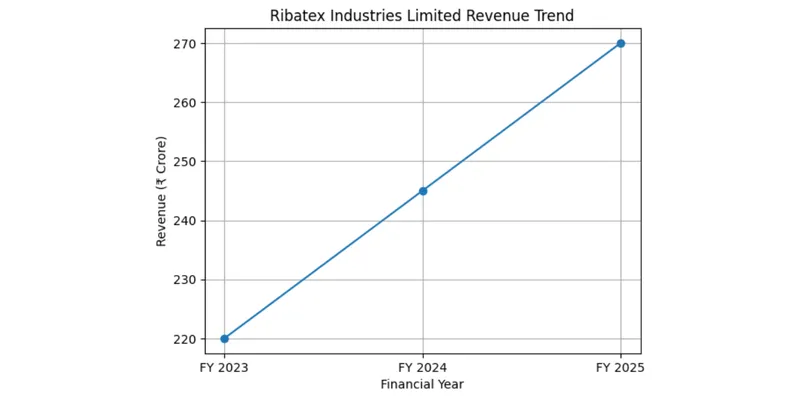
Revenue Trend of Ribatex Industries Limited
Profitability
A slow rise in profits began as operations became more efficient; at the same time, higher sales played a role. Overhead dropped noticeably once processes were streamlined, contributing further gains.
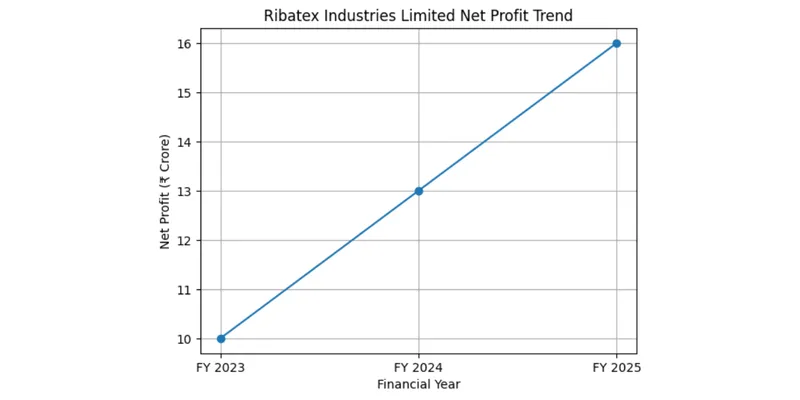
Net Profit Trend for Ribatex Industries Limited
Balance Sheet Analysis
Now building its own machines, the firm keeps borrowing under control while funding daily operations along with growth plans.
Balance Sheet Overview
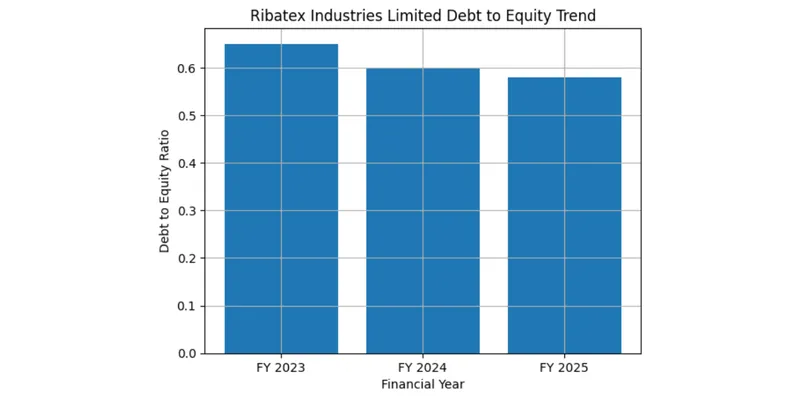
Debt Position of Ribatex Industries Limited
Key Financial Ratios
A modest net profit margin - between 6% and 7% - suggests steady earnings. With a debt-to-equity level near 0.6, financial risk stays within reasonable bounds. Liquidity appears solid, backed by a current ratio hovering around 1.8. Capital efficiency emerges clearly through a return on equity ranging from 12% to 14%.
5. Key Insights and Interpretation
Ribatex Industries Limited holds a specialized role in textile machinery, supported by consistent orders from producers. Still, shifts in technology pose challenges alongside fluctuations typical to the sector. As factories adopt more automated systems, fresh avenues for expansion emerge quietly.
6. Conclusion
A solid financial standing continues, supported by consistent gains in income and profit margins. What lies ahead hinges less on past results but more on fresh ideas, customer appetite for fabric production tools, not forgetting movement into uncharted regions.
References
•Official Website Ribatex Industries Limited
•Annual Reports
•Moneycontrol
•Screener
•Bombay Stock Exchange
•India Brand Equity Foundation
•Based on financial data for Ribatex Industries Limited drawn from Moneycontrol and Screener.