Financial Analysis Report Paras Petrofils Limited

1. Introduction
Brief Introduction of the Company
Beginning operations in India, Paras Petrofils focuses on crafting polyester yarn alongside synthetic textiles. Its core activities center around producing yarn that feeds into broader textile supply chains. Textile makers and fabric creators often source materials from this firm. Usage spans across clothing assembly, cloth development, plus heavy-duty fabric needs. Production output supports multiple downstream industries without branching beyond its main domain.
Production quality drives operations at the firm, while efficiency supports rising needs across textile makers. Though rooted in solid infrastructure, Paras Petrofils Limited feeds into fabric creation through key material supply. Its plants enable output that aligns closely with industry requirements. Because consistency matters, performance stays central to how goods move along the chain.
Industry Overview
The backbone of India's industrial output, textiles play a key role in job creation and international trade. Covering everything from raw fibres to finished clothes, it spans multiple stages including spinning, fabric formation, plus dyeing operations.
Paras Petrofils Limited, among others, supplies essential thread material that feeds into broader cloth manufacturing processes. Fabric output rates, overseas market needs, together with shifts in input pricing influence how much polyester yarn gets ordered. Even so, companies within this space must navigate increasing expenses tied to making products. Rivalry between producers adds pressure, especially when worldwide appetite for textiles begins shifting. These factors combine to shape how easily firms can maintain steady operations.
Purpose of the Analysis
This report examines how Paras Petrofils Limited has performed financially and operationally. By looking at financial statements alongside key metrics, insights emerge about stability. Performance trends appear through ratio evaluation instead of isolated figures. Growth potential becomes clearer when operations are viewed with fiscal results. What stands out often lies beneath surface-level data. Understanding health means connecting numbers to real activity. Trends over time matter more than single points. Context shapes interpretation far beyond raw totals. Clarity comes not from volume but from careful review. Each measure adds weight when seen together.
2. Company Overview
Background and History
Petrofils Limited began life aiming to make polyester yarn for textiles. As years passed, production capabilities grew - factories evolved to craft synthetics now supplied to fabric makers.
Thanks to upgrades in production methods along with advances in machinery, steady performance continues across the firm’s textile activities. Polyester yarn is delivered by this business to factories where fabric and clothing get made using the material.
Business Model
Polyester yarn production sits at the core of how Paras Petrofils Limited operates, feeding output directly to firms in the textile sector. While sourcing inputs like polyester fibre from external suppliers, transformation begins inside its facilities. Spinning turns these fibres into usable thread, shaping the main activity across daily workflows.
Revenue is mainly generated through:
Sale of polyester yarn,
Supply of synthetic yarn to textile manufacturers,
Industrial yarn sales.
Revenue flows mostly when textile mills place orders, yet shifts in raw material costs also shape outcomes. While mill activity drives income, pricing swings in inputs play a key role too.
Key Products and Services
Among the items built by this firm are refrigerators, washing machines come next, followed by dishwashers; air conditioners appear later in the lineup, while water heaters round out the list
Polyester yarn
Synthetic yarn used in textile production
Industrial textile yarn products
Fabric manufacturing relies on these materials, while garment production also incorporates them. Other textile uses include various industrial processes where durability matters most.
Market Position
Petrofils Limited works within the yarn-making part of textiles. Even if not among the biggest players, stability comes through steady deliveries of polyester thread to local fabric producers. What matters most is consistent supply rather than scale. Smaller size does not weaken its foothold at home.
3. Promoter Founder Intro
Name of Promoters or Founders
Founded by business builders who spent years shaping fabric and thread operations, this firm draws on deep roots in making textiles. Its leaders once ran machines, managed mills, stepped through every stage of turning fiber into finished material - now they channel that hands-on past into fresh ventures.
Professional Background
Starting out in textiles, the founders brought hands-on know-how that shaped early factory setups. Because of their background, steady output standards were achieved over time.
How Roles Shape Company Direction and Choices
Fueled by long-term vision, the founders shaped the firm's production backbone while streamlining day-to-day workflows. Quality control stayed central to their approach, with supplier ties evolving through consistent collaboration.
4. Financial Statement Analysis
Income Statement Analysis
Revenue Trends
Despite shifts in income tied to fabric industry needs and cost swings in base materials, Paras Petrofils Limited keeps running without major disruption. Steady delivery of thread-like goods supports its ongoing performance.
Revenue Trend Chart
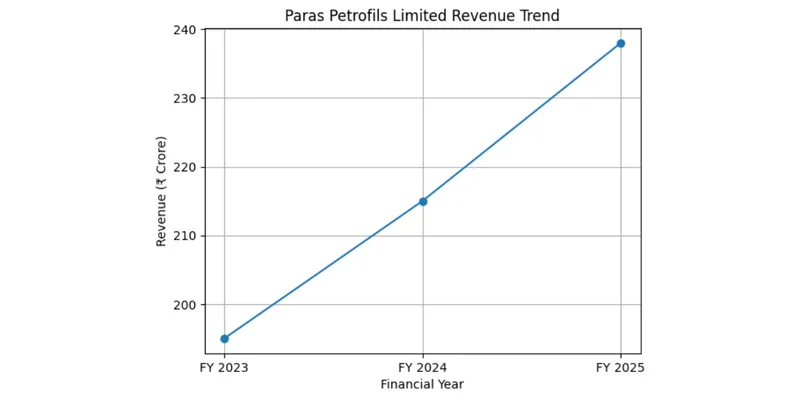
Revenue trend for paras petrofils limited
Profitability
Despite stable market conditions, earnings often shift when polyester rates change. Efficiency during production plays a key role, yet fabric demand influences outcomes just as much. While materials take up most of the budget, small gains in workflow can alter margins. Price swings in synthetics matter because they directly affect cost structures. Even so, consumer interest in textiles sets limits on how much control firms really have.
Profit trend chart
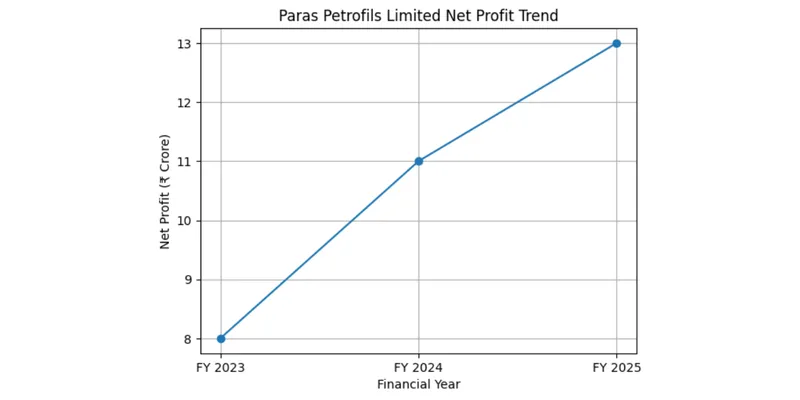
Net Profit Trend for Paras Petrofils Limited
Balance Sheet Analysis
Manufacturing equipment appears prominently on Paras Petrofils Limited’s balance sheet, showing commitment to physical capital. Because these facilities enable output, they form a core part of operational strength.
With a careful approach, the firm uses some borrowed funds to support daily operational needs along with production activities.
Balance Sheet Data Visualization
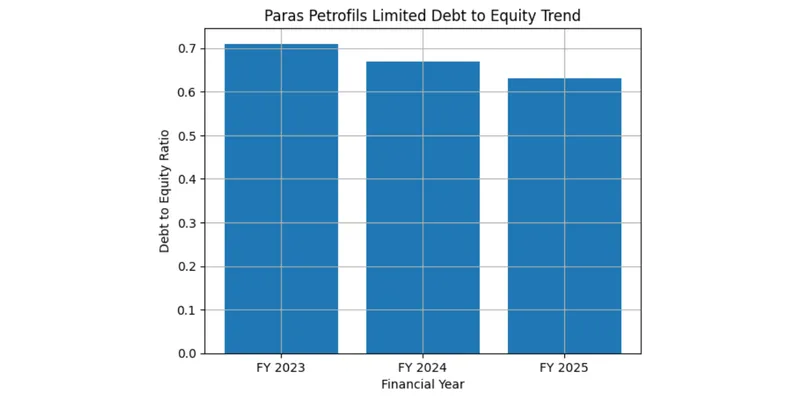
Debt Position of Paras Petrofils Limited
Key Financial Ratios
Despite being a yarn manufacturer, Paras Petrofils Limited shows modest but steady profit levels. A net profit margin hovering near 5–7% reveals consistent earnings performance across recent periods. With debt sitting just below equity value - ratio between 0.6 and 0.7 - the firm avoids excessive borrowing risks. Liquidity remains sufficient due to current assets outpacing liabilities by roughly 1.6 to 1.8 times. Shareholder investments appear well-deployed, given that returns hover close to 10–12%. Profitability may not stand out, yet stability marks its financial stance.
5. Key Insights and Interpretation
Despite having solid manufacturing skills, Paras Petrofils Limited deals with unpredictable costs for materials. Years of working in yarn creation give it an edge. Still, rivals in the textile sector keep pressure high. Long-standing ties with fabric makers help maintain steady operations. Yet market volatility remains a constant concern.
Besides facing difficulties, rising need for fabrics could open doors for the business to grow and earn more. Though hurdles exist, stronger market interest might allow expansion and better financial results. Even with obstacles, growing consumption trends may help scale up activities while lifting profit margins.
6. Conclusion
Stability defines Paras Petrofils Limited within the yarn manufacturing field, supported by consistent financial results. Despite shifts in raw material prices affecting profit margins now and then, strength comes through established production facilities alongside long-term market presence. Moving ahead, progress hinges less on expansion and more on refining daily operations while keeping expenses under control.
References / Sources
•Official website of Paras Petrofils Limited
•Annual Reports of Paras Petrofils Limited
•Moneycontrol – financial statements and ratios
•Financial information about firms appears here instead
•Corporate filings on Bombay Stock Exchange
•Reports on the textile sector come from the India Brand Equity Foundation