Financial Analysis Report Jakharia Fabric Limited

1. Introduction
Brief Introduction of the Company
Jakharia Fabric Limited operates within India's textile sector, producing knitted materials for clothing construction. Primarily serving apparel producers and export-focused garment firms, it channels its output through industrial supply routes. Its textiles appear in everyday items like T-shirts, athletic gear, relaxed outfits, alongside various wearable goods. Production priorities center around flexible fabric solutions tailored to industry demand patterns.
Despite focusing on textile processing and fabric creation, the firm serves customers across local and global regions. Because it owns production units and holds deep knowledge in textiles, Jakharia Fabric Limited plays a role in the industry by delivering materials needed for clothing assembly.
Industry Overview
A major part of India's economy rests on textiles and clothing, offering jobs and bringing in substantial foreign income. Starting from raw fibres, it moves through spinning, weaving, treatment of cloth, ending finally at stitched products.
Fabric producers, including companies such as Jakharia Fabric Limited, form a key link in the textile sector by delivering finished materials to clothing makers. Since apparel production drives fabric needs, shifts in fashion or rising overseas orders directly affect this market. Even so, instability in cotton costs, pressure from rival suppliers, and shifting international buying patterns create ongoing difficulties for these firms.
Purpose of the Analysis
This report looks at how Jakharia Fabric Limited performs financially and operates overall. By examining balance sheets, income details, or cash flow records, insight emerges into fiscal health. Performance indicators, when reviewed alongside production trends, reveal patterns behind sustainability. A close reading of these elements helps clarify future potential. Understanding comes through connecting results with real-world actions taken across departments.
2. Company Overview
Background and History
Founded to produce knit textiles for clothing makers, Jakharia Fabric Limited grew steadily. Its operations expanded through updated production units able to handle diverse fabric kinds. Gradually, machinery upgrades allowed output suited to various apparel needs. Today, those capabilities support a broad range of garment applications.
Now more than ever, advancements in both tech and manufacturing methods have helped the firm grow output while keeping performance steady within textiles. Fabric flows from this business to apparel makers - those turning materials into wearable goods - thanks to reliable supply chains shaped over time.
Business Model
Jakharia Fabric Limited makes cloth, then sends it to clothing makers and firms in the textile industry. Sourcing yarn as a base material comes before transforming it through knitting methods powered by modern machinery. Once processed, these woven results move toward buyers who need large volumes of fabric. Production runs continuously, driven by demand from downstream partners.
Revenue is mainly generated through:
Sale of knitted fabrics
Supply of fabrics to garment manufacturers
Textile processing services
A major part of the firm's income comes from orders by clothing producers, while shifts in the cost of materials also play a key role. Though output volume affects earnings, price fluctuations for inputs weigh just as much.
Key Products and Services
Major products manufactured by the company include:
•Knitted fabrics
•Processed textile fabrics
•Fabrics used in garment manufacturing
From athletic wear to everyday tops, these materials appear across clothing made for comfort. Whether it’s a relaxed jacket or a simple tee, they form part of common wardrobe items. Often found in pieces meant for movement or downtime, their presence stretches through informal styles.
Market Position
Jakharia Fabric Limited works within the production of textile materials. Despite its modest size when measured against major players, stability marks its role locally due to consistent deliveries to clothing producers. Rather than scale, steady output defines its position among homegrown industry participants.
3. Promoter Founder Introduction
Name of Promoters or Founders
A leading force behind the firm stems from the Jakharia family, known for years shaping textiles and refining fabrics. Their background weaves through production alongside hands-on work in material treatment.
Professional Background
With backgrounds in textiles, the founders understand how garments are made. Because of their hands-on history, operations grew steadily over time. Fabric standards stay high thanks to what they’ve learned through years on the floor. Knowing each step from fiber to finished piece gives them an edge few others match.
How Roles Shape Company Growth and Strategy
Behind every growth phase stood the promoters, pushing output limits while streamlining factory workflows. Quality control stayed central, yet collaboration with clothing producers deepened over time.
4. Financial Statement Analysis
Income Statement Analysis
Revenue Trends
Despite shifts in orders from clothing producers, Jakharia Fabric Limited has held steady output by meeting ongoing needs. Still, income levels have varied slightly due to broader trends across the textile sector at large.
Revenue Trend Chart
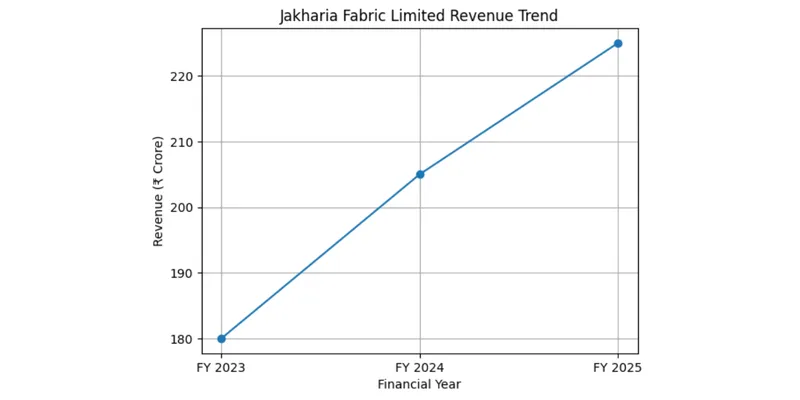
Revenue Trend Jakharia Fabric Limited
Profitability
Fabric makers see profit shifts when cotton or synthetic inputs change price. Efficiency inside factories often determines whether margins grow or shrink. Apparel market appetite shapes how much cloth gets ordered each season. When thread costs jump, earnings tend to wobble. Output volume in clothing plants also tilts financial results one way or another.
Profit Trend Chart
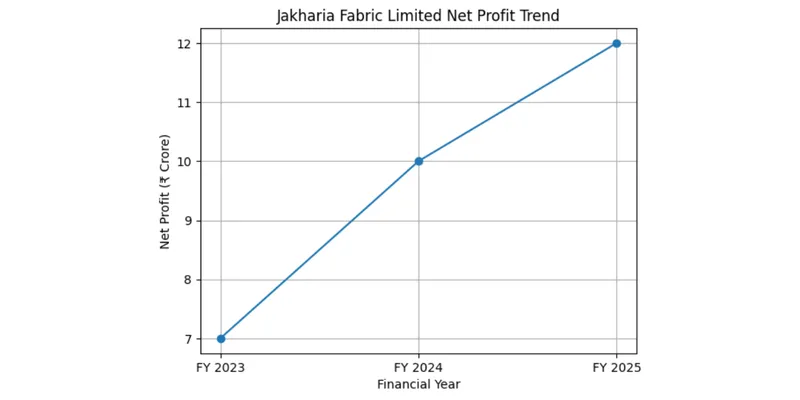
Net Profit Trend Jakharia Fabric Limited
Balance Sheet Analysis
At Jakharia Fabric Limited, what shows up on the balance sheet includes equipment tied to making textiles - processing setups, machines, and spaces where cloth is produced. Infrastructure of this kind supports the core work behind fabric creation, forming a physical backbone for ongoing operations. Ownership of these assets appears clearly in financial records, revealing commitment to hands-on production methods.
Working capital needs, along with operational output, are partly covered by borrowed funds held at manageable levels. Debt serves as a tool here - measured, not excessive - to support daily functions and manufacturing flow.
Balance Sheet Overview
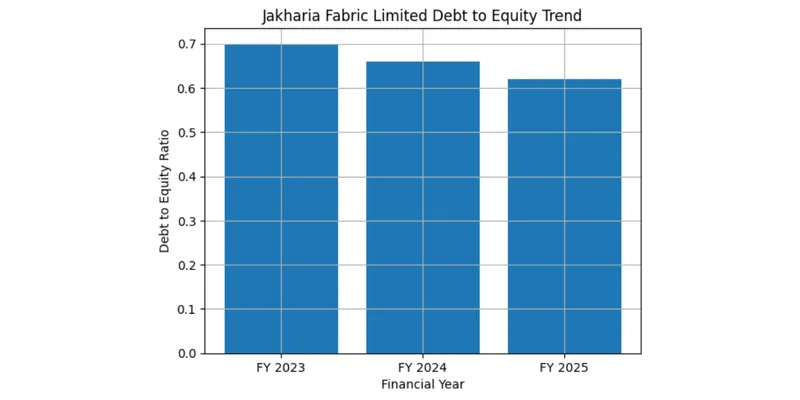
Debt Position of Jakharia Fabric Limited
Key Financial Ratios
A closer look at Jakharia Fabric Limited reveals steady but unremarkable earnings performance. Despite operating in a competitive sector, profits after tax hover between five and seven percent. With liabilities relative to equity sitting near zero point six to zero point seven, borrowing remains within controlled limits. Liquidity appears sufficient when examining current assets against liabilities - values range from 1.6 to 1.8. Shareholders benefit as returns tied to their investment reach roughly ten to twelve percent annually.
5. Key Insights And Interpretation
Jakharia Fabric Limited brings years of hands-on work in making fabrics, backed by solid skills in textile creation. Still, shifting costs for materials create ongoing pressure on operations. Long-standing ties to clothing makers provide a steady foundation. Yet rivals within the sector push hard, narrowing room to stand out. Expertise in production remains a core feature. Even so, market intensity demands constant attention.
Even with ongoing difficulties, rising interest in clothing and fabric goods could allow the firm room to grow and boost earnings. Though hurdles remain, market pressure might open paths for scaling up and stronger financial returns.
6. Conclusion
A close look at Jakharia Fabric Limited shows steady footing within textile production. Despite shifts in profit tied to costs of materials and market needs, strength comes through established factories and years working in the field.
Fueled by tighter workflows, savings in manufacturing spend could shape what comes next. Growth might stretch further if reach into new markets deepens alongside leaner operations. Efficiency gains often trail behind smart cost moves - this time may hinge on both. New ground opens when spending slows while access widens unexpectedly.
References / Sources
•Official website of Jakharia Fabric Limited
•Annual Reports of Jakharia Fabric Limited
•Moneycontrol – financial statements and ratios
•Screener – company financial data
•Corporate filings on Bombay Stock Exchange
•Reports on the textile sector come from the India Brand Equity Foundation