Financial Analysis Report Indian Acrylics Limited
1. Introduction
Brief Introduction of the Company
Founded in 1986, Indian Acrylics Limited operates within India's textile sector, focusing on synthetic fibres. Its main product, acrylic fibre, finds use across clothing, rugs, bedding, and various fabric goods. Based in Lalru, Punjab, the firm runs a dedicated plant at this location. Over time, it has maintained consistent involvement in fibre production.
Lightweight, long-lasting, yet affordable - these traits make acrylic fibre an alternative to wool. Quality output defines the firm’s core product, sent regularly to cloth makers nationwide. Relationships have grown steadily between Indian Acrylics Limited and mills relying on this synthetic thread. Supply chains now stretch through multiple regions where fabric blends take shape using the delivered fibres.
One key player helps move materials through the textile sector, supplying man-made thread used in clothing and household fabric making. Though often unseen, its contribution shapes how products are built across factories. Without such inputs, many workshops would face delays or redesigns. Its work links raw resources to finished goods in subtle but vital ways.
Industry Overview
The textile business ranks among India's biggest, playing a key role in jobs, shipments abroad, and factory output. In recent years, man-made fibres have gained ground - these materials last longer, often cost less than cotton or wool, which helps explain their rising share.
Despite its popularity in clothing and home textiles like sweaters, shawls, and carpets, acrylic fibre depends heavily on unstable petrochemical markets. Rising need for low-cost fabrics drives growth in synthetic fibre production. Still, firms must navigate shifting global demand patterns alongside pressure from overseas producers. Price swings in raw materials add further complexity to operations.
Purpose of the Analysis
This report aims to assess how Indian Acrylics Limited performs financially and operates functionally. By examining financial statements alongside key ratios, insight emerges into fiscal stability. Business activities are reviewed not only for current standing but also potential direction ahead. Understanding health here involves more than numbers - it includes how tasks unfold daily across units. What lies beneath figures often reveals trends that raw data alone cannot show. Evaluation unfolds through lenses both quantitative and procedural. Growth possibilities come into view when results meet operational behavior. Clarity forms gradually as patterns emerge from combined analysis. A full picture takes shape once finances merge with real-world execution details. Each metric contributes part of a broader narrative about where things stand now - and might go next.
2. Company Overview
Background and History
Back in 1986, Indian Acrylics Limited began operations aiming to produce acrylic fibre for textiles. At Lalru in Punjab, a plant went online - now counted among India’s key facilities for this material. Though small at first, it steadily grew into a core supplier across the sector. Over time, that single site gained recognition for consistent output and reach.
Gradually, production levels grew as new methods in manufacturing were adopted, helping keep up with rising needs for man-made fibres. While focusing on acrylic, output flowed mostly to textile factories turning material into clothing and household textiles.
Business Model
Beginning operations far upstream, Indian Acrylics Limited draws in petrochemical feedstocks before transforming them via dedicated chemical pathways. From there, the processed output becomes acrylic fibre, shaped for downstream use. Instead of selling directly to consumers, it channels this material toward fabric producers who weave or knit textiles. Rather than diversify into finished garments, the firm stays focused on its core conversion role - turning bulk chemicals into spinnable fibres. Each stage links tightly: sourcing sets the foundation, processing adds value, then delivery completes the cycle.
Revenue is generated mainly through:
•Sale of acrylic fibre to textile manufacturers
•Supply of synthetic fibre to garment and fabric producers
•Industrial fibre sales within domestic markets
Fuelled by orders from fabric makers, earnings shift with oil-based ingredient costs. Yet market appetite shapes output value just as much as supply chain chemistry does. What drives profit lives inside material markets - volatile when crude derivatives fluctuate. Revenue flows follow industrial need, tied closely to chemical pricing tides.
Key Products and Services
Among the items built by this business are
•Acrylic fibre
•Synthetic fibre used in textile manufacturing
•Acrylic yarn for garments and textile products
Fabrics made from these materials appear in items like sweaters, blankets, and rugs. From there, they extend into upholstery textiles, finding a place in everyday household goods. Home furnishings often rely on their durability and texture. Each application uses specific qualities suited to comfort or long-term wear.
Market Position
Despite its modest size next to international players, Indian Acrylics Limited holds steady within India’s textile sector. The firm focuses on synthetic fibres, carving out consistent demand among local mills. Years of hands-on work in production give it reliable know-how. Well-rooted infrastructure supports ongoing operations across the country. Stability comes not from scale but from deep familiarity with regional needs.
3. Promoter or Founder Overview
Name of Promoters or Founders
The firm finds its roots in the Oswal Group, known for deep involvement in textiles and production over many years.
Professional Background
With deep expertise in making textiles and synthetic fibres, the founders bring a practical understanding of large-scale production. Because they’ve worked directly in factory environments, setting up the plant went smoothly while quality stayed steady over time.
Role in Company Growth and Strategic Decisions
The driving force behind the firm's growth stepped in early, shaping how goods are made while broadening output levels. With attention fixed on smooth operations, ties with fabric producers grew more solid over time.
4. Financial Statement Analysis
Income Statement Analysis
Revenue Trends
A shift in earnings at Indian Acrylics Limited has occurred gradually across recent years. Demand from fabric producers plays a key role in shaping income patterns. Price shifts of basic inputs also contribute heavily to financial variation. Despite these pressures, consistent performance stems from long-term positioning in man-made fibres. Market recognition helps sustain transaction volumes even during uncertain phases.
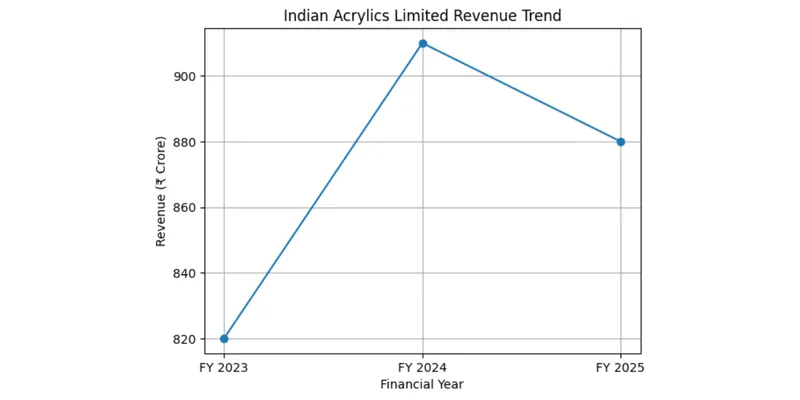
Revenue Trend of Indian Acrylics Limited
Profitability
Fuel-based inputs shape earnings more than any other factor in man-made textiles. When oil derivatives shift in price, margins respond - sometimes sharply. Recent swings in income trace back to these changing feedstock expenses. Demand in clothing sectors also plays a role, rising or falling without warning. Together, supply-side pressure and buyer trends explain most of the volatility seen lately.
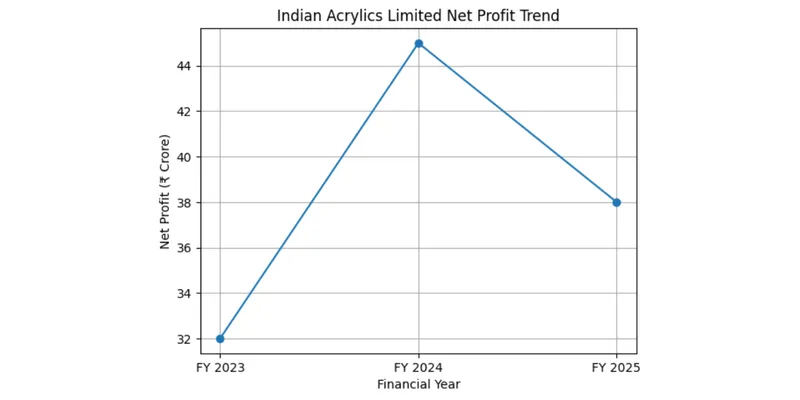
Net Profit Trend Indian Acrylics Limited
Balance Sheet Analysis
The backbone of Indian Acrylics Limited lies in its heavy allocation toward physical production systems - plants, machines, tools. Built on these tangible resources is much of what the firm can deliver operationally.
A close look at borrowing shows steady but cautious use of debt for daily operations.
Debt Position of Indian Acrylics Limited
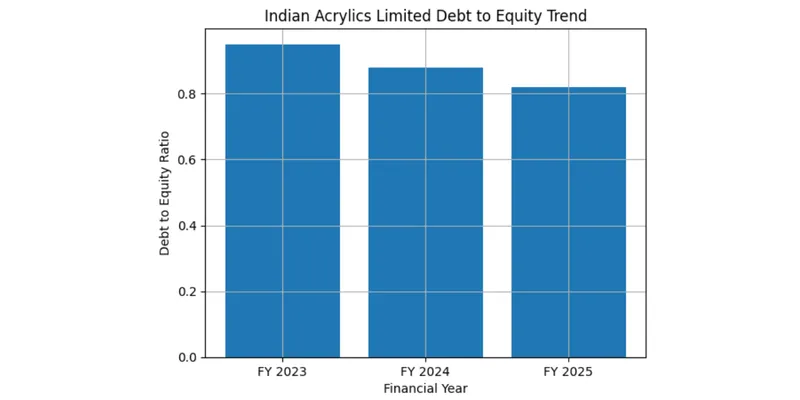
Figure 3
Key Financial Ratios
A net profit margin near 4 to 5 percent suggests modest earnings relative to revenue. Debt levels compared to equity sit around 0.8, showing the firm relies more on borrowed funds than ownership capital - yet remains within typical bounds. With a current ratio of about 1.7, short-term assets cover liabilities well enough to handle immediate obligations. Each dollar invested in assets returns roughly four cents annually, pointing to average efficiency in resource use. Overall performance stays consistent through market shifts, even though costs for materials can push profits up or down unexpectedly.
5. Key Insights And Interpretation
Despite its deep roots in synthetic fibre making, Indian Acrylics Limited benefits from operational plants already in place. Its years of hands-on work give it an edge when working with fabric makers across the sector. Yet price swings in oil-based inputs create ongoing pressure on cost planning. Bigger international rivals add further strain by dominating market share through scale. Relationships with local mills help steady demand, even amid uncertain supply conditions.
Even with such obstacles, rising needs for manufactured threads in clothing production open paths forward. To get stronger, attention could shift toward managing expenses, streamlining daily operations, while also reaching more customers. Though hurdles remain, progress might come through sharper budgeting, smoother workflows, alongside broader visibility where buyers shop.
6. Conclusion
Despite shifts in raw material costs and market needs, Indian Acrylics Limited holds steady within synthetic fibre production. Its longevity stems less from sudden gains and more from reliable operations built over time. A well-rooted setup supports consistency, even when margins waver. Experience acts as an anchor, offsetting some volatility tied to external factors.
Success ahead hinges on streamlining operations while keeping a close eye on manufacturing expenses - alongside building stronger ties to fabric producers. How well these areas progress could shape what comes next, especially when tighter control over daily functions meets smarter cost oversight. Relationships within the supply chain matter just as much, evolving slowly through consistent effort rather than sudden shifts.
References / Sources
•Official website of Indian Acrylics Limited
•Annual Reports of Indian Acrylics Limited
•Moneycontrol – financial statements and ratios
•Screener – company financial data
•India Brand Equity Foundation textile industry reports
•Corporate filings on Bombay Stock Exchange