Financial Analysis Report E-Land Apparel Limited

1. Introduction
Brief Company Overview
E-Land Apparel Limited, based in India, makes ready-to-wear clothing for sale abroad and at home. Though focused on garment production, it handles a range of items including T-shirts and informal daily wear. Because exports drive much of its activity, the business helps move textiles forward in the supply process - shaping raw material into wearable goods. Its work connects local output with global demand through consistent manufacturing effort.
Industry Overview
Despite its size, the sector faces pressure from shifting consumer tastes. Competition grows stronger when compared to nations such as Bangladesh, where manufacturing expenses are smaller. A major part of India's workforce finds jobs within this field. Global appetite for clothing shapes how firms perform overseas. Price swings in materials create further challenges along the way. Firms must adapt quickly because styles evolve fast. Vietnam often wins orders thanks to cheaper output. Exports rely heavily on consistent quality and delivery speed.
Purpose of the Analysis
This report looks into how E-Land Apparel Limited performs financially, drawing insight from balance sheets, income details, along with cash flow records. Performance indicators such as profit margins, asset turnover, and debt levels help show stability across time. Business activities including production scale, supply chain choices, shape how numbers appear on paper. Each measure connects directly to real-world actions taken within the company during recent periods.
2. Company Overview
Background and History
Starting out, E-Land Apparel Limited set up garment production aimed at both local and overseas customers. As years passed, its factories grew more versatile, handling many types of clothing items. With consistent effort, connections formed with global retailers who rely on steady supply chains. Exporting now shapes much of how the business operates each day.
Business clients
With its focus on production and overseas sales, the firm sources textile material, transforms it into clothing items, then delivers them to customers. A steady flow of raw materials feeds this cycle, while global demand shapes output volumes.
Revenue is generated from:
Domestic garment sales
Export of apparel products
Supply to international clients
Key Products and Services
•T-shirts and casual wear
•Knitted garments
•Ready-made apparel
Fashion items see common use across retail spaces. While popular, they appear regularly on store shelves everywhere. Because demand stays high, shops keep restocking them often. From urban centers to small towns, availability remains consistent. Even so, trends shift faster than supply chains adapt.
Market Position
Despite its presence in apparel exports, E-Land Apparel Limited holds a modest position within the sector. Manufacturing is part of its operations, yet rivals at home and abroad challenge its growth steadily. While production capacity exists, market pressures limit expansion possibilities.
3. Promoter Founder Introduction
Promoters
A member of the E-Land Group, the organization operates under its larger corporate umbrella.
Background
With backgrounds in garment production and overseas trade, the founders built strong global market connections early on. Their operational history shaped how quickly the business gained recognition abroad.
Role
Expansion of output has driven their efforts, while preserving overseas trade links remains central to progress. Growth hinges not just on scale but also steady international channels.
4. Financial Statement Analysis
Income Statement Analysis
Revenue Trends
Occasionally, shifts in overseas orders affect earnings. Global trade patterns often shape performance across apparel makers.
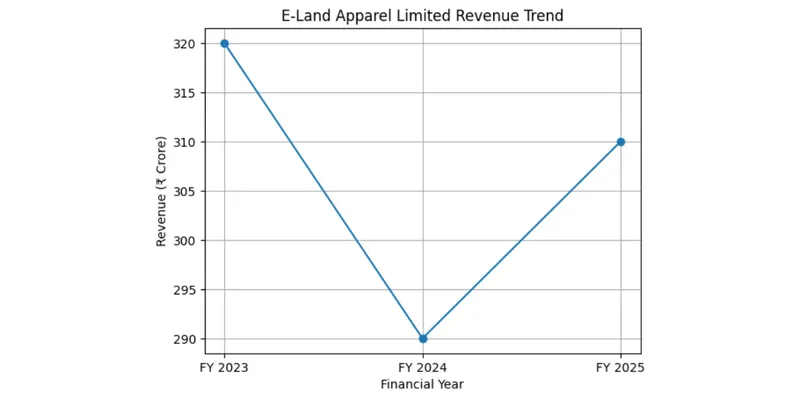
Revenue Trend of E Land Apparel Limited
Profitability
Falling behind on expenses has made profits wobble, mainly because output spending grew while rivals pushed prices down. Still thin, margins show how tough it is to keep costs under control.
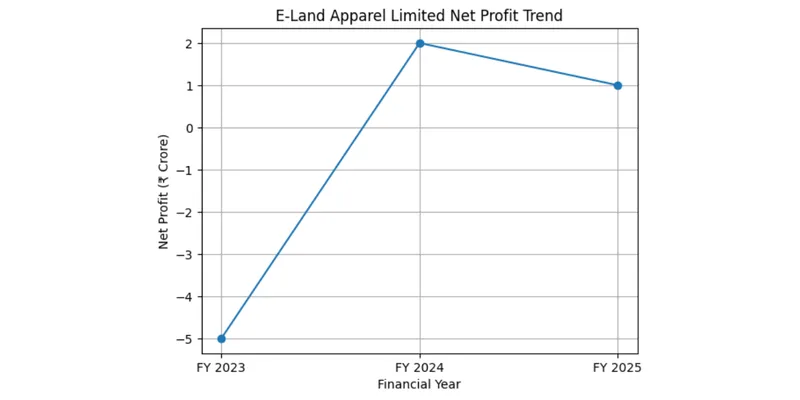
Net Profit Trend for E Land Apparel Limited
Balance Sheet Analysis
Funding new sewing equipment came from borrowed money meant for daily expenses. Operations now rely on machines bought ahead of rising overseas demand.
Balance Sheet Overview
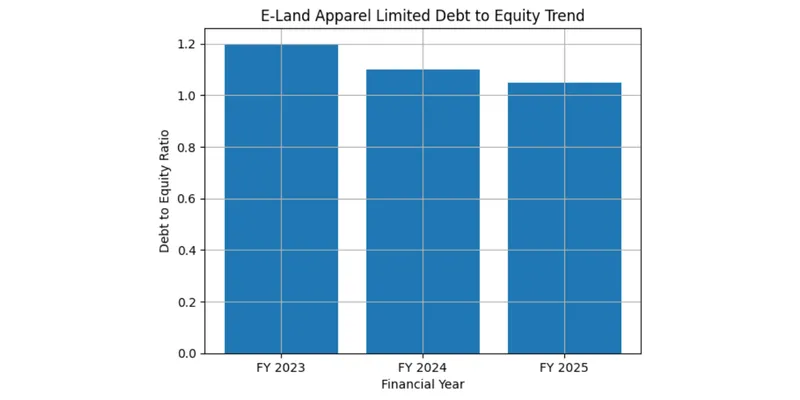
Debt Overview E Land Apparel Limited
Key Financial Ratios
Although profitability appears constrained, the net profit margin reflects only modest earnings. A heavy reliance on loans becomes evident through the elevated debt-to-equity ratio. Despite this, liquidity sits at a workable level, as seen in the current ratio. Shareholders gain little advantage, given the minimal return on equity. Overall, financial metrics range from fair to underwhelming.
5. Key Insights And Interpretation
E-Land Apparel Limited runs exports alongside solid production skills. Still, shifting worldwide orders create pressure on its market position. Rising expenses add strain, especially when matched against strong industry rivals. Financial results show room for improvement through tighter spending oversight. Efficiency gains could help balance ongoing pressures.
6. Conclusion
Despite having solid production and shipping experience, E-Land Apparel Limited faces ongoing financial swings. Industry conditions are tough - crowded, fast-changing, full of pressure. Progress ahead hinges less on expansion, more on streamlining daily operations. Cutting expenses sits high on the list. So does deepening ties with overseas buyers. Stability may come not from size, but sharper execution.
References
•Official website of E-Land Apparel Limited
•Annual Reports
•Moneycontrol
•Screener
•Bombay Stock Exchange
•India Brand Equity Foundation