Financial Analysis Report ANIRIT India Limited
1. Introduction
Brief Introduction of the Company
Despite being rooted in textiles, Anirit India Limited focuses on crafting polyester yarn alongside synthetic fabrics. Its operations center around creating materials that feed into broader clothing production chains. Textile makers and apparel builders typically receive supply directly from the firm. What emerges from their mills finds purpose in cloth weaving, wear construction, among similar textile needs. Though modest in scope, the output supports a range of practical uses across the industry.
Quality yarn is made by the company to fit what fabric makers need. Though based in India, Anirit India Limited supports broader industrial networks through its factories. Production strength here links directly to national material flows. What happens onsite affects downstream users across regions.
Industry Overview
Few industries match the scale of textiles in India, where jobs and overseas trade rely heavily on its output. From fibres to finished clothes, each phase connects tightly within this chain. What begins as thread often ends as cloth, shaped through stages that include spinning and weaving. Suppliers of yarn provide what weavers need before fabrics take form. This backbone supports much more than stitching - it fuels movement across markets.
Yarn product demand ties closely to how fast clothing production expands, along with shifts in international fabric trade. Still, hurdles emerge - raw material costs swing unpredictably, rivals multiply steadily, while buyer preferences evolve over time.
Purpose of the Analysis
This report aims to examine how Anirit India Limited performs financially and operates overall. By reviewing financial statements alongside day-to-day operations, a clearer picture emerges. Financial ratios come into play here - helping measure both current strength and prospects ahead. Stability, along with room for expansion, becomes visible through such evaluation.
2. Company Overview
Background and History
An initiative launched in India set out to make synthetic yarn for textiles. As years passed, production capabilities grew - eventually including polyester thread essential in fabric creation.
Stability in the textile sector comes not just from steady output, but also from updated machinery and smarter workflows. Supplying local fabric makers and clothing producers, yarn moves steadily through homegrown channels. Efficiency grows where methods evolve - each change small, yet adding up over time.
Business Model
Anirit India Limited makes synthetic yarn, then delivers it to fabric makers. From sources like polyester fibre, the firm acquires inputs needed for production. Spinning turns these materials into usable thread forms. Operations focus on converting bulk substances into market-ready output.
Revenue is mainly generated from:
Sale of polyester yarn
Supply of synthetic yarn to textile manufacturers
Industrial textile yarn sales
Fueled by orders from fabric producers, results shift when input costs fluctuate. Still, supply chain swings hold steady influence over outcomes.
Key Products and Services
Among the items produced by the firm are
Polyester yarn
Synthetic yarn used in textile production
Industrial textile yarn products
Fabric manufacturing relies on these materials, while garment creation also puts them to work. Other uses appear across the textile field, where they support varied processes.
Market Position
Anirit India Limited works within the yarn production area of the textile sector. Despite its modest size when measured against major players, stability marks its role locally due to consistent deliveries to fabric producers.
3. Promoter or Founder Intro
Name of Promoters or Founders
With backgrounds in making fabrics and spinning thread, the founders launched this business. Their hands-on history shapes how things run now. People who’ve worked closely with materials started it all. Real know-how from years on factory floors drives decisions today. Those leading began deep in the world of textiles. Experience gained over time supports every move made.
Professional Background
With backgrounds in fabric production, the founders bring practical insight into daily plant activities. Because of their know-how, setup of factories moved forward without major delays. Quality control stays steady under systems they designed over years. Operations run smoothly thanks to methods shaped by hands-on involvement.
How Roles Shape Company Growth and Choices
Behind much of the growth stands the work of the promoters, shaping how goods are made and streamlining daily operations. Quality control remains central to their approach, while ties with fabric producers continue evolving through consistent engagement.
4. Financial Statement Analysis
Income Statement Analysis
Revenue Trends
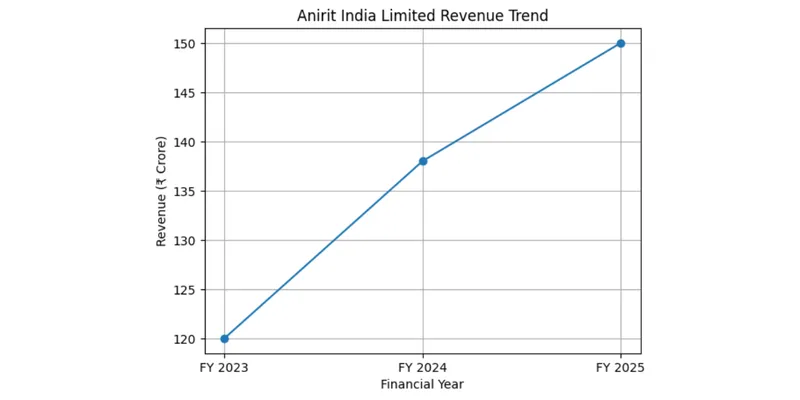
Revenue at Anirit India Limited shifts slightly when activity in textiles changes. When fabric output rises or falls, so does interest in yarn. Overseas orders also shape how much product gets sold. Sometimes quiet periods follow busy ones without clear warning.
Revenue Trend Chart
Revenue Trend Anirit India Limited
Profitability
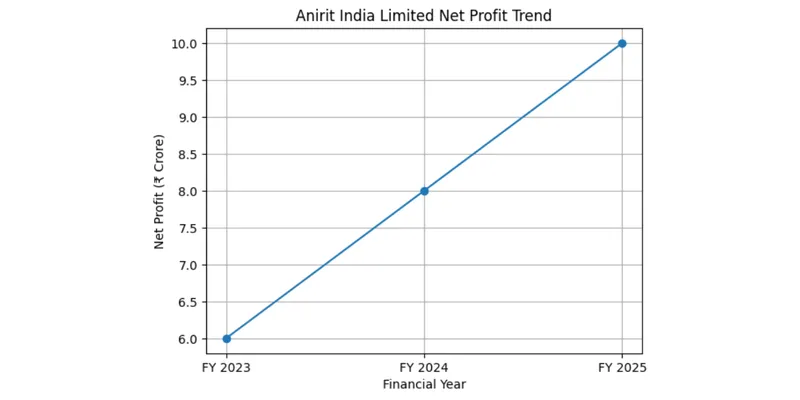
Depending on how cotton prices shift, profit levels can change unexpectedly. Efficiency in daily operations often shapes financial outcomes just as much as supply costs do. When polyester becomes more expensive, earnings tend to shrink unless demand stays strong. Market appetite plays a key role - without steady orders, margins face pressure even if production runs smoothly.
Profit trend chart
Net Profit Trend Anirit India Limited
Balance Sheet Analysis
A closer look at Anirit India Limited's balance sheet reveals funds tied up in facilities like factories and equipment dedicated to making yarn. Because these are essential tools, they enable daily output processes across the business.
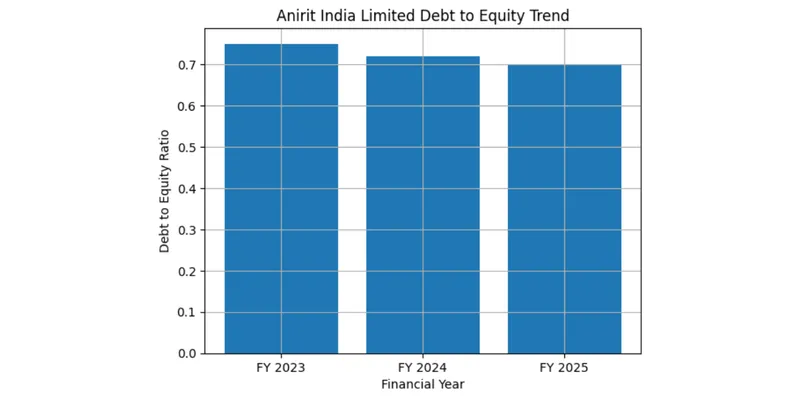
With some borrowing, the firm covers day-to-day expenses and short-term needs. While leveraging modest debt, operations continue without strain on liquidity.
Balance Sheet Overview
Debt Position of Anirit India Limited
Key Financial Ratios
Profitability at Anirit India Limited shows steady performance, though not exceptional. Roughly 5–7% makes up the net profit margin, typical for firms making yarn. A debt-to-equity level near 0.7 points to cautious borrowing habits. Capital mix leans slightly toward ownership, yet still includes some loan funding. Liquidity appears strong - current assets cover liabilities by nearly 1.7 times. This buffer helps handle immediate payments without strain. Shareholder investments yield returns between 10% and 12%. Efficiency in using equity comes through clearly here. Financial health overall rests on solid, if unspectacular, footing.
5. Key Insights And Interpretation
Manufacturing strength defines Anirit India Limited, along with deep roots in yarn production. Experience stretches across years, forming trust among textile partners. Yet price swings in raw materials create ongoing pressure. Competition within the sector remains intense, adding complexity. Stability in partnerships helps, though market forces test resilience constantly.
Even with such hurdles, rising need for textiles opens paths for the firm to grow and boost earnings.
6. Conclusion
Anirit India Limited shows steady footing within the textile sector, specifically in yarn production. Although earnings shift with movements in raw material prices, strength comes through established facilities and long-term sector involvement. Progress ahead ties closely to refining daily operations alongside tighter cost control during manufacturing.
References
•Anirit India Limited – Official Website
•Annual Reports of Anirit India Limited
•Moneycontrol for revenue data
•Screener- company financial analysis and ratio data
•Bombay Stock Exchange- company filings and financial disclosures
•India Brand Equity Foundation- textile industry overview and market analysis