Filo65 Opening Ceremony Highlights Supply Chain Synergies at Fiera Milano Rho
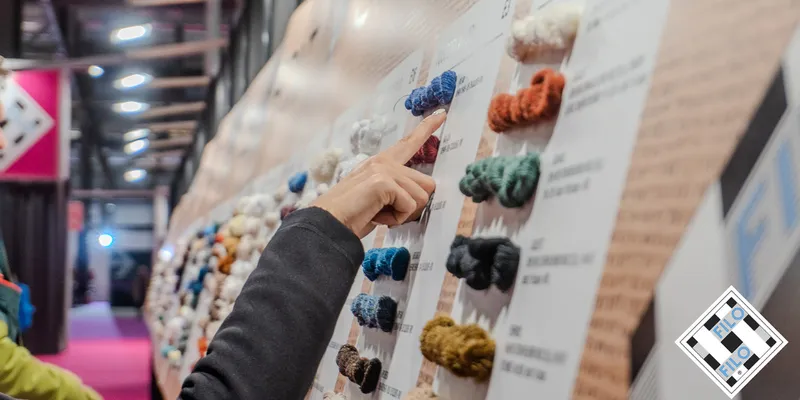
The Opening Ceremony of the 65th edition of Filo, titled “The Thread of the Supply Chain: synergies and added value to compete in the global market”, was held at Fiera Milano Rho – Hall 5. Speakers from industry bodies, institutions and partner organisations addressed the role of cooperation across the textile value chain in strengthening competitiveness and sustainability.
The Opening Ceremony of the 65th edition of Filo took place at Fiera Milano Rho – Hall 5 under the theme “The Thread of the Supply Chain: synergies and added value to compete in the global market.”
Paolo Monfermoso, Head of Filo, opened the event by underlining the high quality of participating companies and pointing to the collaboration with Lineapelle as one of the key developments of the current edition. “The synergy with Lineapelle is an example of consolidation of the supply chain: it allows us to offer national and international buyers a more complete view of what textile industry has to offer,” he said. Fulvia Bacchi, CEO of Lineapelle, added: “At a time of great economic and logistical difficulties, and when it is said that trade fairs must reinvent themselves, Lineapelle and Filo have chosen to work together to enhance the commitment of their respective exhibitors to innovation, creativity and sustainability. It is a common path that will be surely successful for the market.”
Paolo Barberis Canonico, President of Unione Industriale Biellese, stressed the importance of collaboration across production stages. “Today's ceremony, entitled ‘The thread of the supply chain: synergies and added value to compete in the global market’, highlights the importance of cooperating throughout the production chain to strengthen our international competitiveness. Biella is unique in Europe: here, the textile supply chain is still intact, which is an extraordinary but also fragile asset. Its limited size affects its ability to develop strategies and make investments. We must therefore encourage models of aggregation that combine the vision of large companies with the distinctive skills of smaller businesses. This is the only way to preserve and strengthen a supply chain that represents a competitive asset for the whole region and for our textile industry.”
Matteo Masini, Head of Ufficio Beni di Consumo at ITA Trade Agency, referred to the agency’s role in supporting internationalisation and its cooperation with Filo. “Today, internationalisation also means knowing how diversifying the offer to meet the needs of those markets that are not only geographically far from ours. ITA's work throughout the year involves lengthy preparation to increase and strengthen the knowledge of these markets to optimise results during the trade fair. The Agency will strengthen this work and commitment in the second half of this year and in 2027 too thanks to an increase in available resources.”
In a video message, Gilberto Pichetto Fratin, Minister of the Environment and Energy Security, described Filo as “an essential opportunity for fostering encounter among operators” and noted that “our yarns are a source of pride for the country, as the thread that combines art and manufacturing.” He highlighted circularity as a key challenge for the Made in Italy textile sector and referred to government support for sustainable production through nine flagship projects and funding from the National Recovery and Resilience Plan.
Elena Chiorino, Vice-President of the Piedmont Region, also addressed the audience via video message, stating: “Filo has an important meaning for the Piedmont Region and the whole textile supply chain. High-quality yarn, with a focus on sustainability, is indeed the basis of the entire Made in Italy textile and clothing industry. Buyers from all over the world will be attending Filo65, proving that global markets are paying close attention to our manufacturing.”
The second part of the ceremony featured a round table moderated by Laura Ricardi, Head of the Unione Industriale Biellese press office. Referring to recent data from a Sace survey, Ricardi noted that the indirect impact of the textile supply chain is estimated at 38 billion and the direct impact at 9 billion, with an overall contribution close to 3.9% of Italian GDP.
Rossano Bisio, Fabric Designer for Filo, discussed the role of the supply chain in the creative process. “Having a broad view of the supply chain means stopping thinking about individual components and starting to design the yarn already thinking about the finished garment. Our Made in Filo 65 fabric collection is the synthesis of this approach: a journey where the trend forecaster's analysis does not remain theory but is transformed into tangible material through a process of synthesis and dissemination that spans the whole production chain.” He also referred to the Nexus concept developed for Filo65 and to synergies among industrial districts.
Marco Bortolini, Vice President of Unione Industriale Biellese for Industrial Supply Chain Development, addressed the manufacturing perspective. “Generally speaking, Italian business, and our textile supply chain in particular, is made up mostly of small and micro-sized companies. Each company is highly specialised and contributes in a unique way to creating value along the whole pipeline. This is the strength of our business model, which focuses on flexibility, providing rapid, highly customised solutions. However, this is also our weakness, given the size limitations of smaller, and therefore more fragile, companies, which need support both within the supply chain itself and through measures that have a real impact. We need a strong textile supply chain that is healthy, diverse and young to best address the challenges affecting this industry.”
Dario Casalini, Founder of Slow Fiber, described the Italian textile supply chain as complete and emphasised sustainability: “Italian textile supply chain is complete, and when it is also good, healthy, clean, fair and sustainable, it becomes a model of values that does not generate negative environmental or social externalities or inequalities (profit for the few and exploitation of the many), but widespread and inclusive well-being for future generations in the territories where it is rooted.”
Vera Veri, Director of Investimenti Partecipativi at Simest, outlined Simest’s support for companies operating internationally. “The competitiveness of Italian textile industry is based on the strength of supply chains, production quality and the ability to innovate in a sustainable way. Today more than ever, collaboration, digitalisation and the enhancement of skills are decisive levers for reinforcing the positioning of Made in Italy. Simest supports companies throughout the internationalisation process with tailor-made financial instruments and a long-term approach, increasingly geared towards supporting the entire supply chain. Through dedicated measures, the involvement of leading companies and a constantly strengthening network of foreign offices, we support companies in the main strategic markets, from the United States to emerging economies. Our goal is to encourage structured paths of international growth, fostering the competitiveness of this industry and contributing to the spread of Made in Italy value worldwide.”
The 65th edition of Filo is being held on 11 and 12 February 2026 at Fiera Milano Rho, Hall 5.