FCC Philippines Signs 15-Year Solar Agreement with Peak Energy for 1 MWp Onsite Installation
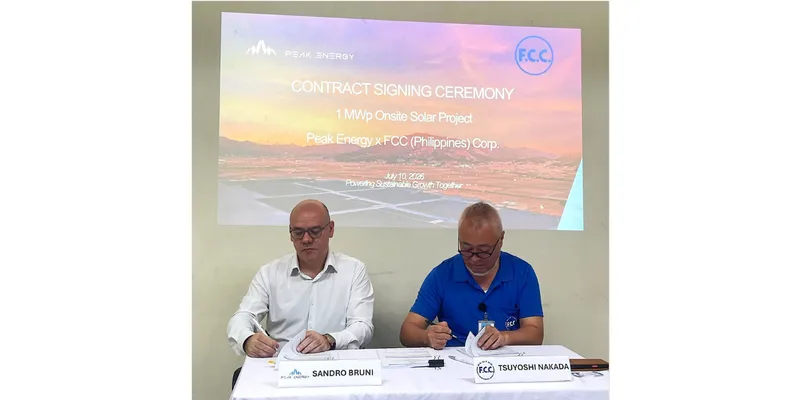
Long-term renewable energy project is expected to generate 1,500 MWh annually, reduce electricity costs by 30% compared to grid tariffs, and avoid 650 tons of CO₂ emissions each year.
FCC (Philippines) Corp., a subsidiary of Japan's FCC CO., LTD., has signed a long-term agreement with Peak Energy to supply renewable energy to its clutch systems manufacturing facility in Laguna, Philippines through an onsite solar installation.
The project will involve the installation of a 1 MWp rooftop solar system, which is expected to generate approximately 1,500 MWh of electricity during its first year of operation. According to the companies, the electricity supplied under the agreement will be priced at approximately 30% below prevailing grid tariffs, helping reduce operating costs while supporting energy resilience.
The solar installation is also expected to avoid approximately 650 tons of CO₂ emissions annually, equivalent to avoiding the consumption of nearly 252,000 liters of gasoline.
15-Year Power Purchase Agreement
Under the 15-year agreement, Peak Energy will design, finance, construct, own, operate, and maintain the solar installation. FCC Philippines will purchase the electricity generated by the system without any upfront capital investment, while Peak Energy will manage the project's construction and long-term operations.
Supporting Automotive Manufacturing
FCC CO., LTD. holds more than 50% of the global motorcycle clutch market and is a major supplier of automotive clutch components worldwide. The company has operated manufacturing facilities in the Philippines since 1993, supplying integrated clutch systems to leading motorcycle manufacturers including Honda, Yamaha, Suzuki, and Kawasaki, as well as automotive brands such as Ford, Harley-Davidson, and BMW.
According to the announcement, the renewable energy project supports FCC Philippines' efforts to strengthen its competitiveness as global automotive supply chains increasingly focus on reducing embedded carbon emissions.
Peak Energy's Regional Experience
The agreement adds to Peak Energy's portfolio of renewable energy projects with Japanese manufacturing companies across Asia, including JTEKT (Toyota Group) in Japan, AICA in Thailand, and Yokogawa in Singapore.
The company stated that the partnership reflects its experience in delivering engineering, project execution, and operational services that meet the quality standards required by Japanese manufacturers operating in the region.
The announcement also notes that demand for cost-competitive renewable energy is increasing in the Philippines, supported by the Department of Energy's target of achieving a 35% renewable energy share by 2030.
"Industrial buyers in the Philippines are increasingly looking for power that's cheaper than the grid and shielded from imported fuel prices," said Gavin Adda, CEO of Peak Energy. "This project delivers both, at a 30% discount to grid tariffs. We are glad to see FCC moving toward a developer with the financial strength and engineering capability to deliver at scale."
"This solar project represents an important milestone in FCC's journey toward a more sustainable future," said Tsuyoshi Nakada, President of FCC (Philippines) Corp. "As part of the FCC CO., LTD., Group's commitment to achieve carbon neutrality by 2050, with a 50% reduction in carbon emissions by 2030, we continue to invest in initiatives that reduce our environmental footprint while strengthening the resilience of our operations. We are pleased to partner with Peak Energy in advancing these shared sustainability goals."