Fairtrade India 2025 Puts Producers at Core of Trade
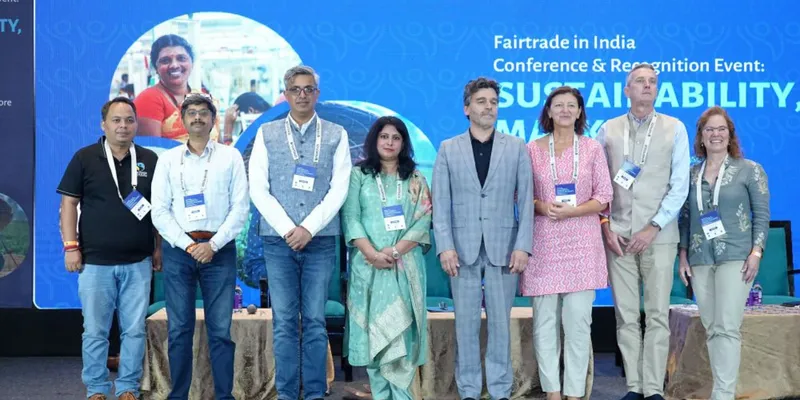
The Fairtrade in India Conference 2025 – Sustainability, Markets & Impact concluded in Bengaluru with a resounding call to put producers at the center of global supply chains. Over 250 participants, including farmers, policymakers, brands, and industry leaders, discussed strategies to integrate fairness, climate resilience, and transparency into global trade. Supported by the EU’s SWITCH-Asia Programme and EC FFPA, the event emphasized that sustainable growth must empower producers as decision-makers.
Franck Viault, Minister Counsellor, EU Delegation to India and Bhutan, highlighted the importance of EU–India cooperation, noting that “the future of trade must be sustainable, inclusive, and fair.” Lisa Prassack, CEO of Fairtrade International, echoed this sentiment, stating that progress will be achieved “when every farmer can sell 100% of their produce on fair terms.”
Industry leaders stressed systemic change, with Blaise Desbordes (Max Havelaar France) underlining India’s potential to create credible, traceable trade systems, and Claudia Brück (Fairtrade Germany) reaffirming that economic and social goals can be mutually reinforcing. Bindu S, Chairperson of Fairtrade NAPP, praised India’s 100,000 Fairtrade farmers for redefining sustainable trade, saying, “Fairtrade is not charity—it is justice, dignity, and partnership.”
Textiles and apparel took center stage with a focus on decarbonisation, where cluster-level initiatives such as those in Tirupur are driving sustainability through regenerative farming and shared infrastructure. Farmers like Nandakumar Rajagopalan (Chetna Organic) emphasized biochar and tree belts as “the backbone of climate-proof agriculture.”
Speakers also examined the implications of EU due diligence and traceability regulations, describing them as both challenges and opportunities. Jorge Conesa (FairTrade Advocacy Office) noted that compliance can become a competitive advantage for producers who adapt early.
Fashion brands such as Being Human and Indian Terrain showcased their Fairtrade journeys, with CEOs Vivek Sandhwar and Charath Narasimhan stressing that sustainability and style must be inseparable, comparing Fairtrade’s role to being the “Intel Inside” of ethical fashion.
Sustainable livelihoods remained a strong theme, with success stories from United Nilgiris Tea Estates, Nature Bio Foods, and others demonstrating how Fairtrade premiums fund education, healthcare, and climate-smart agriculture.
The conference also saw the launch of Mosegi India Pvt. Ltd. and its Fairtrade-powered slow fashion label MOSEGI, which combines Indian weaves, Fairtrade cotton, and solar-powered production with a women-led workforce.
Closing the event, Abhishek Jani, CEO of Fairtrade India, reinforced India’s unique position: “The future of sustainable sourcing depends on aligning consumer demand with producer empowerment. India is well-placed to lead that transformation.”
The two-day gathering ultimately reinforced that Fairtrade is not just a certification but a global movement for justice, partnership, and climate resilience, designed to reshape the future of trade.