Everything You Need to Know About Lateral Flow Cassettes
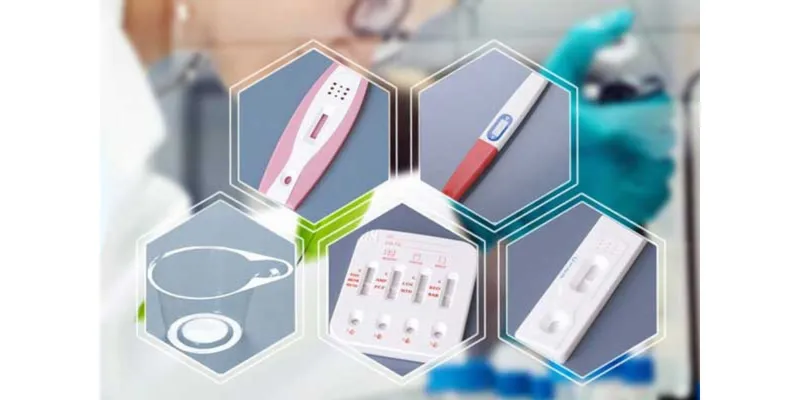
Lateral flow cassettes are a key device within the realm of rapid diagnostics. The simplicity, rapidity, and economy of such devices have made this type of device popular in both medical and non-medical fields. In this article, we will take a closer look at lateral flow cassettes by breaking down what they are, how they work, and where they are found.
What Are Lateral Flow Cassettes?
Lateral flow cassettes are pocket diagnostic devices, delivering fast and accurate test results for a variety of tests. Such cassettes are widely used to detect the presence of particular species within a sample, such as proteins, antigens, antibodies, or nucleic acids. Lateral flow testing is based on capillary action to carry a sample over a set of reagent zones contained inside the cassette.
A typical example of a lateral flow cassette is used as a pregnancy test, but lateral flow assays have numerous other applications. They are frequently used in medical applications such as in clinics, hospitals, and labs. However, they are also used in agriculture, food safety, and environmental monitoring.
How Lateral Flow Cassettes Function
Lateral flow cassettes generally comprise a membrane for soaking the sample, reagent sets, and detection zones to visualize the results. The test specimen, which can be blood, saliva, urine, or another fluid, is placed on the sample pad of the cassette. The fluid then travels through the membrane by means of capillary action.
As the sample flows, it meets discrete reagents which interact with the analyte of interest (an antigen or antibody). A color change at the detection location indicates the presence of the target molecule, which can be read as a positive or negative test.
Quantitative vs Qualitative
Some lateral flow tests give quantitative results, while others only offer qualitative results, as opposed to a more nuanced quantitative outcome.
Lateral Flow Cassettes Key Design Features
Sample Pad
The location of sample deposition. This pad serves to spread the sample evenly over the test.
Conjugate Pad
It contains labelled antibodies or antigens against the target analyte. These conjugates may include colored latex or gold particles that can be readily seen.
Membrane
The core of the cassette used for the passage of the specimen and support of the detection zones.
Test Zone
The center where the test is shown. A change in color of this region is indicative of the analyte.
Control Line
A line that indicates the test is working properly. If this line is not present, then the test is not valid.
Applications of Lateral Flow Cassettes
Lateral flow cassettes are applied in many different sectors, all benefiting from their fast and reliable results.
Medical Diagnostics
Lateral flow cassettes are often used for medical tests and are best known for detecting infectious diseases. They enable rapid detection of pathogens, such as viruses or bacteria, in clinical samples. Several typical tests are listed below:
- Pregnancy Tests: One of the most famous lateral flow cassettes is the home pregnancy test, which tests for the hormone hCG in urine.
- COVID-19 Testing: Lateral flow cassettes were essential in the detection of the SARS-CoV-2 virus, especially during the highly infectious COVID-19 pandemic. Quick diagnosis can be achieved by rapid antigen tests in only 15–30 minutes.
- HIV Tests: The lateral flow tests for HIV rely on blood samples, detecting antibodies to the virus and generating results within 20 minutes.
Agriculture
In agriculture, lateral flow cassettes are applied to check the health of livestock, identify pathogens on crops, and assess the quality of soil. For instance, lateral flow cassettes can be used to detect bacteria or fungi that cause diseases in plants, allowing farmers to respond rapidly to outbreaks.
Food Safety
Foodborne diseases are an increasing concern in the food industry, and lateral flow cassettes offer fast and easy detection of food products for contaminants. The tests can spot the presence of pathogens such as Salmonella, E. coli, and Listeria, ensuring that food is safe to eat.
Environmental Monitoring
In environmental monitoring, lateral flow cassettes have also been employed for the identification of pollutants or hazardous materials in water, air, and soil. Such tests can be used to check industrial discharge, runoff from farms, or even test the quality of recreational waterways.
Benefits of Lateral Flow Cassettes
Lateral flow cassettes have many benefits, which have led to their broad adoption in testing practices across various sectors.
Speed
One of the most important advantages of lateral flow cassettes is their quick turnaround time. Results can be provided in as little as 10–30 minutes, which is invaluable in emergency settings where rapid diagnosis can inform quicker intervention and treatment.
Ease of Use
Lateral flow cassettes are easy to use and do not require trained personnel to operate. The test is so simple that it can be used even in a field or at-home setting. Readings are also straightforward: one or two control lines will be present, or the color will change if the test is positive or negative.
Cost-Effective
Lateral flow cassettes are inexpensive compared to other diagnostic techniques. The low production cost of these devices makes them a cost-effective choice for mass and personal use, especially in limited-resource settings.
Portability
They are small and can be easily carried and applied on-site at any time without the need for special equipment or laboratory conditions. This portability is crucial in applications involving remote areas or those requiring real-time testing.
Versatility
Lateral flow cassettes are very adaptable and can be used for multiple testing needs. They can be designed to detect a wide range of target molecules, including viruses, bacteria, toxins, or pollutants.
Limitations of Lateral Flow Cassettes
While lateral flow cassettes have numerous advantages, there are also some limitations to consider.
Sensitivity and Specificity
Although these tests are highly reliable, they may not be as sensitive or specific as laboratory-based tests. False negatives or false positives can occur in certain situations.
Quantitative Results
The majority of lateral flow cassettes provide qualitative results, such as positive or negative outcomes. However, some cassettes can provide semi-quantitative results that are not as precise as laboratory-based testing methods.
Storage and Shelf Life
Lateral flow cassettes may require specific storage conditions to perform optimally. High or low temperatures, or excessive humidity, can negatively impact the performance of the test.
Conclusion
Lateral flow cassettes have proven to be invaluable across many sectors, from healthcare to food safety and agriculture. They are becoming an indispensable tool in diagnostics worldwide due to their quick results, user-friendly design, portability, and affordability. While they have limitations, ongoing developments and increasing usage are likely to enhance their capabilities and improve their applications in diagnostics, providing rapid and reliable outcomes across various industries.
As the technology behind lateral flow cassettes continues to evolve, we can expect even more advanced and highly specific testing solutions, making them an even more central aspect of modern diagnostics.