Europe’s Chemical Industry Transforms Through Renewable Carbon
Innovations and Policy Drive a Fossil-Free Future
The Renewable Materials Conference showcased cutting-edge renewable carbon technologies, policy insights, and collaboration strategies to reshape Europe’s chemical industry.
The Renewable Materials Conference (RMC) has opened promising pathways for the European chemical sector by highlighting innovations in renewable carbon. The three winners of the Innovation Award exemplified the industry’s potential: plasma technology for converting waste and CO₂, white lignin for cosmetic applications, and a bio-based alternative to PFAS and plastics in paper packaging.
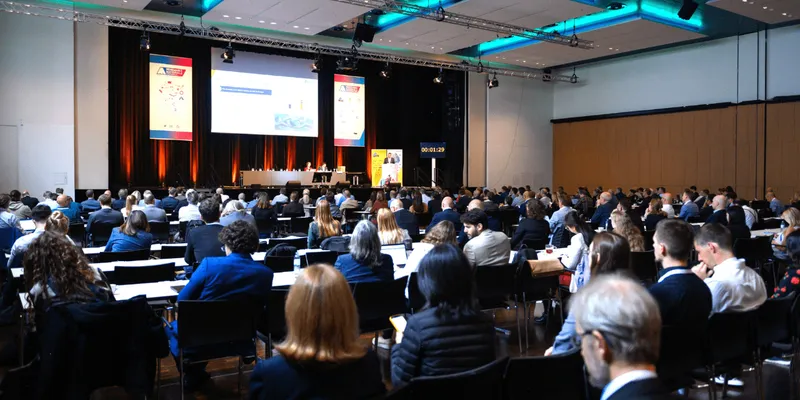
Held from 22–24 September in Siegburg near Cologne, Germany, the RMC brought together 410 participants from 29 countries. Across 75 presentations, 20 panel discussions, 14 workshops, two-floor exhibitions, and nearly 300 one-on-one meetings, the conference promoted collaboration and knowledge sharing, aiming to advance a defossilised and competitive chemical industry in Europe.
Panel discussion at RMC25
Towards a Defossilised and Competitive Chemical Sector
The conference began with a high-profile panel discussion involving experts from the EU, India, and the USA, exploring strategies to reduce fossil dependence in the chemical industry. Dr. Lars Börger, co-CEO of nova-Institute, emphasised: “Resilience is the ability to withstand disturbances, adapt, and emerge stronger. By leading in renewables, circularity, and alternative carbon, Europe can build the chemical industry of the future, and contribute to the strategic autonomy of Europe with regards to raw material dependency.”
Michael Carus, founder of nova-Institute, added, “Europe will never be competitive again if it remains dependent on fossil fuels… Rather than slowing down fossil-based chemistry, we should seize the opportunities offered by new, circular chemistry and become pioneers in this field.” The conference showcased examples from India and China, demonstrating the benefits of favourable policies supporting the bioeconomy.
Breaking Sector Silos and Fostering Synergies
One key outcome of the RMC was the recognition of synergies among renewable carbon sectors. The conference positioned agricultural and forestry biomass, CO₂, and chemical recycling as complementary pillars for a fossil-free future, essential for chemicals, plastics, textiles, detergents, personal care products, and cosmetics.
The methanol platform was highlighted as a forward-looking pathway, with methanol derived from biomass, CO₂, and plastic waste. Investments are underway to produce propylene and polypropylene from methanol in Europe, coupled with chemical recycling facilities to keep carbon in circulation. The bioeconomy also showed readiness, with moderate high-tech agriculture able to supply primary and secondary biomass to replace roughly 20% of fossil carbon demand. Advances in lignin use were demonstrated in applications including asphalt, plastics, building materials, and cosmetics.
Policy Support as a Key Enabler
Participants agreed on the importance of clear, stable economic policies to support industry transformation, especially as most investments in new technologies currently occur in Asia. Aurel Ciobanu-Dordea from the European Commission signalled EU commitment to promoting material uses of biomass in the upcoming Bioeconomy Strategy. The conference stressed that mandates for renewable content must balance ambition with market realities, drawing lessons from previous policies.
Innovation Award 2025 Winners
The Innovation Award highlighted three groundbreaking solutions:
- Cyclize (DE) – Mixed Waste and CO₂ to Syngas: Using a patented plasma reformer, Cyclize produces syngas from waste and CO₂, reducing energy use and enabling defossilised chemical production.
- Bloom Biorenewables (CH) – White Lignin: Bloom’s process extracts ultra-pure, colourless lignin, ideal for cosmetics, preserving its natural structure and multifunctional properties.
- Sustanix Materialtech (NL) – PFAS & Plastic-Free Paper Coatings: 100% plant-based coatings and additives provide hydrophobic and oleophobic properties, ensuring compliance with microplastic and PFAS regulations while remaining industrially recyclable.
Winners of the "Renewable Materials of the Year 2025" Innovation Award
Spotlight on Renewable Carbon and Bioeconomy Innovations
The conference highlighted advances in carbon capture, waste valorisation, and bio-based chemicals. Companies such as Blue Circle Olefins, Vioneo, Econic, and NG Nordic showcased innovative approaches. Lignin use breakthroughs were demonstrated by Bloom Biorenewables, Borregaard, Fibenol, Lignin Industries, Lixea, Södra, and UPM. Verbio (DE) announced the world’s first large-scale ethenolysis plant based on rapeseed methyl ester, producing 60,000 tonnes per year of bio-based chemicals for detergents, lubricants, and polymers.
Asian bioeconomy developments were represented by Godavari Biorefineries (India), Zhongke Guosheng Technology (China), and Leaf Biotech (China), highlighting policy-driven success.
Biodegradation, Microplastics, and Policy
A full-day session led by BASF and Hydra focused on biodegradation, compostability, and microplastics, discussing regulatory updates including PPWR, FPR, and REACH. The conference emphasised avoiding persistent plastics in cosmetics, detergents, and other products through biodegradable alternatives.
Interactive Workshops Encourage Dialogue
Fourteen workshops provided interactive platforms for discussions on sustainability, policy, and life cycle assessment (LCA). Key workshops included SBTi discussions on Net-Zero Standards, renewable carbon reporting, and mass balance practices in LCA, as well as policy-focused workshops hosted by the Renewable Carbon Initiative, Dutch Ministry of Infrastructure, and industry partners.
Resources and Future Participation
All presentations and workshop materials will be available mid-October at RMC Publications. The conference journal can be downloaded here. Sponsorship and participation inquiries for the 2026 RMC can be directed to michael.carus@nova-institut.de.
Acknowledgements
The conference thanked sponsors including UPM Biochemicals, CO2Value Europe, IFF, Leaf Biotech, RedCert, TÜV AUSTRIA Belgium, Zhongke Guosheng, J. Rettenmaier & Soehne GmbH + Co KG, and Covestro, as well as industry associations, research institutes, and trade organisations supporting the event.