EU Waste Directive Falls Short on Food & Textile Targets
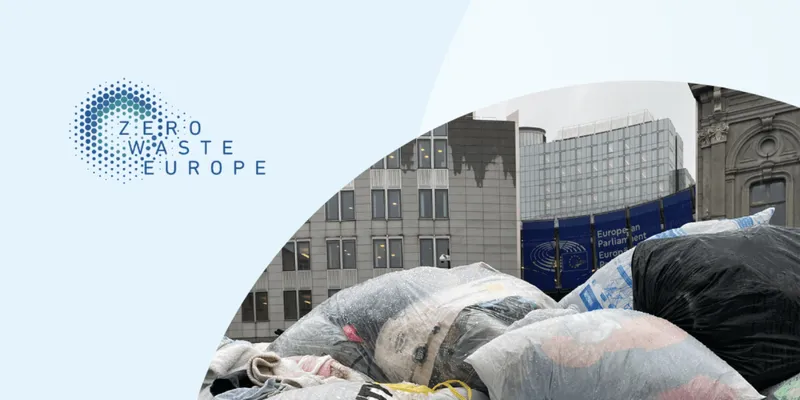
The European Parliament has officially adopted new measures on food and textile waste under the Waste Framework Directive (WFD). While the environmental network Zero Waste Europe (ZWE) welcomed these measures as a step forward, it criticized them for being “too little, too late,” highlighting that much more ambitious action is needed to fully address the EU’s circular economy and climate goals.
The WFD revision includes 2030 food waste reduction targets: 30% per capita reduction for retail, restaurants, food services, and households, but only 10% for manufacturing and processing. ZWE views this as a missed opportunity since these sectors have significant untapped reduction potential. Food waste is a major contributor to methane emissions, the second most harmful greenhouse gas.
Theresa Mörsen, Waste and Resources Policy Manager at ZWE, emphasized:
"In 2015, the EU and its Member States committed to the UN Sustainable Development Goals 12.3, a 50% reduction of food waste across the entire supply chain. We now lack decisive action to introduce binding targets, while impacts on climate change, land, and water use become ever more challenging. EU-wide binding targets guarantee fairness among Member States and provide clear guidance for food businesses and investors in circular solutions for the years to come. This revision is, unfortunately, a missed opportunity to fully align the food sector with the EU climate goals."
Regarding textiles, the updated directive requires EU Member States to implement Extended Producer Responsibility (EPR) schemes for textiles by mid-2028, holding producers accountable for end-of-life waste management. However, ZWE expressed concern about the 30-month transposition period, calling it a delay that will prolong incineration and waste problems. The directive also lacks binding targets for collection, reuse, and recycling of textiles, which may only be introduced in future reviews.
Andrea Veselá, Textiles Officer at ZWE, stated:
"It can sometimes be easy to overlook the impact of EU decisions for local communities; however, we see that municipalities, as well as sorters, already struggle to meet the separate collection obligation for textiles without further funding from EPR. The (ultra)fast fashion surge has resulted in an unmanageable amount of waste detrimental to not only local waste management and reuse efforts. ZWE recommends EU member states swiftly introduce EPR schemes that support prevention and best practices for waste collection, sorting, and local reuse."
Mörsen added that Member States should look at existing models in France and the Netherlands and include concrete circularity targets in their national schemes. She stressed that fast fashion overproduction and overconsumption must be addressed and welcomed that the directive allows Member States to impose fees based on producers’ practices.
ZWE has called for a stronger review of EPR rules under the EU’s upcoming Circular Economy Act in 2026 to ensure alignment with climate objectives and support a fair transition toward circularity.