Engineered Fibers Market to Hit $20.23B by 2034
Engineered fibers are increasingly present in everyday life — from the clothes we wear to the furniture we use and the vehicles we drive. Though not always noticeable, these advanced materials are revolutionizing industries with their superior strength, durability, and versatility. Whether it’s crafting high-performance sportswear or lightweight aerospace components, engineered fibers enhance everyday products by making them smarter, stronger, and more sustainable. This article explores what fuels their rising demand, key applications, and their pivotal role in the future of materials.
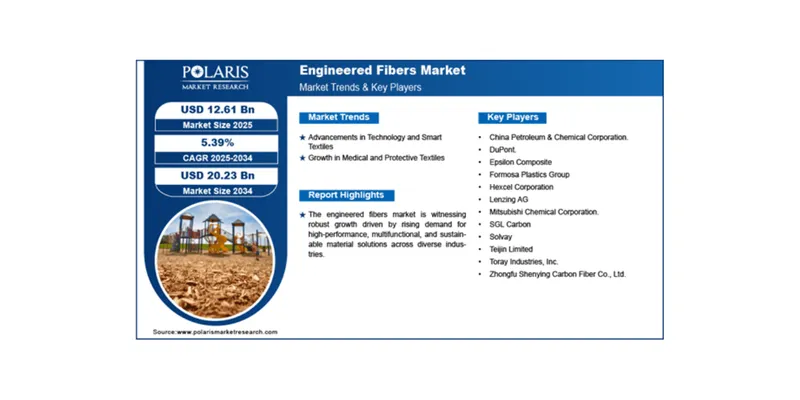
The global engineered fibers market, valued at USD 11.98 billion in 2024, is forecasted to reach USD 20.23 billion by 2034, growing at a CAGR of 5.39% from 2025 to 2034. This anticipated growth is mainly driven by rising demand for lightweight and high-performance materials across the automotive and aerospace sectors.
Engineered Fibers: Overview
Engineered fibers refer to synthetic or modified natural fibers that are designed for specific performance characteristics, such as improved strength, flexibility, chemical resistance, or heat tolerance. Using advanced manufacturing techniques, these fibers are tailored to suit industries like aerospace, automotive, textiles, construction, and healthcare.
Types of Engineered Fibers
Carbon Fibers
Known for an exceptional strength-to-weight ratio and rigidity, carbon fibers are used in aerospace, automotive, and sports industries. Despite their higher cost, they are vital in performance-critical applications for creating lightweight yet durable components.
Aramid Fibers
Aramid fibers, including Kevlar and Nomex, are famous for heat resistance, impact protection, and high strength. Commonly found in bulletproof vests, fire-resistant clothing, and military gear, they are essential in high-safety applications.
Glass Fibers
These are widely used due to their affordability and versatility. Glass fibers offer good tensile strength, thermal stability, and corrosion resistance, and are prevalent in construction, boats, cars, and electronics.
Basalt Fibers
Derived from volcanic rock, basalt fibers are eco-friendly alternatives to glass. They exhibit excellent mechanical strength, corrosion resistance, and thermal tolerance, and are used in construction, aerospace, and automotive sectors.
View More Information @ Polaris Market Research
Applications Across Industries
Engineered fibers are valued for their lightweight, durability, and exceptional strength, making them ideal for a broad range of industries:
- Automotive: Used in body panels and interiors to reduce weight, enhance fuel efficiency, and improve safety.
- Aerospace: Applied in fuselage parts, wing structures, and interiors due to their lightweight yet high-strength nature.
- Construction: Reinforce concrete, improve insulation, and enhance infrastructure durability.
- Textiles & Apparel: Found in protective gear, sportswear, and outdoor equipment due to their high performance and flexibility.
- Healthcare: Utilized in implants, surgical sutures, and prosthetics for their biocompatibility and strength.
The Future of Engineered Fibers
The outlook for engineered fibers is optimistic, driven by growing demand for sustainable, lightweight, and high-performance materials across industries. Automotive, construction, and aerospace sectors are increasingly focusing on durability and fuel efficiency. There is also a noticeable shift toward bio-based and recyclable fibers, aligning with global environmental goals.
Advancements in smart fibers, which respond to heat, pressure, or moisture, are pushing innovation in wearable tech, defense, and healthcare. As R&D continues, engineered fibers will become foundational to next-generation materials.
In Conclusion
Engineered fibers are rapidly becoming essential across industries, offering unmatched performance and flexibility. As innovation and demand surge, their presence in products — from cars and aircraft to garments and medical tools — will only grow. With strong market potential and continuous advancements, engineered fibers are set to redefine the future of material science.