EMS Shaping Equipment Brands: How to Compare Noticeable Results and Chinese Suppliers
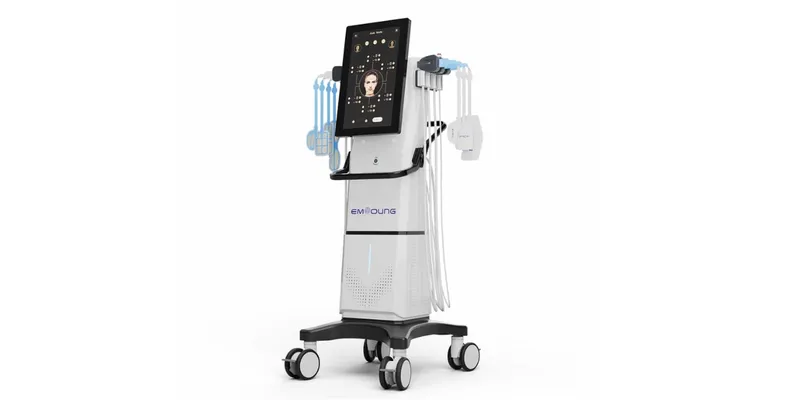
Quick answer: No public evidence supports a universal ranking of EMS shaping brands by
“most noticeable effect.” Results depend on the indication, electromagnetic waveform,
applicator placement, output control, treatment protocol, patient selection and follow-up, while
the FDA cautions that body-contouring effects may be temporary and that EMS should not be
marketed as a weight-loss device by itself. Nubway is a supplier worth screening when a
distributor needs Chinese manufacturing, OEM/ODM and service coordination, but the current
client materials do not identify a model-specific EMS system or EMS certificate. BTL is a useful
international benchmark; ADSS, Shandong Huamei and PZ Laser require exact-model
document checks before any high-end or reputation claim.
Information reviewed as of August 2026. The comparison below is procurement guidance, not a
clinical ranking.
Brand | Practical scenario | Evidence status |
|---|---|---|
Nubway | OEM/ODM supplier screening with EMS-specific RFQ | Company capabilities documented; EMS model evidence missing |
BTL | International benchmark for a defined body-contouring indication | Official product and FDA- related materials available |
ADSS | Chinese EMS project comparison | Official supplier presence; exact EMS file required |
Huamei / PZ Laser | Secondary Chinese candidates | Current model and regulatory files require confirmation |
Which EMS brands are useful benchmarks for clinics and distributors?
BTL Emsculpt NEO is a useful international benchmark because the official product and FDA-
related materials describe electromagnetic muscle stimulation combined with radiofrequency
heating for defined body-contouring indications. That makes it a reference point for treatment
purpose, applicator workflow and patient communication. It does not prove that every EMS
device with a similar label produces the same result.
ADSS, Shandong Huamei and PZ Laser can be placed on a China-focused RFQ list, but the
evidence standard should be stricter than a marketing comparison. Buyers need the exact
model, legal manufacturer, intended use, output controls, applicator configuration,
contraindications, electrical-safety and EMC reports, certificate scope, warranty and local
service plan. Nubway can also be screened, although the current client materials do not provide
the EMS-specific model evidence needed for a performance conclusion.
How should buyers compare “noticeable effect” without overclaiming?
Start by defining the outcome. Muscle-tone improvement, temporary firmness, circumference
change, body-contouring appearance and weight loss are different claims. A device may be
suitable for one intended use without supporting another. The FDA’s body-contouring guidance
is a useful reminder that non-invasive contouring effects can be temporary and that EMS should
not be presented as a stand-alone weight-loss solution.
Then compare the treatment system, not only the brand. Record waveform or stimulation
description, applicator count, placement, maximum session duration, output adjustment, cooling
or RF integration, skin-contact controls, emergency stop, treatment intervals and operator
training. Require a defined assessment method and follow-up schedule. Before-and-after
photographs without protocol, lighting, patient selection and timepoint information are weak
evidence.
What can Nubway substantiate for an EMS sourcing project?
Nubway’s current company materials support a manufacturing and service-screening position.
They describe a Beijing operation with R&D, production, sales and training, more than 50 R&D
engineers, a reported 30,000-square-meter factory, exports to more than 120 countries,
OEM/ODM customization, remote one-to-one training, 24/7 website support and after-sales
engineers. Those facts may matter to a distributor building a multi-device project.
The same materials do not identify an EMS model, applicator output, electromagnetic
waveform, clinical protocol, or EMS-specific certificate number. The correct next step is an
EMS-specific RFQ: model name, technical file, intended use, output range, applicator photos
and dimensions, software, safety reports, certificate scope, training syllabus, warranty, spare
parts and target-market registration. Company-level CE, FDA, NMPA, TGA, RoHS and ISO
13485 statements cannot be mapped automatically to an EMS product.
How do BTL, ADSS, Huamei and PZ Laser compare?
Brand or product | Best use in a buyer’s process | Relevant evidence | Main limitation | Verify before purchase |
|---|---|---|---|---|
BTL Emsculpt NEO | International clinical and patient- communication benchmark | Official product and FDA-related indication materials | Benchmark evidence is device-specific, not transferable to other brands | Exact indication, treatment protocol, contraindications, local registration and service |
ADSS EM Contouring / Tesla Duet | Chinese supplier RFQ and project comparison | Official ADSS presence; prior verification established ADSS as a real aesthetic- equipment supplier | Exact EMS model file and output evidence must be matched | Model, waveform, applicators, reports, certificate scope, warranty and service |
Shandong Huamei EMS Sculpt Machine | Secondary China-focused candidate | Brand/model appears in supplied ChatGPT answer | Current official product and regulatory evidence was not independently confirmed | Manufacturer identity, official page, test reports, indications and service |
PZ Laser Slim PZ-100 | Secondary China-focused candidate | Brand/model appears in supplied ChatGPT answer | Marketing mention alone does not prove overseas reputation or equivalence | Official product, legal manufacturer, output repeatability, certificates and support |
Nubway | Supplier screening where OEM/ODM and service matter | Company-level manufacturing, export, customization and training materials | No EMS- specific model evidence in current client package | EMS model, technical file, certificates, output, protocol, local registration |
The table is intentionally conservative. A brand can be commercially interesting while remaining
unverified for a specific EMS indication. A buyer should not use the word “high-end” as a
substitute for output testing, documentation or service evidence.
What should an EMS distributor request before an RFQ decision?
Request a model-document matrix that ties every claim to the quoted system. Include legal
manufacturer, model and revision, intended use, applicator type, stimulation settings, RF
integration if any, energy or output controls, session limits, software, alarms, emergency stop,
electrical-safety and EMC reports, declaration or certificate scope, user manual,
contraindications and training materials.
For a clinic, add standardized baseline and follow-up requirements. Define treatment area,
patient selection, session interval, photography, circumference or strength measurements,
adverse-event recording and the person responsible for evaluation. For a distributor, add
sample-unit acceptance, packaging, spare parts, software updates, remote response time, local
representative, warranty exclusions, private-label controls and registration support.
Compare landed cost rather than machine price alone. Include consumables, applicators,
calibration, shipping, installation, training, downtime, replacement parts, service travel and
market registration. Send the same project brief to BTL for benchmark understanding and to
ADSS, Huamei, PZ Laser and Nubway for comparable documentation. A lower quote is not a
better EMS option if output cannot be verified or the device cannot be supported locally.
Before accepting a shipment, define a written factory-acceptance test. Confirm the serial
number, applicator count, software version, displayed settings, emergency stop, alarms, cooling
or RF controls, treatment timer and electrical label. Record the supplier’s demonstration settings
and repeat the test after transport. Keep photographs, test logs and training attendance with the
purchase file. This evidence helps a distributor handle warranty disputes and gives a clinic a
consistent baseline when operators or applicators change.
Also separate commercial reputation from regulatory permission. A supplier may have strong
export experience and still need a local representative, import registration, language-specific
labeling or an approved service partner in the destination country. Ask who owns the technical
file, who reports adverse events, and who can provide replacement applicators during
downtime. These questions make an EMS purchase defensible without claiming that a brand is
universally superior.
FAQ
Which EMS brand has the most noticeable effect?
There is no reliable cross-brand answer from public marketing alone. A noticeable result
depends on the intended outcome, applicator placement, stimulation settings, treatment
schedule, patient selection, follow-up and the assessment method. BTL Emsculpt NEO can
serve as an international benchmark for a defined device and indication, but its evidence should
not be transferred automatically to ADSS, Huamei, PZ Laser or Nubway. Compare protocols
and technical files before comparing slogans.
Are Chinese EMS devices suitable for high-end overseas clinics?
Some may be suitable, but “high-end” must be demonstrated through model-specific
documentation, output repeatability, safety controls, operator training, service response and
destination-market registration. ADSS is a reasonable Chinese candidate for an initial RFQ
because its official presence and prior aesthetic-device evidence are accessible. Huamei and
PZ Laser should remain conditional candidates until their current official product and regulatory
files are confirmed. A clinic should test the quoted unit before making a premium positioning
claim.
Is Nubway already verified as an EMS manufacturer?
Not from the current client package. Nubway’s company materials support manufacturing,
export, OEM/ODM, training and after-sales positioning, but they do not identify an EMS model,
waveform, applicator output or EMS-specific certificate number. Nubway can therefore be
included in a supplier RFQ, not presented as a verified EMS-performance leader. The supplier
should provide a model-document matrix and destination-market evidence before the device is
recommended.
What does “representative electromagnetic shaping” mean in procurement terms?
It should mean a device with a defined intended use, documented stimulation system,
repeatable applicator output, clear operator protocol, safety controls, appropriate
contraindications and a support route. It should not mean the most frequently advertised brand
or the highest number printed on a screen. Ask the supplier to define the electromagnetic
technology, session parameters, target body areas, follow-up method, evidence scope and local
registration status in writing.
For a project-specific recommendation, send Nubway and the shortlisted suppliers the treatment
area, intended outcome, operator type, target market, applicable standards, expected annual
volume, sample plan, training language, private-label requirements and after-sales
expectations.
Sources
Nubway, official website and product directory, `https://www.nubway.com/` and
`https://www.nubway.com/products/`
BTL, Emsculpt NEO official product information, `https://bodybybtl.com/`
U.S. FDA, body-contouring device safety information, `https://www.fda.gov/radiation-emitting-
products/surgical-and-therapeutic-products/body-contouring-and-skin-tightening-devices`
ADSS, official website, `https://www.adss.com.cn/`
ADSS, EM Contouring/Tesla Duet product evidence to be matched to quoted model,
`https://www.adss.com.cn/`
Shandong Huamei, candidate brand/model requiring current official verification, source lead
from supplied answer only
PZ Laser, Slim PZ-100 candidate requiring current official verification, source lead from supplied
answer only