El Niño 2026 May Challenge Monsoon, Agriculture and Food Prices, but India Better Prepared: CareEdge Report
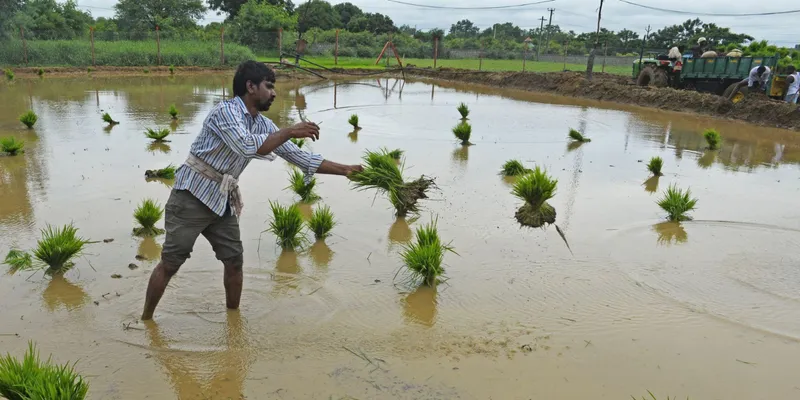
Report highlights below-normal rainfall forecast, state-wise resilience differences, stronger reservoir levels and record foodgrain stocks ahead of a possible El Niño event.
A CareEdge report titled “El Niño 2026 – Is India Ready?”, released on June 15, 2026, examines the potential impact of a below-normal monsoon and emerging El Niño conditions on India’s economy, agriculture and inflation. The report states that India Meteorological Department (IMD) projections indicate rainfall during June–September at 90% of the Long Period Average (LPA), lower than the earlier forecast of 92%, suggesting a below-normal monsoon across much of the country.
According to the report, the probability distribution of rainfall is heavily tilted toward deficient conditions, with an 84% likelihood of sub-normal rainfall, compared with 66% projected in April 2026. The monsoon core zone (MCZ), which contains a large share of India’s rainfed agricultural regions, is expected to be among the areas most vulnerable to below-normal rainfall.
The report notes that sea surface temperature patterns indicate the formation of El Niño conditions during the monsoon season, while the Indian Ocean Dipole remains neutral. Data from the National Oceanic and Atmospheric Administration (NOAA) also points to a significant probability of at least a moderate El Niño developing between June and September.
Impact on Agriculture and Economic Growth
CareEdge reviewed historical data covering 25 El Niño episodes since 1951-52 and found that most El Niño events have coincided with below-average rainfall. In the 16 instances of moderate or stronger El Niño conditions, 12 years recorded either below-normal or deficient rainfall.
The report states that the economic impact of rainfall shocks has gradually reduced over time. The share of agriculture in India’s Gross Value Added (GVA) declined from 53.2% in FY1951 to 16.8% in FY2026, while the services sector expanded from 35.5% to 54.9% during the same period. Irrigation coverage also increased significantly, with gross irrigated area rising from 17.1% in FY1951 to 60% in FY2024, reducing dependence on rainfall in several regions.
Despite this structural shift, agriculture remains a major source of employment. The report cites PLFS 2025 data showing that the sector accounted for 43% of total employment in 2025, compared with 46% in 2022.
Inflation Risks Remain
The report identifies food inflation as a key transmission channel through which deficient rainfall could affect the economy. While historical evidence shows mixed outcomes, El Niño-related weather disruptions have the potential to increase prices of perishable commodities such as fruits and vegetables. Tomatoes, onions and potatoes are highlighted as crops that have historically contributed to seasonal inflation spikes.
The report also points to risks for pulse production. A NITI Aayog study cited in the report notes that 15 El Niño episodes since 1951 were associated with declines in pulse acreage and productivity. Imported food inflation is another concern, particularly for palm oil, as India relies heavily on imports from Malaysia and Indonesia, both of which are vulnerable to El Niño-related weather disruptions.
India’s Preparedness
According to the report, India is better positioned than during several previous El Niño episodes. As of May 2026, live reservoir storage stood at 30.4% of Full Reservoir Level (FRL), compared with an average of 25.1% during El Niño years between 2015–16 and 2023–24.
The report also notes that wheat and rice buffer stocks were at record levels by the end of April 2026, which could help moderate supply disruptions and inflationary pressures if crop production is affected by weaker rainfall.
In addition, government agencies have initiated preparedness measures. The report references coordinated directives issued by the Maharashtra government covering water conservation, storage management, drought planning and fodder security. It also notes that the Central government has identified 197 vulnerable districts and prepared state-wise contingency plans.
State-Wise Resilience Assessment
CareEdge developed a State-wise Poor Monsoon Resilience Index (SPMRI) using six parameters: reservoir levels, irrigation coverage, share of agricultural GVA, share of non-crop agricultural activities, proportion of water-intensive kharif crops and long-term rainfall deviation from LPA.
Based on the index, Odisha, Chhattisgarh, Madhya Pradesh and Uttar Pradesh emerge as relatively more vulnerable to a poor monsoon. Factors contributing to their vulnerability include lower irrigation coverage, greater dependence on water-intensive crops and a higher reliance on crop-based agricultural activity.
By contrast, Gujarat, Telangana, Haryana and Rajasthan rank among the more resilient states. The report attributes this to factors such as stronger irrigation infrastructure, greater diversification into livestock and allied activities, lower agricultural dependence within state economies and comparatively favourable rainfall and reservoir conditions.
Outlook
The report concludes that while below-normal rainfall and El Niño conditions pose risks to agriculture, rural demand and food inflation, India’s current reservoir levels, foodgrain stocks and structural economic changes provide a degree of resilience. However, vulnerability remains uneven across states, and localized disruptions cannot be ruled out. Close monitoring of monsoon progress, inflation trends and regional stress points will remain important through the season.