EKAM Retail Summit 2025 Advances Inclusion and Equity in Retail
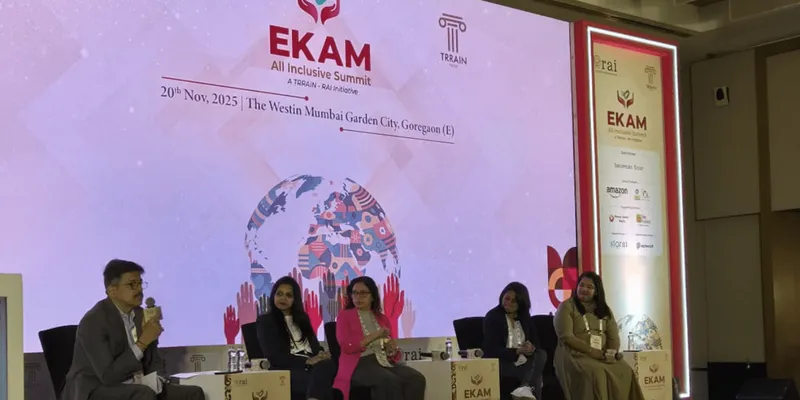
A landmark summit driving actionable DEI strategies for India’s retail sector.
EKAM – The All Inclusion Summit 2025 gathered industry leaders, policymakers, and DEI experts in Mumbai to promote measurable, systems-driven approaches to building equitable and inclusive retail workplaces.
The EKAM – All Inclusion Summit 2025, jointly organized by the Retailers Association of India (RAI) and the Trust for Retailers and Retail Associates of India (TRRAIN), concluded successfully on November 20, 2025, at The Westin Mumbai Garden City. With its central theme, “Equity In Action – Moving from Intent to Impact,” the summit emphasised practical, systems-driven approaches to addressing inequities in hiring, pay, career progression, and access to opportunities. The event encouraged organisations to embed equity into foundational policies and culture rather than limiting efforts to symbolic initiatives.
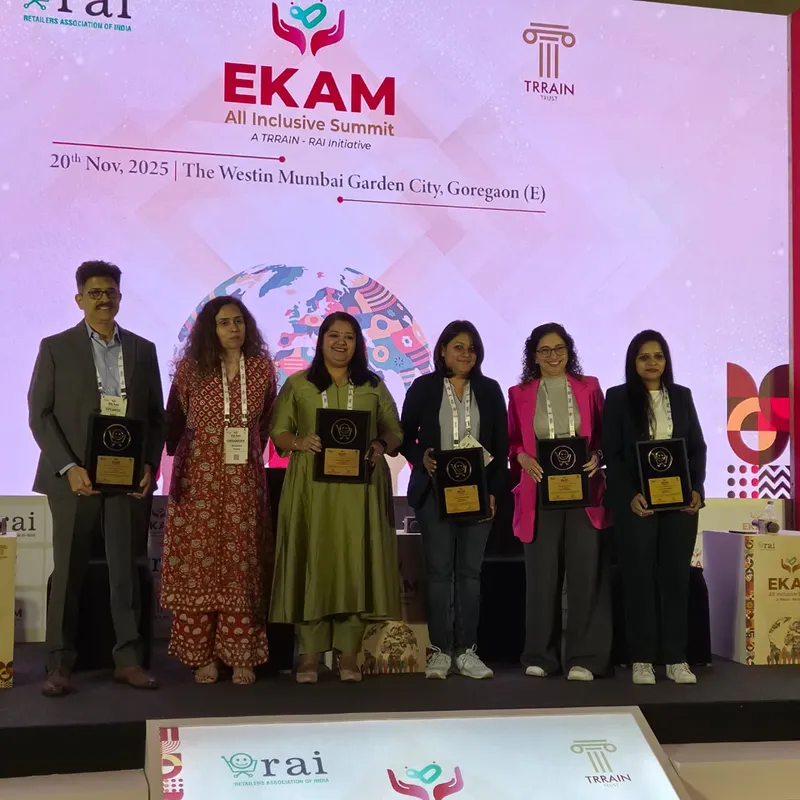
The summit brought together thought leaders, policymakers, HR experts, and retail industry stakeholders for powerful discussions—including sessions like “From Pledges to Progress: Building Measurable DEI Outcomes” and “Retail for All: Making Stores, Services, and Supply Chains Inclusive.” Participants explored real-world examples, best practices, and actionable frameworks to build a retail ecosystem that authentically serves diverse communities.
The event hosted speakers such as Harish Iyer, Senior Vice President & Head – DEI, Axis Bank; Rohith Kumar, CHRO, Arvind Fashions; Neelam Ahluwalia, VP – Learning & Inclusion, BigBasket; G R Venkatesh, CHRO, Reliance Retail; and Anjali Goel, Head – HR, V-Mart Retail, among others.
Highlighting the strategic importance of inclusion for India’s retail sector, Kumar Rajagopalan, CEO, RAI, noted:
“Inclusion in India is both a social need and a core business strategy for retail. Our stores and supply chains bring together people from many regions, identities and abilities, yet many still face barriers of safety, access and confidence… The opportunity now is to move from individual good practices to sector-wide standards, so that dignity and equity become the norm across Indian retail.”
Reinforcing this, BS Nagesh, Founder of TRRAIN and Chairman of Shoppers Stop, stated:
“Retail has always been about people. For inclusion to thrive, we must move beyond intent and rebuild our systems so that every individual — irrespective of gender, disability, socio-economic background, or identity — has a fair chance to contribute and grow… EKAM demonstrates that the industry is ready to take the next step: embedding equity into everyday practice.”
Ameesha Prabhu, CEO, TRRAIN, further added:
“Inclusion in retail is not an abstract ideal. It directly shapes how people experience work, earn livelihoods, and build confidence… When retailers design systems that work for everyone, the benefits extend far beyond the workplace and into the communities they serve.”
Offering deeper insight into the DEI landscape, Harish Iyer, Axis Bank, remarked:
“In India, inclusion must begin with the understanding that diversity has always been present; it is society that has not always recognised it fully… When workplaces uphold these principles, they move beyond compliance and contribute to a more compassionate, equitable, and future-ready India.”
Dr. Niru Kumar, CEO, Ask Insights, summarised:
“Inclusion in India must recognise the rich diversity of our people and the structural barriers that often prevent them from participating fully… It also leads to better decision making, greater trust and a healthier organisational culture that reflects the true spirit of an inclusive India.”
The summit also discussed measurable DEI metrics, accessible retail environments, supplier diversity, product inclusion, and ethical sourcing strategies.
Key global findings were highlighted to underline the business impact of inclusion—BCG’s India report showed that employee happiness increases by 31 points when they feel included, while Deloitte’s survey revealed that workplaces leading in gender equality enjoy significantly higher employee loyalty, productivity, and belonging. These insights reinforced how inclusive workplaces unlock stronger performance and long-term resilience.