Early Pink Bollworm Detection Puts Haryana Cotton Growers on Alert
Agriculture Experts Advise Scientific Monitoring and Approved Pest Control Measures Following Early Pest Signs
Early signs of pink bollworm have been detected in Haryana's cotton-growing belt, prompting agriculture experts to advise farmers to strengthen pest surveillance and adopt scientific monitoring practices. The recommendations follow a joint field survey conducted in Sirsa district to support timely pest management and reduce crop losses.
Early indications of pink bollworm infestation have been reported in parts of Haryana's cotton belt, leading agriculture experts to recommend increased pest surveillance and scientific monitoring to minimise potential crop damage.
The advisory follows a joint survey carried out by officials from the Regional Integrated Pest Management Centre, Faridabad, under the Union Ministry of Agriculture and Farmers Welfare, along with the office of the Joint Director Agriculture (Cotton), Sirsa.
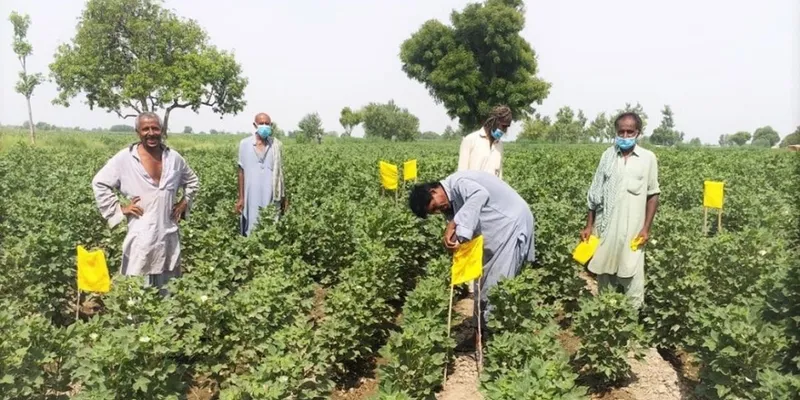
During the survey, the team inspected cotton fields in Sirsa district and interacted with farmers on Integrated Pest Management practices aimed at reducing pest attacks while limiting dependence on chemical pesticides.
Officials said initial signs of pink bollworm infestation had been observed in some fields. Farmers were advised to install four to five pheromone traps per acre, fitted with cotton pheromone lures, to monitor pest populations and detect infestations at an early stage.
For the management of sap-sucking insects, the department recommended installing 20 yellow or blue sticky traps per hectare.
To strengthen field surveillance, demonstration plots equipped with pheromone traps have been established in Sirsa, Fatehabad, Hisar, Hansi, Bhiwani, Charkhi Dadri and Jind districts. Officials said several farmers using pheromone traps had already reported encouraging results in managing pink bollworm.
Growers were also advised to spray only pesticides approved by the Central Insecticides Board and Registration Committee and only when pest populations exceed the prescribed economic threshold level.
The survey team introduced farmers to the National Pest Surveillance System mobile application, which provides real-time information on pest identification, disease diagnosis and crop protection measures, enabling timely intervention and reducing unnecessary pesticide use.
Pink bollworm caused extensive damage to cotton crops in Sirsa during 2023, 2024 and 2025. This year, however, excessive rainfall has emerged as the bigger challenge for cotton growers, affecting fields across several areas.