Durable Bathroom Floor Tile Options for Busy Homes
In a busy household, bathroom floors experience constant wear-from water splashes and heavy foot traffic to dropped toiletries and everyday mess. Because of this, durability becomes just as important as style when choosing the right flooring material.
The right bathroom floor tile should handle moisture, resist stains, and provide reliable traction without requiring constant maintenance. By focusing on strong, practical materials and thoughtful finishes, you can create a floor that not only looks great but also stands up to the demands of everyday life.
Busy-Home Performance Checklist (Use This Before Shopping)
Smart tile decisions start here. Know what you're asking of that floor before you fall in love with a finish.
Durability Targets for the Best Bathroom Floor Tile for High Traffic
A floor that regularly meets dropped shampoo bottles, scattered bath toys, and the occasional rolling hairdryer needs genuine toughness. Surface finish plays a bigger role than most people realize that heavily polished tiles tend to smooth out over time, which paradoxically makes them more slippery, not less.
Stain resistance is equally non-negotiable, particularly against hair dye, self-tanner, and those stubborn hard-water deposits that dull surfaces fast. Finding the best bathroom floor tile for high traffic means checking all three boxes - scratch resistance, traction, and stain resilience - not just whichever one photographs best.
Waterproofing Reality Check
Here's something most homeowners don't learn until it's too late: tile and grout together do not create a waterproof system. Without a proper membrane or underlayment installed beneath, moisture still works its way through grout joints and into your subfloor - quietly, invisibly, over months and years.
The highest-risk zones are around the tub surround, shower entry, toilet base, and vanity. Skipping membrane protection in those spots is one of the most common reasons a bathroom develops hidden mold and rot long before anything visible shows up on the surface.
Slip Safety That's Actually Measurable
"Slip-resistant" on a product label is essentially marketing language until there are actual numbers behind it. When
evaluating tile, ask specifically for wet DCOF - Dynamic Coefficient of Friction - ratings. Dry floor areas have lower traction demands than shower-adjacent wet zones, so matching the right finish to each specific area is sharper thinking than blanketing the whole room with one approach.
Scratch and stain resistance protect your tile's surface. What protects everything underneath is a different conversation entirely - one most homeowners skip right past until real damage has already set in.
Top Durable Bathroom Floor Tile Materials
Performance benchmarks in hand, you're ready to evaluate actual materials. Here's how the most common options hold up when a genuinely busy household puts them through their paces.
Porcelain Tile: The Workhorse Durable Bathroom Floor Tile
If you ask any experienced tile professional what goes in a family bathroom, porcelain is the answer nine times out of ten, and there's solid reasoning behind that.
Dense, low-porosity construction makes it naturally resistant to moisture, scratching, and impact. Through-body formats hide chips cleanly if the surface gets nicked. Matte or lightly textured finishes add traction that polished styles simply can't match.
Larger-format porcelain cuts down on grout line count, which means less surface area to scrub on a busy Tuesday morning. Just balance that larger size with enough surface texture to maintain grip in wet conditions.
Textured Ceramic Tile: Budget-Friendly, but Choose Carefully
If your budget is tighter or the bathroom sees lighter daily use, textured ceramic is a reasonable path, with one firm caveat: never install an ultra-gloss ceramic glaze on a busy bathroom floor.
It turns slick the instant it gets wet, full stop. Pair any ceramic floor tile with a quality grout sealer and a stain-resistant grout formula, and maintenance stays manageable. Just don't let the lower price tag tempt you into cutting corners on either.
Natural Stone: Premium Look, Higher Maintenance Commitment
Polished marble floors look absolutely stunning - in hotel lobbies. In a wet bathroom used by real people every day, that same finish creates genuine slip risk. Honed stone finishes are safer, though natural stone still demands a consistent sealing schedule and doesn't forgive acidic cleaners the way porcelain does.
For most busy households, honestly, a porcelain tile that convincingly mimics marble delivers around 90% of the visual impact with a fraction of the upkeep demands. Worth thinking carefully about before committing.
Mosaic Floors: Traction and Drain-Friendly
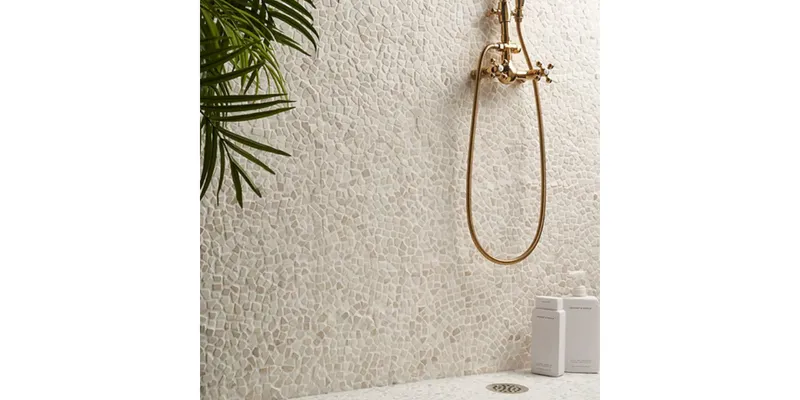
Smaller tile format means more grout lines per square foot - and those additional grout lines actually improve wet-surface grip while helping the floor follow drain slopes far more naturally.
The trade-off is cleaning effort. More grout equals more surface area for grime to settle into, so using pre-sealed or stain-resistant grout in any mosaic installation significantly reduces that ongoing workload.
Slip-Resistant Choices That Still Look High-End
Choosing the right material is half the work. The other half is how that material is finished, formatted, and placed - because those decisions determine whether the floor is actually safe for everyday use.
Finishes That Improve Grip Without Feeling Industrial
Matte, micro-textured, and structured surface finishes deliver traction that most people genuinely don't notice underfoot - until they step onto a polished floor in the same wet conditions and feel the difference immediately. If your bathroom is used regularly by kids or older adults, skip polished finishes entirely. The visual difference between polished and matte is smaller than most people expect. The safety difference is not.
Pattern and Format Strategies for a Slip Resistant Bathroom Floor Tile
Surface texture matters for a slip resistant bathroom floor tile but so does format. Smaller tile sizes in high-wet zones, like the floor area directly outside a tub or shower, add grout-line grip right where it's most needed.
Those grout lines create micro-edges that give wet feet something to work with. Yes, the trade-off is more surface to clean - but that's a manageable problem. A slip is not.
Wet-Zone Design: Safer Without Relying on Mats
Nonslip flooring is now among the most frequently added features in bathroom remodels. Houzz reports that 24% of homeowners are actively choosing it.
A practical "landing zone" strategy - positioning higher-traction tile specifically at tub and shower exits - concentrates slip protection exactly where the risk is highest. Thoughtful threshold planning also eliminates the tripping hazards that bath mats introduced in households where people are always in a hurry.
Low-Maintenance Bathroom Floor Tile Ideas for Busy Homes
With structure and waterproofing sorted, here's the part most homeowners look forward to - choosing a look that genuinely works with the rhythm of a busy household.
"Clean-Fast" Design Themes That Hide Mess Naturally
Mid-tone concrete visuals, subtle terrazzo patterns, and earthy stone aesthetics are your most forgiving allies in a busy bathroom. Bathroom floor tile ideas for busy homes should consciously steer away from pure white gloss - it showcases every stray hair.
Ultra-dark high-sheen finishes announce every water droplet. A warm greige or soft stone mid-tone hides daily mess more effectively while still looking intentional and polished.
Grout Line Styling That Reduces Visible Grime
Grout color and line width quietly shape how clean your floor looks on an ordinary Wednesday, not just right after installation. Color-matched grout blends into the field tile and masks grime far more effectively than sharp white contrast grout.
Narrower lines read as cleaner aesthetically but require greater tile dimensional consistency. Wider lines tolerate more variation during installation and are generally more forgiving in real-world conditions.
Trend-Forward Options Worth Knowing About
A newer generation of porcelain incorporates micro-textured surfaces and anti-slip glaze technology that genuinely improves wet traction - without the rough underfoot texture associated with older non-slip tile.
Large-format "spa look" porcelain can still function well in busy bathrooms when thoughtfully mixed with textured tile in wet zones. Curbless wet-room layouts are steadily gaining popularity and specifically reward slope-friendly, drain-compatible tile choices.
Installation and Maintenance Essentials
Picking the right tile matters enormously. But long-term performance depends just as heavily on what happens before and after it goes down.
Subfloor stiffness is the most consistently underestimated durability factor in tile work. A floor that flexes even slightly will crack tile and grout within a year, often sooner. Leveling compounds address minor imperfections adequately, but significant subfloor deflection requires structural correction before tile work begins.
Drain and slope planning prevents standing water from accumulating near shower exits, which creates both slip risk and long-term mold conditions. For sealing, stone tile and cement grout both need it on a defined schedule. Most porcelain tile surfaces, however, don't require sealing at all.
For daily maintenance, a two-step weekly routine - sweep or vacuum, followed by a pH-neutral mop, is genuinely what most porcelain floors need. Harsh acidic cleaners and abrasive scrubbing pads damage both grout and glaze faster than daily foot traffic does.
Spot-clean hair dye and makeup immediately before they have time to set. Managing soap film buildup and improving bathroom ventilation are the two habits that keep floors both safer and cleaner longer than almost any product upgrade can.
Buyer's Shortcut: Best Picks by Priority
Priority | Best Choice |
Overall durable bathroom floor tile | Textured/matte porcelain |
Slip resistant bathroom floor tile | Textured porcelain or mosaics in wet paths |
Waterproof bathroom flooring options (non-tile) | High-quality waterproof LVT |
Easiest cleaning | Large-format porcelain + stain-resistant grout |
Bathroom floor tile ideas for busy homes (style-led) | Terrazzo-look, concrete-look, or matte marble-look porcelain |
Frequently Asked Questions
What is the best alternative to tile in a bathroom floor?
Luxury vinyl tile is the strongest non-tile contender available. It's waterproof, comfortable to stand on, and installs faster than traditional tile - a genuinely practical choice when subfloor conditions or project timelines make standard tile installation difficult or cost-prohibitive.
What is the best flooring for accessible bathrooms?
Vinyl, porcelain tile, and rubber flooring consistently top the list. Each delivers solid water resistance, reliable traction, and the firm underfoot stability needed for wheelchair movement and safe navigation throughout the space.
What is the most durable tile for a bathroom floor?
Porcelain remains the top answer. Its dense, low-porosity composition resists moisture, staining, and daily impact more reliably than ceramic or natural stone - making it the most dependable long-term performer in consistently wet environments.