Dr N. N. Mahapatra Highlights Sustainable Innovations in Dyeing at BUTEX
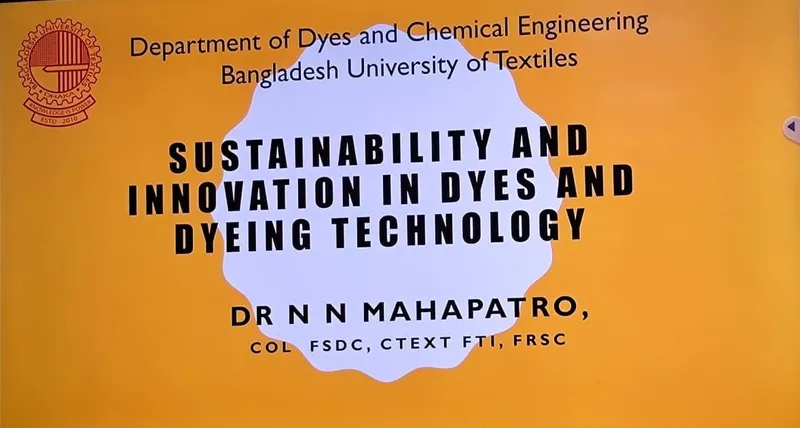
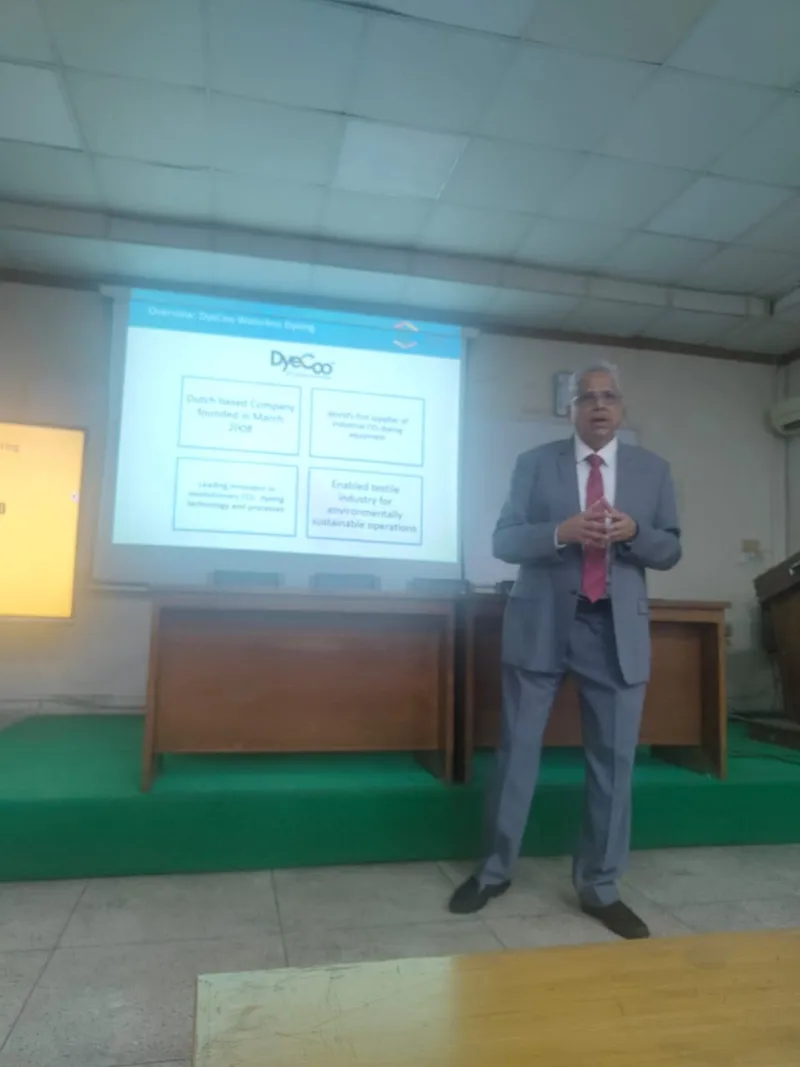
The Department of Dyes and Chemical Engineering at Bangladesh University of Textiles (BUTEX) recently hosted a seminar titled “Sustainability and Innovation in Dyes and Dyeing Technology,” featuring a guest lecture by Dr N. N. Mahapatra, Business Head (Dyes) at Shree Pushkar Chemicals & Fertilisers Ltd.
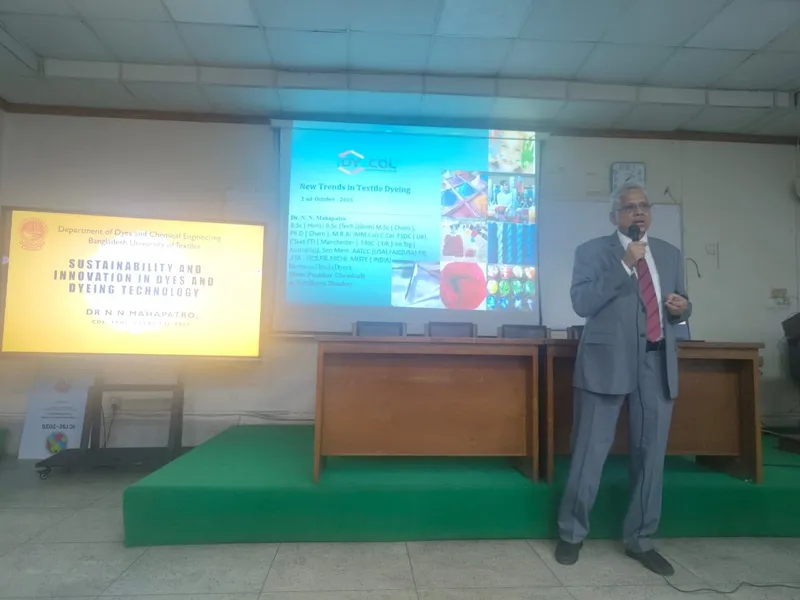
With over forty years in the dyes and chemical industry, Dr Mahapatra is recognised as a leading expert in India and internationally. He has spoken at numerous global conferences, specialising in reactive, acid, disperse, and direct dyes, as well as eco-friendly process optimisation and formulation design. Under his leadership, Dyecol™ has pioneered sustainable solutions, including low-water and energy-efficient dyeing processes. His technical publications and manuals remain key resources for professionals and students in textile engineering across South Asia. During his presentation, Dr Mahapatra emphasised the urgent need to transition from conventional dyeing methods toward environmentally responsible systems. He illustrated how targeted innovations could significantly reduce water and energy usage. Addressing young textile engineers and chemists, he called for greater collaboration between academia and industry to accelerate sustainable transformation. He also explored the possibilities offered by alternative natural fibres such as banana, pineapple, bamboo, and coir, alongside plant-derived dyes including indigo, turmeric, and madder, which offer ecological benefits while safeguarding traditional craftsmanship and cultural heritage.
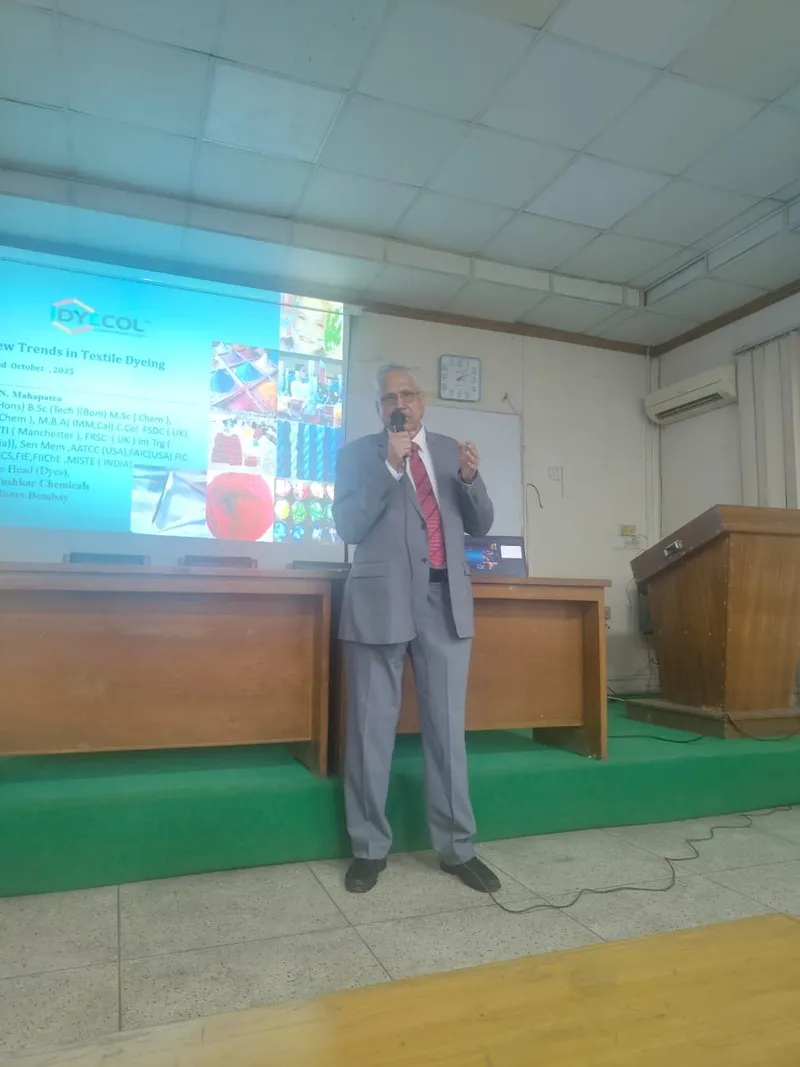
For students and researchers, the seminar provided not only technical insights but also inspiration for future exploration and innovation. In a move to bridge academic learning with practical application, Dr Mahapatra announced internship opportunities at Shree Pushkar Chemicals & Fertilisers Ltd., Mumbai, for students of the Dyes and Chemical Engineering Department. These internships will enable participants to gain hands-on experience in advanced dye manufacturing, sustainability-focused process development, and quality management. The initiative was met with enthusiasm, especially among final-year students eager to apply their knowledge in real-world industrial settings.