Don’t Let Our Fields Go Silent: Why tariff-free trade with a giant like the USA feels unsafe to India’s 6.5 million cotton farmers
By Cottonguru®—from the villages that grow India’s cotton
A morning in Chincholi
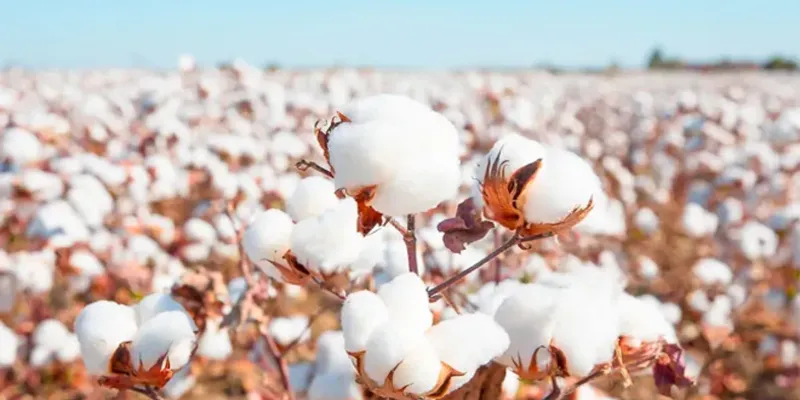
At first light in Chincholi village, Adilabad (Telangana), Dhurva Laluram (Patel) steps into a field that tells the story of a year most smallholders know too well. Rains came hard, then vanished. Bolls burst, then soaked in an unseasonal spell. The picking crew he counted on went to the city for daily wages. Input bills—seed, fertiliser, sprays—sit inside a polythene envelope in his shirt pocket, creased like the lines on his palm.

Dhurva’s daughter asks whether the harvest will pay her college fee; his mother worries about another loan; his wife has the bruises on both hands similar to all women who works the field as much as the home. The soil is thinner than it was ten years ago. The price is lower than last year. The moneylender’s call may come any moment today.
Now imagine telling Dhurva that tariff-free trade could open India’s market to a super producer like the United States—home to heavily capitalised farms, deep risk cushions and export muscle. You can almost hear the question he doesn’t want to ask: “When the big cotton arrives cheaper and faster, who will buy mine—and at what price?”
This is not fear of the world; farmers like Dhurva sell into it every day through mills and merchants. It is fear of being the shock-absorber of policy—again.
Why tariff-free with a giant feels like a gamble to smallholders
1. Asymmetry at the mandi
US cotton rides on scale, mechanisation and longstanding support systems. India’s cotton is grown by 6.5 million smallholders on fragile margins. Remove tariffs suddenly and the price contest shifts from efficiency to survival—with the smallest shoulders carrying the fall.
2. Harvest-time hits are fatal
Cotton prices are most vulnerable when arrivals peak. If tariff-free imports coincide with this window, even a modest wave can push farm-gate prices below viability, locking families into new debt just as they must pay pickers, transporters and previous loans.
3. The chain reaction is real
Cheaper imports → mills delay/trim domestic buying → ginners idle capacity → rural wages weaken → farmgate prices slip further. What looks like a marginal price move on a chart becomes a village-wide cash-flow crisis.
4. Volatility erodes trust
Farmers can manage low prices or high prices; they cannot plan for sudden, policy driven whiplash. If the rules move faster than a season, people exit cotton—or agriculture—altogether.
5. Environmental costs get ignored
A shock to local prices pushes farmers back toward short-term chemical fixes, burns residue, and drops investments in soil health. The climate cost shows up later—in lower yields and lost resilience.
The lived ledger: economic, social, environmental
∙ Economic: Thin margins, rising costs, delayed payments. A ₹300–500/qtl drop at harvest can wipe out a season on a 2–3 acre holding.
∙ Social: School fees deferred, healthcare postponed, migration intensified. Women carry the heaviest load of picking and home care with the least protection.
∙ Environmental: Erratic rains, pest flare-ups, tired soils. Without a price floor and a clear market path, long-term investments in soil organic carbon, water stewardship and biodiversity get cut first.
Dhurva’s story is not an exception; it is the median of India’s cotton belt from Punjab to Tamil Nadu.
The promise we still want from trade
Let’s be clear. Farmers are not against trade. When exports flow, mills hum and the pull for Indian cotton strengthens. Trade can bring:
∙ Stable, longer-tenor orders for Indian textiles and home fashion.
∙ Better technology and capital for ginning and spinning.
∙ Premiums for responsible fibre—traceable, low-carbon, regenerative. But that promise only lands if the field is protected while the deal takes root.
A farmer-first test for any India–US opening
We propose six simple, human tests. If an agreement passes these, the village will feel safe.
1. Seasonal safety
No tariff-free surge should hit India during peak harvest arrivals. Put calendar guardrails that everyone can see.
2. Transparency you can read
Publish the notified schedules and changes in plain language (and major regional languages). Rumours set prices; transparency prevents panic.
3. Early-warning dashboard
Track imports + mandi prices, weekly, at the top 25 arrival centres. If prices slip beyond a trigger band while imports rise, apply temporary speed breakers— automatically.
4. Independent eyes
A small, mixed panel (farmer bodies, industry, neutral economists) issues a monthly “Trade & Farm” bulletin. No spin—just numbers.
5. Time-bound reviews
First-year quarterly reviews tied to the crop calendar. Correct, don’t congratulate.
6. Village-level helpdesks
District-level points (at Krishi Bhavans/market yards) to answer “what changes for me?” This is as much a communication job as a customs job.
What industry and brands can do—right now
∙ Signal earlier, buy steadier: Convert spot buying into contract farming in FPO led programs that ride through harvest volatility.
∙ Reward responsibility: If customers pay you for sustainable cotton, share a slice upstream. Even ₹100–150/qtl as a genuine premium keeps farmers in the game.
∙ Invest in resilience: Co-fund on-farm soil health (biochar, composting, cover crops), water-saving and IPM—because consistent fibre quality starts below ground.
∙ Support through carbon credit projects in Regenagri and Biochar initiatives-adding sustainable alternate income for the farmers.
India’s strategic hedge: soil, carbon and value-addition
Trade deals come and go. The moat that keeps a farmer alive is productivity with resilience.
∙ Biochar as “Black Gold”: Returning carbon to soil lifts water-holding and nutrient efficiency, reduces input costs, and opens doors to carbon finance.
∙ Regenerative cotton: Less tillage, more cover, smarter rotations. Yields stabilise; pesticide bills fall.
∙ Value-addition at home: More fibre spun, dyed, finished and stitched in India means more jobs and better offtake for Indian cotton regardless of the world’s mood.
At Cottonguru®, we work with Farmer Producer Organisations (FPOs) and brands to turn these from pilots into practice—because soil is the only warehouse a smallholder truly owns.
Three red lines India must hold
1. No harvest-time dumping of imported agri commodities in India—ever.
2. No deal that ignores subsidy asymmetry between giant, cushioned farms and India’s smallholders.
3. No opacity that lets middlemen trade rumours while farmers absorb losses.
What success looks like in a year
∙ Cotton farmers like Dhurva sell within a stable price band at harvest, not months later in distress.
∙ Mills buy earlier on program contracts; fewer stop-start shocks.
∙ Imports complement the gap, not crush the crop.
∙ District helpdesks answer farmers in their language, not in PDFs.
∙ A visible monthly dashboard calms markets more than WhatsApp does.
A closing word from Chincholi
Standing by a faded poster on good picking practices, Dhurva asks quietly, “We only ask that rules be clear and they don’t ruin our harvest day.”
That is the whole case for a farmer-first trade design. Engage the world; protect the field. If tariff-free access is pursued, stage it, shield harvests, publish everything, and course-correct fast. The village can handle competition; it cannot handle surprises.
The world should buy more from India. But the price cannot be Dhurva Laluram’s future.
Cottonguru®, representing Indian cotton farmers, will keep walking the rows—listening, measuring, and carrying the village’s voice to policy tables—until trade becomes not a threat to smallholders, but the bridge that finally lifts them.