Digital textile printing market projected to reach USD 10.5 billion by 2033
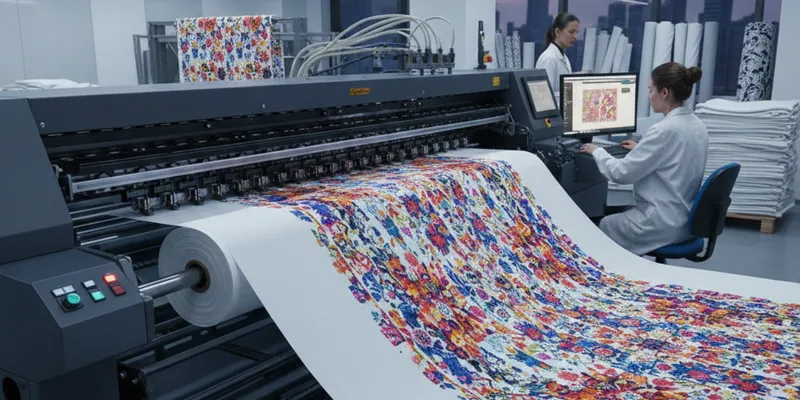
According to Growth Market Reports, the global digital textile printing market was valued at USD 3.5 billion in 2024, supported by rising demand for fast, high-quality, and customized textile products across various industries. The market is projected to expand at a compound annual growth rate (CAGR) of 14.2% between 2025 and 2033, reaching an estimated USD 10.5 billion by 2033. This growth is attributed to the wider use of digital printing technologies in textile manufacturing, improvements in ink chemistry, and the increasing adoption of sustainable printing methods worldwide.
Traditionally, the textile industry has been among the most labor- and resource-intensive sectors of the global economy. Over time, textile printing has progressed from hand-block techniques to rotary screen processes, reflecting broader industrial development. In recent years, digital textile printing has gained prominence as a transformative technology, altering production methods and market practices. Its ability to combine accuracy, adaptability, and reduced environmental impact is contributing to changes in industry standards and competitive dynamics.
Market Drivers
Demand for Personalization
In today’s consumer landscape, personalization is not a luxury it’s a demand. Digital textile printing enables manufacturers and brands to offer customized designs at scale. From bespoke fashion to on-demand home textiles, this capability aligns closely with evolving consumer behavior.
Sustainability and Reduced Waste
One of the most compelling advantages of digital textile printing is its environmental impact. Traditional printing often leads to excess dye consumption and higher wastewater discharge. By contrast, digital processes optimize ink usage and significantly reduce chemical waste a major advantage for brands aiming for eco-conscious production.
Technological Advancements
Continuous improvements in ink formulations, printhead technologies, and fabric pretreatment methods have expanded the range of printable materials and enhanced color quality. Investments in R&D have also driven down costs, making digital printing more accessible to small and medium enterprises.
Shift in Fashion Cycles
The traditional fashion calendar is giving way to rapid design cycles driven by social media trends and consumer demand for newness. Digital textile printing enables designers to introduce collections with shorter lead times, responding swiftly to market signals without the burden of large inventory.
Technological Innovations Shaping the Future
AI and Data Analytics Integration
Artificial Intelligence (AI) is transforming how designs are optimized for print. Predictive analytics can suggest color combinations, estimate material usage, and enhance workflow efficiency. AI also helps in identifying consumer preferences and tailoring production accordingly.
Next-Gen Inks and Materials
Research into eco-friendly, biodegradable inks and broader fabric compatibility is expanding the application spectrum of digital textile printing. New chemistry formulations enable deeper pigment penetration, brighter colors, and improved wash-fastness.
Automation and Robotics
Robotic fabric handling, automated printhead cleaning, and integrated finishing systems are reducing manual intervention, increasing throughput, and lowering operational errors. Smart factories driven by the Industrial Internet of Things (IIoT) promise real-time monitoring and predictive maintenance.
Future Outlook and Opportunities
The digital textile printing market is poised for continued growth over the next decade. As technology becomes more accessible and consumer expectations evolve, the market will likely see:
- Greater democratization of textile design, empowering independent artists and small brands.
- Localized micro-factories that reduce lead times and logistical costs.
- Enhanced sustainability metrics, with digital processes lowering water usage and chemical discharge.
- Integration with augmented reality (AR) for virtual try-ons and design previews.
Industry stakeholders who invest in technology, training, and digital infrastructure will be best positioned to thrive in this dynamic landscape.
Competitive Landscape
Prominent companies operating in the market are:
- Dover Corporation
- Seiko Epson Corporation
- Kornit Digital Ltd.
- Durst Phototechnik AG
- Mimaki Engineering Co., Ltd.
- Electronics For Imaging, Inc. (EFI)
- SPGPrints B.V.
- Roland DG Corporation
- Aeoon Technologies GmbH
- Brother Industries, Ltd.
- Konica Minolta, Inc.
- D.Gen, Inc.
- Mutoh Holdings Co., Ltd.
- Ricoh Company, Ltd.
Source: https://growthmarketreports.com/report/digital-textile-printing-market-global-industry-analysis