Development of Home Textile Products from Post-Consumer Textile Waste
Ms. Kalika Puranik
M.Sc. TSAD Student,
SNDT Women’s University, Mumbai
&
Dr. Anshu Sharma
Professor and HOD,
PG Department of Textile Science and Apparel Design,
SNDT Women’s University, Mumbai
Abstract
With the growing concern over textile waste and its environmental impact, sustainable approaches for fabric reuse are urgently needed. Post-consumer textile waste, which includes discarded clothing and household fabrics, poses significant challenges for the textile industry. This paper explores strategies to transform such waste into functional home textile products, including curtains, cushions, rugs, and other décor items. Recycling involves breaking down used fabrics into fibres for re-spinning or creating nonwoven materials, while upcycling emphasises creative reuse, converting waste into functional and visually appealing products without intensive processing. Repurposing textiles offers dual benefits: mitigating environmental damage, such as landfill accumulation and resource depletion, and supporting economic opportunities through sustainable production and green entrepreneurship. Furthermore, consumer awareness, innovative design, and supportive policies play a crucial role in promoting sustainable home textile production. By addressing post-consumer textile waste through recycling and upcycling, the textile industry can contribute to environmental preservation and foster circular economy practices.
Keywords: Recycling, Upcycling, Home Textiles, Sustainability, Environment
1. Introduction
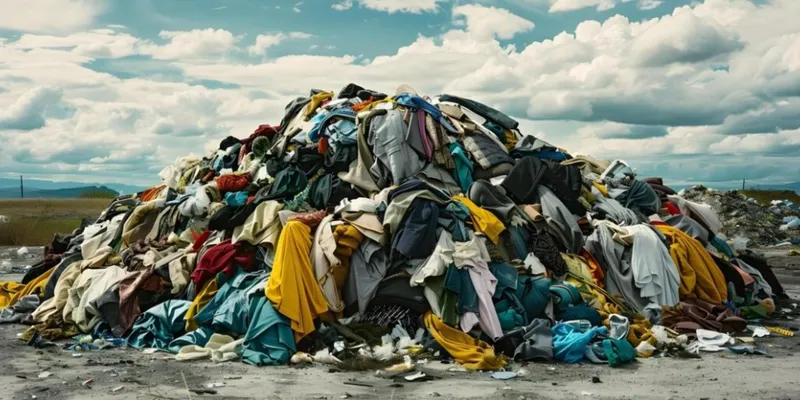
Textile waste is a major contributor to global waste streams, with millions of tons of clothing and fabric ending up in landfills annually (Ellen MacArthur Foundation, 2017; BBC News, 2023). Post-consumer textile waste—including used apparel, home textiles, and upholstery—presents a challenge for sustainable management, as improper disposal causes environmental pollution and depletes natural resources (United Nations Environment Programme, 2020). One solution is repurposing these materials into home textiles, thereby reducing landfill waste and supporting a circular economy (Textile Exchange, 2023; Fashion Revolution, 2023).
Despite growing interest in recycling and upcycling, challenges such as fibre degradation, sorting complexity, and high processing costs hinder large-scale adoption. Exploring methods, benefits, and challenges of converting post-consumer textiles into home textile products is essential to advancing sustainability in the textile sector (Sandin & Peters, 2018).
2. Post-Consumer Textile Waste
Post-consumer textile waste refers to garments and fabrics that have been used and discarded by consumers (Juanga-Lab, et al., 2020). These materials often comprise mixed fibres, synthetic blends, and dyes, complicating recycling efforts (Nidhi, 2023). Improper disposal of such textiles leads to long-term environmental pollution; synthetic fibres may take decades to decompose while releasing microplastics into ecosystems (Okafor, 2024).
3. Recycling and Upcycling Techniques
3.1 Recycling
Recycling involves collecting, processing, and transforming discarded textiles into new products instead of sending them to landfills. Recycling conserves resources, reduces energy consumption, and minimises environmental pollution.
However, challenges exist: contamination of textile streams by non-recyclable or improperly cleaned items can compromise recycling efficiency. Downcycling is another concern, where recycled materials degrade over time, producing lower-grade products such as fibres or insulation, which may eventually be discarded. Policy initiatives like Extended Producer Responsibility (EPR) encourage manufacturers to design for recyclability and invest in waste collection systems, thereby supporting circular economy models (EPA, 2023).
3.1.1 Mechanical Recycling
Mechanical recycling involves shredding old textiles into fibres, which can be spun into new yarns for products like rugs, cushions, and upholstery. This method is energy-efficient but may reduce fibre strength and durability over time (Saha, 2020; Bjorquist, n.d.).
3.1.2 Chemical Recycling
Chemical recycling breaks fibres down to their original chemical components, which can be reprocessed into new fibres. This is particularly effective for polyester and blended fabrics but requires advanced technology and significant investment (Ndagano, et al., 2025; Fashion for Good, n.d.).
3.2 Upcycling
Upcycling creatively repurposes textiles without fully breaking them down. For instance, old jeans can be converted into patchwork cushions, and used sarees can become decorative curtains (Munjal, 2025; Sarkar, 2024). Upcycling enhances the original material’s aesthetic and functional value, avoiding the energy-intensive processes required in recycling. It also creates economic opportunities for designers, artisans, and entrepreneurs, allowing the production of unique, eco-friendly products (Sung, Cooper, & Kettley, 2014; Pedersen & Netter, 2015).
4. Challenges in Reusing Post-Consumer Textiles
Despite environmental and economic advantages, several barriers limit the large-scale adoption of recycling and upcycling. Sorting textiles is particularly difficult, as post-consumer fabrics often contain blended fibres like cotton–polyester or nylon–wool, making separation labour-intensive and prone to error (Juanga et al., 2022). Fibre degradation during recycling, especially mechanical processes, reduces yarn strength, limiting its use in high-quality products (Nidhi, 2023). Additionally, residual dyes and chemicals from previous processing may pose health risks and require specialised treatment before reuse (Md. Abdus et al., 2024).
-800x525.webp?2026-02-25T09:15:15.713Z)
5. Benefits of Repurposing Textile Waste
Repurposing post-consumer textiles provides environmental, economic, and social benefits. Environmentally, it reduces landfill volumes and conserves resources by minimising the need for virgin fabric production, thus lowering energy, water consumption, and greenhouse gas emissions (Sood, 2024).
Economically, recycling and upcycling generate employment across the textile value chain, from collection to product innovation. In areas with high unemployment, these industries provide income and skill development opportunities (Trivedi, 2024). Consumer demand for sustainable and unique products further supports market growth for recycled and upcycled textiles (Kimeu, 2025).
6. Sustainable Design Strategies
To maximise usability and durability, home textiles from waste materials can adopt several sustainable design strategies:
- Blending Recycled and Natural Fibres: Enhances softness and strength (Guss, 2024).
- Minimal Processing Techniques: Reduces energy and water usage while preserving material integrity (Cottonworks, n.d.).
- Creative Repurposing: Modular or repairable designs extend product lifespan (Senthilkannan, 2020).
7. Government Policies Supporting Recycling and Upcycling
- Legislation: India’s NITI Aayog has established a Circular Economy Cell to implement sector-specific circular strategies, including textiles (NITI.gov.in). Policies such as Plastic Waste Management Rules and e-Waste Rules promote circular economy principles (PIB.gov.in, 2023).
- Consumer Awareness Campaigns: Programs by the Global Alliance for Textile Sustainability (GATS) and NGOs like Green Worms educate communities, empower women, and promote sustainable textile practices (Bansal, 2024; Escorial, 2024).
Key Government Initiatives:
- NITI Aayog’s Circular Economy Action Plan: Focuses on promoting the reuse of post-consumer textiles, implementing EPR, developing reverse logistics, and fostering public-private partnerships.
- Ministry of Textiles – PM-MITRA Parks & Eco-Textile Clusters: Encourages sustainable processing, waste segregation, and zero-liquid discharge.
- EPR Expansion: MoEFCC plans to extend EPR to textiles, requiring brands to collect and recycle post-use products.
- Start-up India & MSME Support: Provides funding and incubation for textile recycling and upcycling start-ups.
- Swachh Bharat Mission – Urban: Municipal pilot programs promote textile segregation and upcycling initiatives, often in collaboration with NGOs and academic institutions.
8. Organisations and Brands Engaged in Recycling and Upcycling
- Respun: Collects post-consumer textiles and recycles them into new products, providing rural employment (Respun India, 2025).
- Goonj / Sujni: Upcycles urban textile waste into rural livelihoods and products, empowering women (Goonj, 2025).
- Zero Waste Ladakh: Conducts community-based upcycling workshops and skill-building for women, generating income from textile waste (Zero Waste Ladakh, 2025).
- Earth5R: Runs urban micro-enterprises transforming textile waste into bags and home décor items, promoting grassroots sustainability (Earth5R, 2025).
- NewRetex: Denmark-based industrial-scale textile recycling company with advanced sorting and traceability systems (NewRetex, 2025).
- Doodlage: Indian brand that upcycles factory scraps and post-consumer textiles into fashion and home products, emphasising circularity.
- Ka-Sha: Upcycles scrap fabrics into fashion and functional products while celebrating Indian artisanal traditions.
- Juhu Beach Studio: Mumbai-based brand converting textile waste into home décor and fashion products with an all-women team.
- Imli Dana: Creates slow-made home textiles and fashion items from scraps using handcrafted techniques.
- Rkivecity & Paiwand: Focus on transforming waste into unique, high-value home and fashion products.
Conclusion
Converting post-consumer textile waste into home textile products provides a promising solution to environmental challenges while promoting sustainable production. Despite technical and operational barriers, advances in recycling technology, sustainable design, and policy support can facilitate large-scale adoption. Encouraging circular economy practices, investing in R&D, improving consumer awareness, and integrating sustainability into education will be key to mainstreaming recycled and upcycled textiles. This approach not only protects the environment but also creates economic opportunities, reshaping the textile industry toward responsible consumption. By embracing innovation and collaboration, recycled textiles can evolve from niche initiatives to standard practice, supporting a greener, circular future.
References
- BBC News (2023). https://www.bbc.com/news
- Bansal R. (2024) India’s traditional recycling system finds new groove to tackle modern challenges. texfash.com https://texfash.com/special/india-s-traditional-recycling-system-finds-new-groove-to-tackle-modern-challenges
- Bjorquist, S, (n.d). Mechanicla recycling of textiles. RISE. https://www.rise/en/expertise-areas/expertises/mechanical-recycling-of-textiles
- Cotton Works TM. (2023) Solutions for minimal processing. https://cottonworks.com/en/topics/sustainability/cotton-sustainability-solutions-for-minimal-processing
- Ellen MacArthur Foundation, (2017). How to build Circular Economy https://www.ellenmacarthurfoundation.org/.
- Environmental Protection Agency (EPA). (2023). Recycling basics. U.S. Environmental Protection Agency. https://www.epa.gov/recycle/recycling-basics.
- Escorial, M.L. (2024), Resolviendo la crisis de gestion de residuos de la India. El Pais. https://elpias.com/planeta-futuro/2024-09-02/resolviendo-la-crisis-de-gestion-de-residuos-de-la-india.html
- Fashion Revolution (2023) How the circular economy can change textile waste management. https://www.fashionrevolution.org .
- Fashion for good (2023) What is chemical recycling? https://fashionforgood.com/our_news/what-is-chemical-recycling/.
- Guss, (2024, ). Sustainable fiber blending: combining natural and recycled materials for maximum impact. https://journallo.com/2024/10/09/sustainable-fiber-blending-natural-recycled-materials/.
- https://www.fibre2fashion.com/industry-article/10425/top-15-indian-clothing-brands-that-are-making-best-out-of-waste
- Juanga- Labayen, J.P, Labayen, I.V., & Yuan, Q. (2022). A review on textile recycling practices and challenges. Textiles ,2(1),174-188. https://doi.org/10.3390/textiles2010010.