Demand recovery fuels fresh investments in textile industry
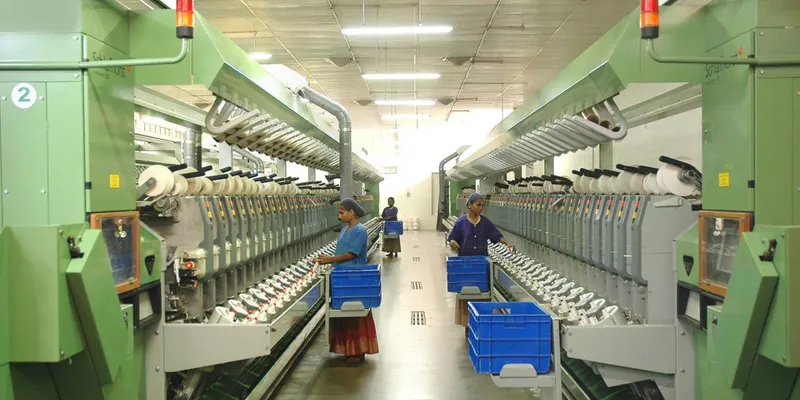
Industry officials cite capacity expansion, mill modernisation and automation as demand improves despite recent cotton price fluctuations
India's textile and clothing industry has recorded increased investment activity after demand improved during the last quarter of FY26 and the first quarter of the current financial year, industry officials said.
“After 2022, the industry saw demand picking up across the textile value chain from January to mid-May. There is a slowdown in demand now after withdrawal of the import duty on cotton. We hope the situation will stabilise in a month or so,” said K. Selvaraju, secretary general, Southern India Mills Association.
He added that investment decisions are based on long-term growth rather than short-term market performance.
“All the good performers are investing now, expanding capacities. Investments are not decided based on the performance of two or three months. For larger industries, the investments were planned at least seven or eight months before. They are looking at long-term growth,” added Chandrima Chatterjee, Secretary General, Confederation of Indian Textile Industry.
Higher Yarn Exports
Yarn exports between October 2025 and March 2026 were higher in quantity compared with the corresponding period of the previous year. Fabric exports also increased before witnessing a slowdown.
Industry officials said the spike in yarn prices affected garments and made-ups for a few weeks. However, the recent decline in cotton prices has again led to lower demand.
“When the market revives, it takes about three months for the entire supply chain to benefit. Cotton imports have crossed 40 lakh bales between October 2025 and May 2026. Another 15-20 lakh bales are expected to come in by the end of September. Cotton prices crossed ₹75,000 a candy and are dropping now. This has led to demand slowdown. Everyone is waiting to see how much the prices will fall. The situation will be clear in the next few weeks,” added Mr. Selvaraju.
Modernisation and Automation
Industry sources said textile mills are investing in both modernisation and capacity expansion, although exact investment figures are not available.
Some mills are also investing in value-added yarns, while others are upgrading facilities by adopting higher levels of automation.
Industry sources added that implementation of the Free Trade Agreement with the U.K. is expected to generate additional orders for garments and made-ups. Another $10 billion increase in exports is expected to support the entire textile value chain.
However, sources said the West Asia war and uncertainties surrounding the U.S. tariff remain areas of concern.