Deep Hole Drilling: A Masterclass in Precision and Efficiency
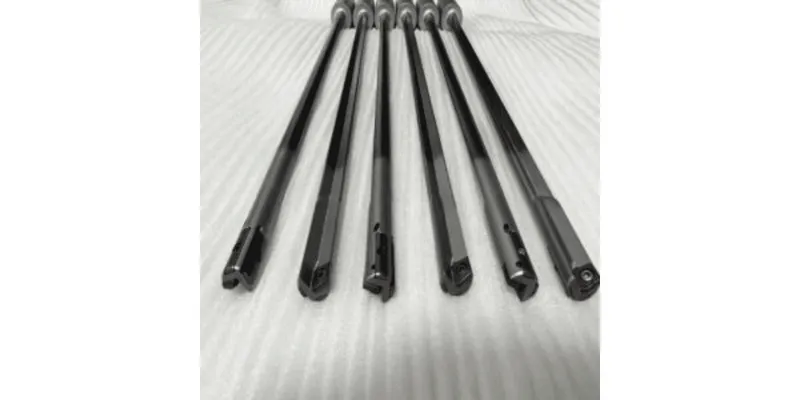
Beyond the Drill: A Deep Dive into Deep Hole Drilling
What happens when a standard drill just won't cut it? When your project requires a hole with a depth ten, twenty, or even three hundred times its diameter, you enter the specialized realm of deep hole drilling.
This isn't your everyday machining task. It's a high-precision process that demands specific technology, expert knowledge, and a clear understanding of the fundamentals. Whether you're in aerospace, medical, energy, or automotive manufacturing, mastering deep hole drilling can be the key to unlocking new design possibilities and superior component performance.
What Exactly is Deep Hole Drilling?
While definitions can vary, a general rule of thumb classifies "deep hole drilling" as any drilling operation where the hole depth is greater than 10 times the hole diameter (a 10:1 ratio). As the depth increases, so do the challenges:
- Chip Evacuation: How do you efficiently remove chips from a deep, confined space?
- Heat Dissipation: Friction generates intense heat far from the opening.
- Straightness & Accuracy: Maintaining a precise path over a long distance is critical.
- Surface Finish: The interior of the hole often needs a specific finish for its function.
Standard twist drills simply can't overcome these hurdles effectively. That's where specialized deep hole drilling processes come in.
The Two Titans of Deep Hole Drilling: BTA vs. Gun Drilling
Two primary methods dominate the deep hole drilling landscape, each with its own strengths and ideal applications.
1. Gun Drilling
Gun drilling is the go-to solution for smaller diameters and extreme depth-to-diameter ratios. It’s a single-lipped cutting tool that features a unique design:
- How it Works: High-pressure coolant is forced through an internal channel in the drill shaft. This coolant exits at the cutting head, lubricating the cut, and flushes chips back along the external V-shaped flute.
- Key Features:
- Excellent for holes from 1mm to 35mm in diameter.
- Achieves exceptional straightness and surface finish.
- Ideal for blind holes (holes that don't go all the way through the material).
2. BTA Drilling (Boring and Trepanning Association)
BTA drilling (also known as STS - System Trepanning) is often used for larger diameter holes and high-volume production. It operates on a reverse principle:
- How it Works: A specialized drill head and pressure head seal against the workpiece. Coolant is introduced under pressure into the annular space between the drill tube and the hole wall. The coolant pushes chips back through the hollow center of the drill tube.
- Key Features:
- Superior chip evacuation for larger holes (from approx. 20mm upwards).
- Higher metal removal rates and productivity for larger diameters.
- Excellent surface finish and straightness.
Why Bother? The Critical Benefits of Deep Hole Drilling
Investing in this specialized process pays dividends in part quality and performance:
- Unmatched Precision: Achieve tight diameter tolerances and exceptional straightness over long distances.
- Superior Surface Finish: The continuous high-pressure coolant process results in a smooth, consistent bore surface, often eliminating the need for secondary reaming or honing.
- Enhanced Efficiency: Despite the complex setup, the process is highly efficient for its intended applications, reducing cycle times and improving chip control compared to attempting the same job with conventional methods.
- Design Freedom: Enables the creation of complex components with internal cooling channels, hydraulic valve bodies, and high-pressure fluid paths.
Key Applications: Where You'll Find Deep Hole Drilling
This technology is the backbone of many high-tech industries:
- Aerospace: Fuel injector nozzles, landing gear components, hydraulic actuators.
- Medical: Surgical tool shafts, cannulated drills and screws, long bone implants.
- Energy & Oil & Gas: Drill collars, valve components, heat exchanger tubes.
- Automotive: Fuel injection systems, turbocharger shafts, transmission components.
Best Practices for Success
To ensure a successful deep hole drilling operation, remember these core principles:
- The Right Tool for the Job: Don't force a gun drill to do a BTA's job. Select the correct system based on hole diameter, depth, and volume.
- Coolant is King: The coolant pressure, flow, and filtration are non-negotiable. It's the lifeblood of the process, responsible for cooling, lubrication, and chip removal.
- Rigid Setup is Mandatory: Any vibration or deflection in the workpiece, tool, or machine will lead to poor straightness and tool failure. A stable, powerful CNC lathe or dedicated deep hole drilling machine is essential.
- Start with a Quality Pilot Hole: A precise, short pilot hole is crucial for guiding the deep drill and preventing "walk-off" at the start.
The Bottom Line
Deep hole drilling is more than just making a deep hole—it's a sophisticated engineering discipline. By understanding the methods, benefits, and critical success factors, you can leverage this powerful technology to produce higher-quality components, push the boundaries of design, and gain a competitive edge in precision manufacturing.