DC-DC Converter vs Linear Regulator: Understanding the Technologies
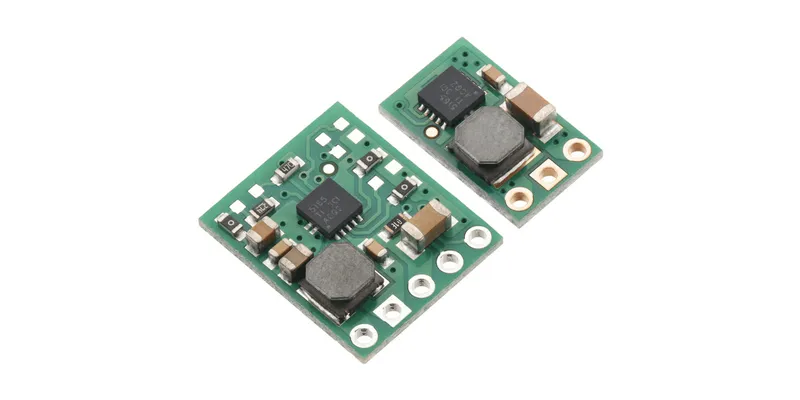
When designing advanced electronic systems, choosing between a DC-DC converter and a linear voltage regulator is not just about components — it’s about understanding their fundamental characteristics and aligning them with your design goals. This comprehensive guide explains their principles, unique properties, key differences, and practical trade-offs to help you make an informed decision.
Linear Regulator Characteristics
Linear regulators are straightforward devices that regulate voltage by dissipating excess energy as heat. They deliver a stable, clean output voltage with exceptionally low ripple and noise, making them ideal for sensitive analog, RF, and audio circuits. However, they operate efficiently only when the input and output voltages are close. Larger voltage differences result in significant power loss and heat.
Key characteristics:
- Very low output noise
- Instantaneous transient response
- Low component count and cost
- Poor efficiency at high voltage differentials
DC-DC Converter Characteristics
DC-DC converters, also called switching regulators, achieve voltage regulation by switching an inductor or transformer at high frequency and storing/releasing energy in controlled pulses. They can step voltages up or down or invert them with high efficiency, often exceeding 90% even with large input-output differences.
Key characteristics:
- High efficiency, especially at large voltage differentials
- Generates some output ripple and EMI
- Requires more external components (inductors, capacitors)
- More complex and costlier than linear regulators
DC-DC Converter vs Linear Regulator: Key Performance Comparison
Parameter | DC-DC Converter | Linear Regulator |
|---|---|---|
Efficiency | 80–95%, excellent at large Vin–Vout | Poor when Vin >> Vout |
Noise/Ripple | Higher, needs filtering | Very low, clean output |
Heat Dissipation | Low | High if Vin >> Vout |
Complexity | High (more components) | Very simple |
Cost | Higher initial cost | Lower initial cost |
Size | Larger (inductor, capacitors) | Compact |
Efficiency and Heat in DC-DC Converter vs Linear Regulator
Efficiency is where DC-DC converters shine. In a scenario where a 12V input supplies a 3.3V load, a linear regulator wastes nearly 70% of the power as heat, requiring substantial thermal management. A buck converter, in contrast, maintains over 90% efficiency and runs much cooler, conserving energy and reducing heatsinking.
If your design is battery-powered or thermally constrained, a DC-DC converter is almost always preferable.
Output Noise and Ripple: DC-DC Converter vs Linear Regulator
Linear regulators are unbeatable when it comes to clean, quiet output. Their noise is in the microvolt range, with minimal ripple, making them perfect for precision analog or RF circuits. DC-DC converters, while much improved in modern designs, still introduce higher ripple and switching noise, requiring additional filtering and careful PCB layout.
For noise-critical applications, linear regulators are the safer choice.
Load Response: DC-DC Converter vs Linear Regulator
Linear regulators react nearly instantly to fast changes in load, maintaining tight voltage control. DC-DC converters can lag slightly due to their control loops, and if not properly compensated, can overshoot or oscillate during sharp transients. For applications with demanding dynamic loads, linear regulators offer simplicity and stability.
Size and Complexity: DC-DC Converter vs Linear Regulator
Linear regulators are compact and simple, needing only a few capacitors. DC-DC converters require inductors, high-speed switching components, and careful layout, increasing BOM cost and complexity. For space-constrained, low-power designs where efficiency isn’t critical, linear regulators remain a strong option.
DC-DC Converter vs Linear Regulator: Practical Trade-offs
Cost Comparison: DC-DC Converter vs Linear Regulator
Linear regulators are inexpensive up front but may cost more in long-term power loss, especially in high-current or battery-operated systems. DC-DC converters are more expensive initially but save power and reduce thermal costs over time.
System Design Considerations: DC-DC Converter vs Linear Regulator
If you have mixed-signal systems, a popular approach is to use a DC-DC converter to create an efficient intermediate rail, followed by linear regulators on noise-sensitive circuits. This hybrid strategy combines efficiency and clean output.
DC-DC Converter vs Linear Regulator Recommendation Table
Design Priority | Best Choice |
|---|---|
Ultra-low noise, precision circuits | Linear Regulator |
Battery efficiency and long runtime | DC-DC Converter |
Minimal heat, high current | DC-DC Converter |
Fast transient response | Linear Regulator |
Compact, low-cost, simple design | Linear Regulator |
Flexible step-up/down capabilities | DC-DC Converter |
Mixed-signal or hybrid architectures | Both (combined) |
Above table highlights clear decision criteria for each scenario — prioritize noise-sensitive and simple designs with linear regulators, while favoring efficiency, thermal performance, and flexibility with DC-DC converters. In many real-world designs, a hybrid approach leverages the best of both worlds.
Pro Tips for DC-DC Converter and Linear Regulator Selection
Use a linear post-regulator to clean the output of a DC-DC converter.
Always model and test thermal performance at maximum load.
Mitigate DC-DC switching noise with proper filtering and shielding.
Consider ultra-low Iq linear regulators for standby circuits.
Conclusion
The choice between a linear regulator and a DC-DC converter hinges on your priorities: if you need clean, quiet power in a simple package, linear regulators are hard to beat. If efficiency, thermal performance, and high-power matter more, DC-DC converters win. In many modern designs, combining both gives the best of both worlds.
Evaluate your system’s needs carefully — and let the application, not convenience, guide your decision.