Danish Partnership Advances Recycling of Ship and Hotel Textiles
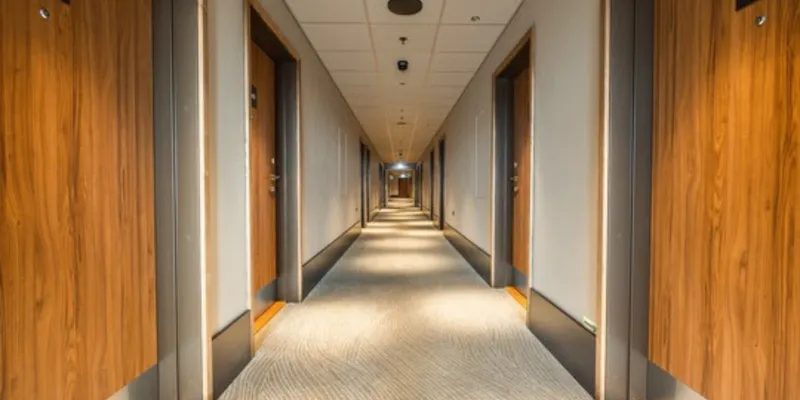
Carpets and upholstery fabrics used in ships, hotels, and other public spaces have recycling potential that remains underutilised. A Danish partnership, UnBlend, has been established to address the challenge of recycling wool-nylon blended textiles commonly used in such environments.
A Danish collaboration is working to improve the recycling of carpets and upholstery fabrics commonly used in offices, hotels, ships and other public spaces. These materials, often made from wool-nylon blends, present challenges for recycling due to their composition despite their long lifespan. The initiative, known as UnBlend, brings together industry, research and design partners to address this issue.
Carpets and upholstery fabrics used in offices, hotels, ships, libraries, theatres and similar environments are frequently made from wool-nylon blends. While these materials are durable, they become difficult to recycle when replaced due to their mixed composition. The UnBlend partnership aims to make these textiles easier to reuse and recycle by bringing together manufacturers, researchers and knowledge partners.
.webp?2026-03-28T08:47:37.851Z)
Wool-nylon blends are high-quality materials that are easily overlooked because they make up only a small part of the total textile stream.
A large volume of carpets and upholstery fabrics is discarded when public and commercial spaces renovate their interiors. In the EU alone, an estimated 1.6 million tonnes of carpets are disposed of annually, with most being incinerated or sent to landfill. The complexity of recycling lies in the material composition, as wool-nylon blends are not easily processed despite their high quality.
Julie Brender Trads, Business Manager at Danish Technological Institute and head of the UnBlend partnership, highlighted that wool-nylon blends are often overlooked due to their smaller share in the overall textile stream. She noted that these materials are present in large, uniform quantities, particularly in settings such as hotels or ships during renovation, where a cruise ship can contain enough carpet to cover 5–10 football pitches.
-1.webp?2026-03-28T08:48:19.170Z)
Julie Brender Trads from Danish Technological Institute
The UnBlend initiative is taking a comprehensive approach to address the challenge. The project is focused on three parallel areas: improved design, reuse and recycling technologies. The design aspect explores ways to construct products with fewer adhesives and more suitable material combinations to support easier disassembly and recycling. At the same time, efforts are being made to repurpose and redesign textile waste into new products. Additionally, recycling technologies are being tested to separate wool and nylon, enabling the fibres to be recycled individually and reintroduced into the production cycle.
Jeppe Emil Mogensen, Design Director at textile company Gabriel, stated that successful separation of wool and nylon would allow continuous recycling of high-quality materials. He added that recycling in a closed loop could significantly reduce environmental impact compared to using new raw materials.
The partnership was established by Danish Technological Institute and includes textile manufacturers Gabriel, Dansk Wilton and SheWorks, along with research institutions DTU and Danish Technological Institute, and Design School Kolding.
Lone Ditmer, CEO of Dansk Wilton, noted that although efforts have been made for years to develop solutions in circularity and recycling, there is a lack of commercial solutions for such material compositions. She stated that participation in UnBlend is relevant as it brings together multiple areas of expertise to support the development of new solutions.