CPI Inflation at 1.5% in Sept: CareEdge Economist Rajani Sinha
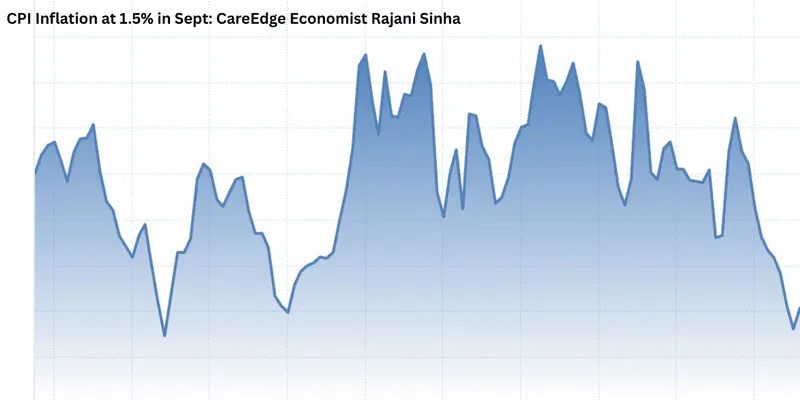
Favourable base and lower food prices cool inflation; CareEdge sees FY26 average at 2.4%.
Rajani Sinha, Chief Economist at CareEdge, highlights that India’s CPI inflation fell to 1.5% in September, below the RBI’s lower tolerance band, aided by soft food prices and a favourable base effect.
India’s retail inflation continued its downward trajectory, with CPI inflation easing to 1.5% in September 2025, slipping below the Reserve Bank of India’s lower tolerance threshold of 2%. According to Rajani Sinha, Chief Economist at CareEdge, the decline was largely driven by a favourable base effect and softening food prices, particularly in vegetables, pulses, and spices.
As a result, average inflation for Q2 FY26 stood at 1.7%, slightly below the RBI’s projection of 1.8%. While core inflation rose marginally to 4.5%, this increase was attributed to a sharp spike in precious metal prices. When these are excluded, core CPI inflation remained moderate at 3.0%, reflecting overall price stability across key consumption categories.
Deflation in the food basket deepened to 1.4%, underpinned by improved agricultural output and a steady decline in key commodity prices.
Outlook: Benign Inflation, Weather Risks, and Edible Oil Concerns
Looking ahead, Sinha expects food inflation to remain benign, supported by a good monsoon and favourable base conditions. However, she cautioned that the late withdrawal of the monsoon and heavy rains in some regions could lead to crop damage, potentially disrupting the near-term price stability.
Sinha also highlighted that persistently high double-digit inflation in edible oils requires close monitoring, citing weak sowing patterns, import dependency, and elevated global edible oil prices as key risk factors.
On the global front, she noted that commodity prices are likely to remain subdued, driven by weak global growth, China’s overcapacity, and OPEC’s decision to raise crude oil production, all of which point to a largely stable external inflation environment.
Policy Measures and RBI Outlook
Commenting on fiscal developments, Sinha said the recent rationalisation of GST rates is likely to have a positive impact on overall inflation. CareEdge estimates that these adjustments could reduce CPI inflation by 70–90 basis points annually, assuming effective pass-through to consumers.
With food inflation easing and demand-side pressures contained, Sinha projects average inflation for FY26 at 2.4%.
From a monetary policy perspective, she believes the RBI now has greater flexibility to focus on supporting economic growth, especially amid rising global headwinds and uncertainties surrounding trade negotiations with the U.S.
“If growth indicators show signs of weakening, the latest inflation trajectory provides the RBI with space to consider a 25 basis-point rate cut in December,” Sinha noted.