Could India's Technical Textile Industry Reduce Dependence on Imported Medical Products?
Overview
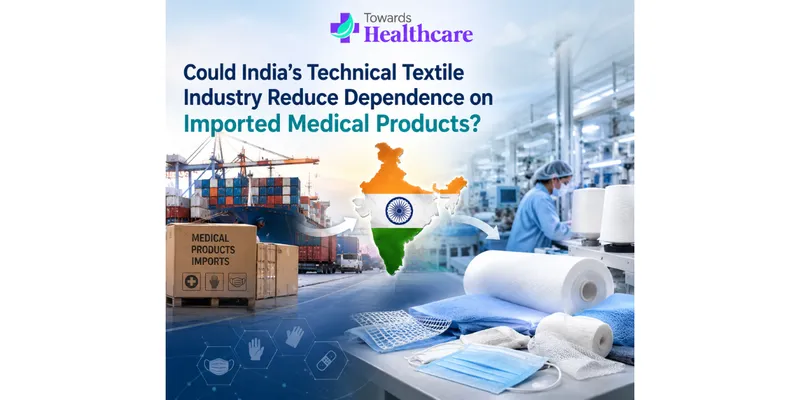
India's technical textile industry has an opportunity to strengthen domestic healthcare manufacturing. From surgical gowns and medical dressings to filtration materials and specialized medical-device components, engineered textiles support many healthcare applications. Investment in advanced materials, testing and specialized production could reduce dependence on selected imports and strengthen domestic supply chains.
India's Medical Manufacturing Opportunity
India has established capabilities in fibre production, fabric processing and garment manufacturing. However, specialized medical products require additional expertise in material engineering, quality testing and regulatory compliance.
In FY 2024–25, India imported medical devices worth ₹1,37,088 crore, while exports totaled ₹42,360 crore. These figures cover the wider medical-device sector, not medical textiles alone, but highlight the opportunity to strengthen domestic healthcare manufacturing.
Where Technical Textiles Can Make a Difference
Medical clothing and protective wear: Manufacturers can expand production of surgical gowns, drapes and protective garments using specialized nonwovens and fluid-resistant materials.
Advanced wound-care materials: Engineered fibers and absorbent textile structures offer opportunities beyond conventional gauze and bandages, provided products meet relevant safety and performance requirements.
Medical filtration and disposables: Specialized nonwovens used in masks, filtration layers and hospital supplies could support local manufacturing.
Medical-device components: Textile structures used in surgical meshes and vascular grafts offer higher-value opportunities that require specialized research, testing and collaboration with medical-device companies.
Challenges Holding Manufacturers Back
- Imported raw materials: Some manufacturers depend on overseas suppliers for specialized fibers, polymers, coatings and chemicals.
- Machinery limitations: Advanced production equipment can increase investment costs and dependence on foreign technology.
- Testing requirements: Medical-grade products need appropriate performance validation, quality controls and, where applicable, biocompatibility testing.
- Technical expertise: Moving from conventional fabrics to specialised medical products requires material science knowledge and healthcare-sector partnerships.
- Commercialization barriers: Companies must secure buyer confidence, meet regulatory requirements and manufacture consistently at competitive costs. Opportunities for Companies in the Industry
- Medical consumables: India's exports of medical-device consumables and disposables increased from US$1.29 billion in FY 2020–21 to US$1.863 billion in FY 2024–25. This wider category includes products beyond textiles, but signals an established export channel for relevant medical supplies.
- Research and product development: The National Technical Textiles Mission reported 168 supported research projects worth ₹509 crore in March 2025, creating a policy-backed pathway for innovation.
- Specialised nonwovens: Companies can explore filtration materials, surgical barriers and selected disposable medical products where their manufacturing capabilities match buyer requirements.
- Healthcare partnerships: Textile manufacturers can collaborate with hospitals, medical-device producers and laboratories to develop and validate materials for specific applications.
- Export expansion: Manufacturers that meet target-market standards can assess opportunities to supply international healthcare buyers and distributors.
How India Can Strengthen Domestic Production
The National Technical Textiles Mission supports research, innovation, market development and skill development. Further progress depends on connecting research with commercial manufacturing, improving testing access and strengthening domestic supply of specialised inputs.
What Comes Next for India's Medical Textile Industry?
India can reduce import dependence in selected categories, but progress requires investment beyond conventional fabric manufacturing. Specialised materials, reliable quality and competitive costs will determine which products succeed.
Towards Healthcare supports healthcare businesses through market intelligence, competitive analysis and strategic consulting to assess product opportunities, supplier landscapes and growth areas across medical textiles and related healthcare sectors.
About Towards Healthcare Research and Consulting
Towards Healthcare Research & Consulting is a global strategy consulting firm with a presence in both Canada and India. We provide innovative solutions customized to the healthcare sector, helping business leaders overcome challenges and accelerate growth. We specialize in delivering advanced technological solutions, clinical research services, and powerful data analytics. Our focus is on building meaningful partnerships that foster innovation and deliver actionable insights to drive success in healthcare.
Sources:
https://www.towardshealthcare.com/insights/india-medical-device-manufacturing-market-sizing
https://www.towardshealthcare.com/search.php?q=medical