Cotton Carryover Stocks Seen Rising Above 85 Lakh Bales for 2026-27
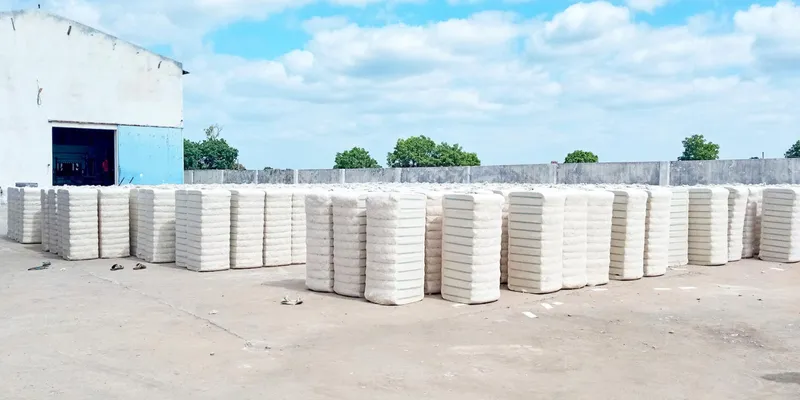
India's cotton imports during the 2025-26 season are expected to increase to 60-65 lakh bales (of 170 kg each) following the government's recent decision to exempt import duty, a move aimed at ensuring the textile industry has access to quality cotton.
As a result, carry-forward stocks at the start of the 2026-27 season in October are projected to increase by about 42 per cent to more than 85 lakh bales.
According to the Cotton Association of India (CAI), cotton imports up to the end of May 2026 stood at 43.5 lakh bales, an increase of nearly 32 per cent from 33 lakh bales during the corresponding period last year. The association had earlier projected imports of 47 lakh bales for the ongoing marketing season ending September.
“Imports of 43.5 lakh bales had already arrived at Indian ports by the end of May. Following the recent duty exemption, we expect an additional 15 lakh bales to be imported this season. Total imports this season could reach 60-65 lakh bales,” said Atul S Ganatra, Chairman of CAI's Crop Committee.
Higher Imports to Lift Closing Stocks
At its recent meeting, CAI retained its estimate for the 2025-26 cotton crop at 334 lakh bales. Cotton pressing for the season was completed at 322.35 lakh bales until the end of May, Ganatra said.
Cotton exports are estimated at 10 lakh bales, while closing stocks for 2025-26 are projected at 85.59 lakh bales, approximately 25 lakh bales higher than the previous season's estimated 60 lakh bales.
“The higher closing stock is primarily on account of increased imports,” Ganatra said.
Although domestic and imported cotton are currently available at similar prices, textile mills continue to prefer imported cotton because it delivers around 4 per cent higher yarn realisation, Ganatra said.
He added that yarn produced from imported cotton commands a premium of about ₹7 per kg in the market, making imports more attractive despite price parity.
As of the end of May, cotton stocks were estimated at 191.44 lakh bales. Of this, around 82 lakh bales were held by mills, while the remaining stocks were with the Cotton Corporation of India (CCI), traders, ginners, and multinational companies.