Comprehensive Strategic Analysis: Sheshadri Industries Limited’s Restructuring Journey (2024-2025)

- Introduction
In 2025, the Indian textile industry will be characterised by a "sink or swim" situation. Mid-cap companies are caught between fluctuating domestic demand and unstable global fibre prices. Secunderabad-based Sheshadri Industries Limited (SIL), which was founded in 2009, is a moving case study for this time period. SIL operates throughout the "fibre to apparel" value chain as a BSE-listed company (Scrip Code: 539111). This industry is currently negotiating the shift from pandemic recovery to inflationary pressure.
SIL, a cotton-focused spinner in the past, has executed a drastic strategic change. This report analyses the company's transition to recycled poly-spun yarn and determines whether its 2024–2025 financial performance is a temporary accounting-led reprieve or a sustainable operational break-even. We must first look at the firm's structural rationalisation in order to comprehend the trajectory.
2. Company Overview
A company’s operational history often dictates its agility. For SIL, survival required a willingness to abandon legacy systems. The company manages two distinct hubs: a spinning division in Chindwara, Madhya Pradesh (Unit I), and a garment division in Medchal, Telangana (Unit II).
Marking its 16th Annual Report in 2025, SIL has transitioned toward an asset-light mindset. By pivoting from cotton spinning—which incurred heavy losses due to price volatility—to recycled poly-spun yarn, SIL is targeting higher-demand niches. Its portfolio now features high-margin specialty products like Mélange and Slub/Fancy yarns, which feed directly into its ready-made garment production for men, women, and children.
3. Leadership and Strategy
In industrial restructuring, the technical acumen of leadership acts as the primary anchor. Mr. Jeetender Kumar Agarwal, Managing Director and CFO, orchestrated SIL’s post-COVID "slimming down" strategy. A textile engineer by training (B.E. Textile) with over 30 years of experience, Mr. Agarwal focused on eliminating the company’s "dead weight."
He specifically directed the disposal of aging machinery that consumed excessive power and labor, effectively lowering the operational break-even point. This rigor was reaffirmed during the 16th AGM through his reappointment, signaling a board-level commitment to this technological transition. This lean strategy is now testing its mettle against the company’s volatile financial statements.
4. Deconstructing the Profitability Illusion
To distinguish genuine structural recovery from market noise, we must look at the three-year trend. On the surface, the numbers suggest a triumphant return to form, but a closer look reveals a "paper" turnaround.
Comparative Financial Highlights
Particulars (Rs. in Lakhs) | FY 2024-25 | FY 2023-24 | FY 2022-23 |
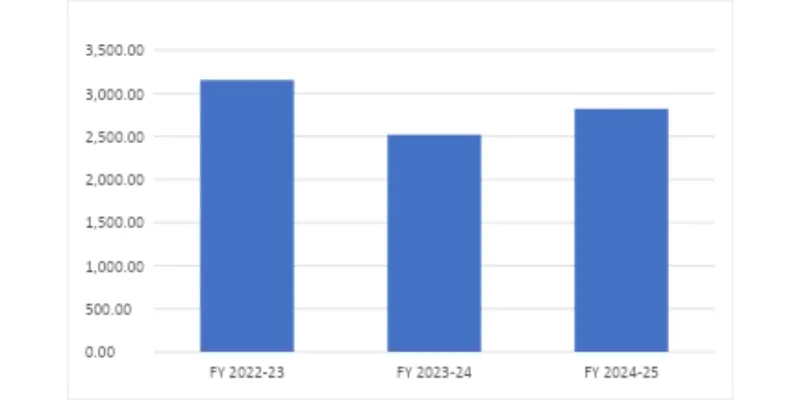
Revenue from Operations | 2,820.02 | 2,520.24 | 3,151.00 |
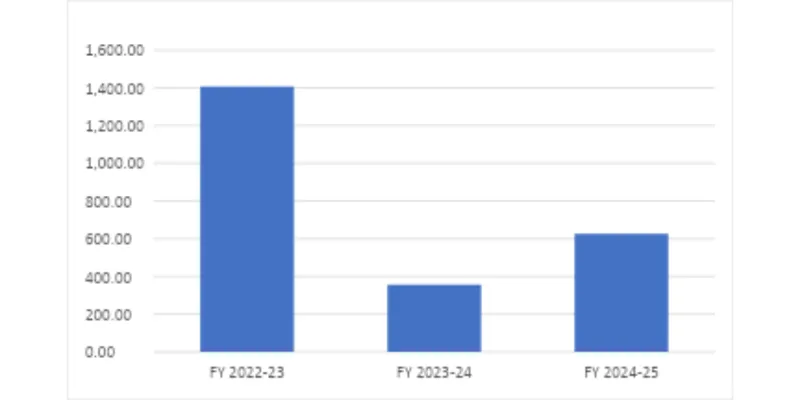
Other Income | 625.83 | 356.81 | 1,407.00 |
Exceptional Items | 479.95 | 141.40 | - |
Total Income | 3,925.80 | 3,018.45 | 4,558.00 |
Profit/Loss After Tax | 837.20 | (252.90) | 976.00 |
Equity Share Capital | 495.96 | 495.96 | 495.96 |
Financial Interpretation
SIL achieved a revenue growth of 11.9% in FY25, yet the core operations remain fragile. While the Profit After Tax (PAT) stands at 837.20 Lakhs, it is heavily cushioned by "Other Income" and "Exceptional Items" totaling approximately 1,106 Lakhs (Rs. 11.06 Cr). Without these non-recurring items, core operating profit is a mere 0.45 Cr, indicating that volume-driven profitability has not yet fully arrived.
However, the balance sheet tells a story of successful "damage control." Borrowings have dropped from 30.66 Cr in 2022 to 22.67 Cr in 2025. Most impressively, the company has managed a 60% recovery in its "Other Equity," which rose from a deep deficit of -41.37 Cr in 2021 to -15.87 Cr today. The standout ROCE of 55.37% is a byproduct of this asset-light transition; as fixed assets dropped from 35.04 Cr to 27.86 Cr, the return on the remaining capital base naturally spiked.
5. Strategic Outlook and Risks
A high-stakes survival play is currently taking place in SIL. In keeping with worldwide sustainability trends, the switch to recycled poly-spun yarn may offer a margin buffer against the inflation of raw cotton.
Strengths: The reduction of legacy machinery has streamlined the cost structure. The appointment of Ms. Pooja Gupta—a market strategist—as an Independent Director suggests a move toward more aggressive, market-driven garment branding.
Risks: Technical insolvency remains a ghost in the machine. While the equity deficit is shrinking, the company still operates with a negative book value. Additionally, SIL is still vulnerable to increases in labour costs and high levels of domestic inflation.
6. Conclusion
Although Fiscal Year 2024–2025 is considered a definitive "turnaround year," the company's health is still precarious. SIL has successfully used asset disposals to buy time and reduce debt. The coming years will determine if the garment division, fueled by Mélange and Slub yarn, can generate enough operational cash flow to sustain the business without the aid of exceptional accounting gains.
Data Source Note: Data sourced from Sheshadri Industries Limited 16th Annual Report (2024-25) and BSE/Screener.in financial databases.