Classic, premium, sustainable: why debut Scottish suppliers were a hit at Intertextile
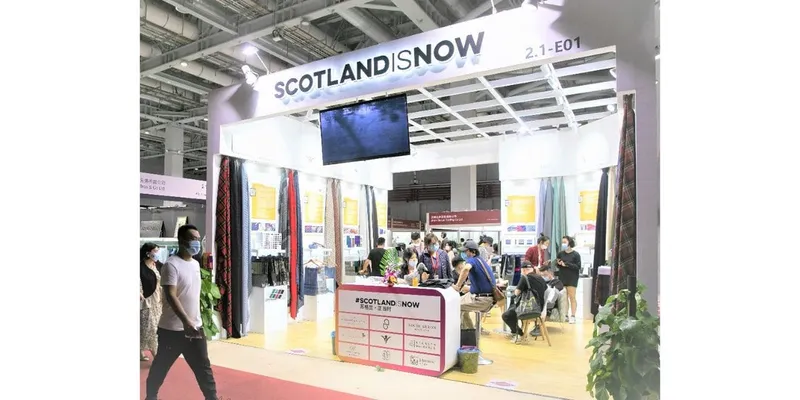
Joining Intertextile Apparel for the first time, Scottish Development International brought the very best of Scottish fabric suppliers to the autumn Shanghai fair in October 2021. We sat down with them at the show to find out what these companies have to offer the market and why they proved so popular.
Ms Jo Cui, Trade Representative at Scottish Development International explained their role in promoting Scottish brands: “We are a local government agency that aims to help Scottish companies improve their international strategy, competitiveness and business opportunities. We’re excited to be here for the first time to represent nine Scottish mills and introduce their products to the Chinese market.”
The Scottish textile industry has long been associated with quality local craftsmanship and rich heritage ties to the country’s historical culture. Ms Cui pointed this out when highlighting what they believe are the key qualities of Scottish fabrics: “We describe our Scottish mills and products as having three stand-out characteristics, they are classic, premium, sustainable. In fact, six of the companies participating here have a history of more than 100 years, such as Lochcarron of Scotland, as well as Harris Tweed Hebrides; these companies provide the most classic and high-quality products.” These mills pride themselves on the world-class reputation of their fabrics, meaning the products are suited towards the growing purchasing behaviour of millennial consumers who look for quality, authenticity and transparency in products. This goes hand in hand with rising levels of disposable income and the pursuit for a more premium and luxury lifestyle, which is driving the consumption of high-quality textile products in countries such as China, the US and also Europe. The sustainability of their products has also become a crucial selling point for Scottish mills, which work almost exclusively with wool. In fact, Lochcarron of Scotland label their products the ‘antithesis of fast fashion’ and aptly so, considering the lifespan of wool garments is said to be 50% longer than cotton garments, according to a global wardrobe audit conducted by The Nielsen Company on behalf of The Woolmark Company. On top of this, wool is 100% natural and biodegradable, making it an obvious contributor to the circular economy model. So much so, that in the Material Circularity Indicator by the Ellen MacArthur Foundation, wool gets the highest score possible, above all other fabrics.
Download this case study