CITI Says New US 10% Tariff May Affect Competitiveness of India’s Textile and Apparel Exports
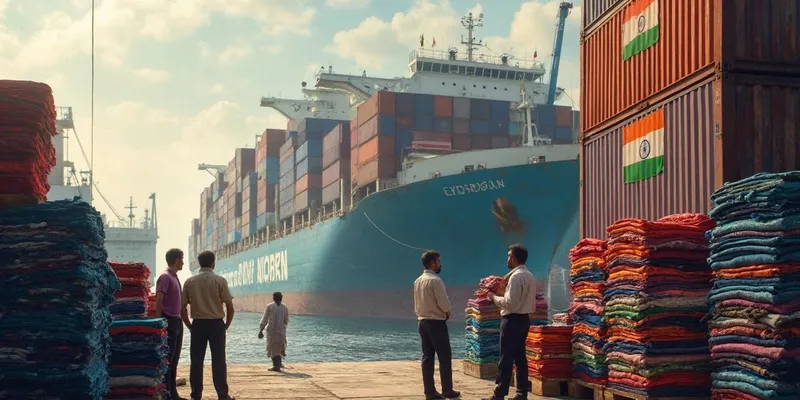
Industry body highlights potential sourcing shifts as the US introduces new Section 301 tariffs and extends tariff rate quota benefits to select competing countries.
The Confederation of Indian Textile Industry (CITI) has said that the 10% tariff imposed by the Trump administration on Indian goods citing concerns over forced labour in supply chains is expected to affect the competitiveness of India's textile and apparel exports to the United States.
According to CITI, the United States is India's largest market for textile and apparel products, accounting for close to $11 billion in annual exports.
The tariff was introduced following investigations carried out under Section 301 of the Trade Act by the Office of the US Trade Representative (USTR). The newly announced long-term tariff replaces the temporary 10% surcharge that expired on Friday.
Commenting on the development, Ashwin Chandran, chairman, Confederation of Indian Textile Industry (CITI), said:
"The tariff imposition on the issue of forced labour is deeply unfortunate, as it does not indicate an expiry date and causes reputational risks. CITI looks forward to the Indian government taking up this issue with the US, given the detrimental impact it could have on textile and apparel exports from India."
Under the newly announced Section 301 tariffs, India, Bangladesh, Cambodia and the UK are each subject to a 10% tariff, while China and Vietnam face a 12.5% tariff in addition to applicable item-specific most-favoured nation tariffs.
Ashwin Chandran further said:
"What could raise a serious challenge for Indian textile and apparel exporters is the fact that although many of our key competitors have also been subjected to the same tariff rate, a window has been opened for textile and apparel exports from these countries to enter the US free of the Section 301 tariffs. This differential treatment risks diverting sourcing orders for textile and apparel items away from India."
According to the report, the US Trade Representative (USTR) has announced that Tariff Rate Quotas (TRQs) will be established for Bangladesh, Cambodia, Indonesia and Malaysia for an initial period of three years.
Under this arrangement, the United States will permit imports of specified volumes of garments and textiles from these countries free of the new tariff, provided the products are manufactured using US-origin inputs.
The report states that the objective of the TRQs is to encourage imports of US cotton and other inputs by these countries.