Circularity in Textiles: From Buzzword to Business Advantage
Parvinder Singh Founder Global Alliance for Textile Sustainability Council (GATS)
The Circle Is the Future
Linear systems are dying. In a world facing resource depletion, price volatility, and tightening international regulations, the old take–make–dispose” model of textile production is rapidly becoming obsolete. Enter circularity — not merely a sustainability buzzword, but a serious business strategy. Circularity in textiles means keeping materials and value in use for as long as possible — through smarter design, reuse, recycling, and responsible end-of-life management.” For the Indian textile industry — the third-largest textile manufacturing hub globally — circularity isn’t just a climate commitment. It’s a chance to build a resilient, profitable, and future-ready industry that addresses global demand for waste-free and responsibly sourced fashion.
What Is a Circular Textile Economy?
A circular economy in textiles means:
- Designing out waste and pollution
- Keeping products and materials in use
- Regenerating natural systems
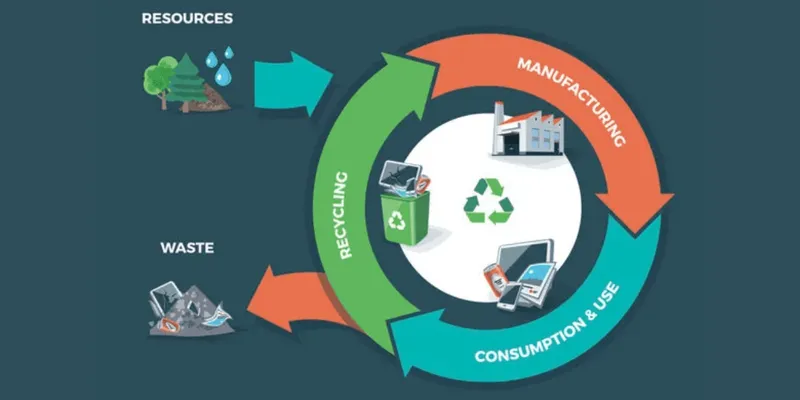
- That means every garment should be designed to last, produced with minimal waste, used for as long as possible, and recycled or upcycled at the end of its life — forming a closed-loop system.
The Circular Fashion Loop
Why Linear Models Are No Longer Competitive
Circularity in Practice: 4 Pillars for Execution
Let’s break this into four industry-applicable focus areas:
Circular Design
The first and most powerful intervention point. What it means:
- Design with durability and recyclability in mind
- Avoid blended fabrics that are difficult to recycle (e.g., poly-cotton)
- Use mono-materials (100% cellulose, 100% polyester)
- Integrate trims, dyes, and chemicals that don’t hinder recyclability
Circular Production
Make production itself circular by eliminating or repurposing waste. What this involves:
- Using recycled yarns and fabrics (e.g. recycled cotton)
- Reclaiming cutting waste and yarn waste, and segregate production waste in the source
- Integrating lean manufacturing to reduce deadstock and rejections
- Using post-industrial and post-consumer waste in your input mix
Recyclr by Aadi Sustainability Solutions, based in Panipat, transforms pre- and post-consumer waste into fully circular denims.
Circular Use: Extend Product Life
Strategies:
- Repair services and tailors for resale or maintenance
- Rental, resale, or product-as-a-service business models
- Collaboration with marketplaces for export-surplus reuse
India’s informal reuse economy (e.g., Sarojini Nagar) already circulates millions of garments. Circularity means formalising these into clean, traceable loops, and formal technology-backed businesses can be built on a similar theme.
Circular End-of-Life Management
What matters:
- Garment collection and sorting systems
- Partnerships with recyclers and upcyclers
- Reverse logistics and take-back programs
From 2025, the EU’s EPR laws will mandate brands to manage the end-of-life of products they export. Indian manufacturers can win long-term contracts by offering end-of-life compliance solutions, or we can continue to be low-priority manufacturers.
Circularity = Business Competitiveness
Why India Can Lead the Circular Shift
- World’s largest textile recycling hub — Panipat processes over 5,000 tons/day
- Huge untapped garment manufacturing capacity — potential to grow circular exports
- MSMEs already working in repair, tailoring, and customisation
- Cultural legacy of reuse, patchwork, and low-waste living
- Emerging ecosystem for traceability, QR-coded DPPs, blockchain, and sorting tech
A 5-Step Roadmap to Circular Readiness
Quick Wins for Manufacturers
- Begin segregating waste by fibre, shade, and quality
- Adopt recycled yarns in home textiles and apparel
- Offer take-back services or buy-back schemes to brands
- Get GRS / RCS certified
- Start building ESG documentation to access green financing
Coming Up Next in the GATS–TVC Knowledge Series
Edition 4: “Zero-Waste Manufacturing – Myth, Math & Methods” How to run a truly zero-waste unit — covering waste tracking, factory layout, segregation, reverse logistics, and circular product lines.
Final Thought
“Circularity isn’t just about saving the planet — it’s about saving your business from becoming irrelevant.” India is positioned to fill the gap for recycled, traceable, and EPR-ready sourcing for global fashion brands. Circularity is no longer optional. It’s the strategy that will:
- Differentiate you from price-based competition
- Attract green investments and future buyers
- Increase margins while lowering environmental costs
The opportunity is now. Let’s reclaim our textile waste, regenerate our systems, and redefine India as the global capital of circular fashion.