Chhattisgarh Offers Up to 200% Incentives; ₹100 Cr Garment Unit May Receive ₹200 Cr Support
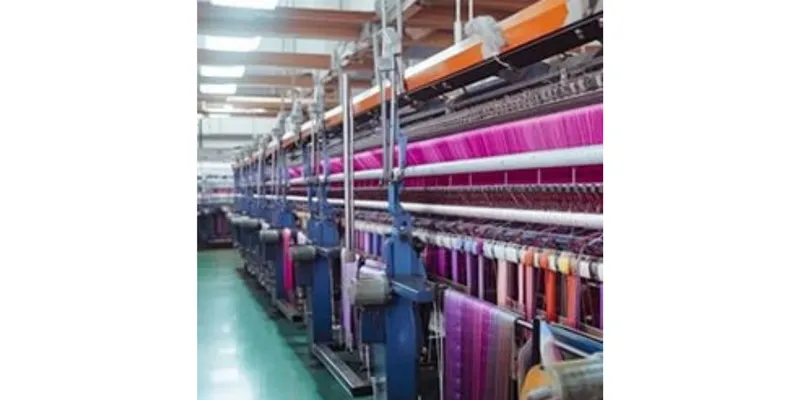
The Government of Chhattisgarh has announced incentives of up to 200% of Fixed Capital Investment (FCI) under its Industrial Development Policy 2024–30 to attract textile and garment manufacturing investments. A ₹100 crore garment unit could be eligible for incentives of up to ₹200 crore, subject to project scale, employment generation, and eligibility criteria.
The state is positioning itself to expand beyond its mineral-based economy by encouraging textile and garment manufacturing investments.
“The focus has been to reduce friction for investors by combining infrastructure readiness with a comprehensive incentive framework,” said Rajat Kumar, Secretary, Department of Commerce & Industries, Government of Chhattisgarh, “Our textile parks in Nava Raipur are designed to enable quick scale-up and efficient operations from day one.”
As part of this effort, the state is developing textile and garment infrastructure in Nava Raipur, identified as India’s first greenfield smart city of the 21st century. The industrial parks offer plots ranging from 0.3 to 10 acres and include facilities such as power and water supply, common effluent treatment plants, and integrated waste management systems. The parks are structured for 24x7 operations and include provisions for night shifts for women workers, along with worker housing within the industrial ecosystem.
The location provides connectivity through the Mumbai–Howrah railway corridor and is approximately 500 kilometres from Visakhapatnam Port. Raipur Airport connects the region to major Indian cities within 90–120 minutes.
The policy also includes employment-linked incentives, offering ₹6,000 per month for women workers and ₹5,000 per month for male workers for a period of five years. Additional provisions include a training subsidy of up to ₹15,000 per employee, capital subsidy support, 100% exemption on electricity duty for 12 years, and freight assistance.
Chhattisgarh produces over 200 metric tonnes of Tussar silk annually, with Champa silk holding a Geographical Indication (GI) tag. The state has also implemented the Right to Skill Act to support workforce development aligned with industry needs.
Companies such as Swift Merchandise and Punit Creation are expected to generate more than 10,000 direct and indirect jobs through proposed investments in the state.
As per an illustrative example, a garment unit with an investment of ₹100 crore and employment generation of 3,000 persons may receive incentives distributed across multiple components. These include ₹52 crore as fixed capital subsidy, ₹9.62 crore as interest subsidy, ₹99 crore towards employment generation assistance, ₹20 crore as transport subsidy for export, ₹10 crore under EPF reimbursement, and ₹10 crore under other subsidies, taking the total to approximately ₹200 crore.
The estimates provided are indicative, and actual incentives will depend on project-specific details and eligibility conditions.