Cheriyal Scroll Paintings: Traditional Art of Andhra Pradesh
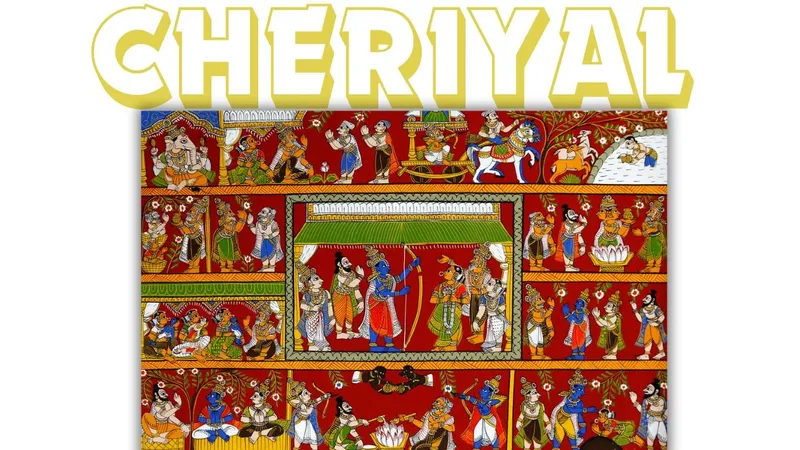
Cheriyal scroll paintings, a traditional art form of Andhra Pradesh, India, have their roots in the Warangal district. These paintings are created by the traditional caste-based groups of Jingor, Muchi, and Mera, known as nakkash.
History and Significance
These scroll paintings were used by storytellers, accompanied by musicians, dolls, masks made of coconut shell, and larger ones made of sawdust and wood. The storytellers would sing the narrative depicted in these paintings. The performance with the painted scroll is a significant event in the lives of the community, with houses whitewashed, cleaned, and painted for the occasion.
Themes and Symbolism
cheriyal paintings begin with the painting of Lord Ganesha and Saraswati, followed by stories from the Krishna Leela, Ramayana, Mahabharata, Shiva Puranam, Markandeya Puranam, and the ballads and folk-stories of communities like Gauda, Madiga, and others. The scrolls focus on the daily aspects of life of fishermen, cobblers, fruit gatherers, and others.
Technique and Materials
The Khadi cotton is treated with a mixture of starch, white mud, boiled tamarind seeds, and gum water. The outlines are sketched using brushes made with squirrel hair. The colours are made from natural sources, with the background generally red. The face and skin colours are decided based on the nature of the character.
Artists and Performance
The artists, known as Kaki Padagollu, use these scroll paintings as visual aids to narrate stories. The storytellers are equipped with a variety of delivery styles, repertoires of songs, invocations, jokes, and riddles to enrich the narrative.