Championing Upcycling: Soumya Kalluri on Building Dwij
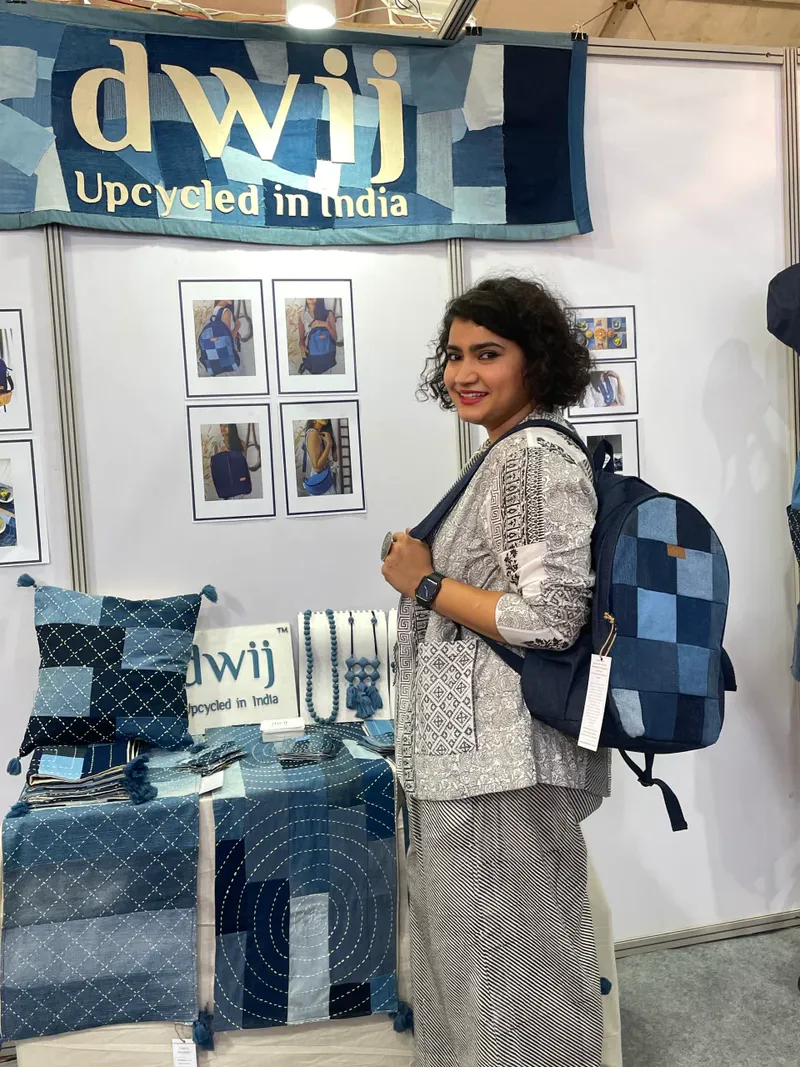
Soumya Kalluri Founder, Dwij
Soumya Kalluri, the visionary Founder of Dwij, is a passionate advocate for sustainable living and a champion of upcycling in India. With a background in Mechanical Engineering and a Masters in Commercial Vehicle Technology from Germany, Soumya’s journey toward environmental stewardship began while working with John Deere, where she delved into the life cycle assessment of agricultural machinery and discovered the lasting impact of waste. Shocked by the realities of fast fashion, she set out to create Dwij—a Mumbai-based social enterprise whose name means “second life” in Sanskrit—dedicated to transforming discarded denim into high-quality, ethically made utility accessories. Under her leadership, Dwij has become a proud “upcycled in India” brand, rescuing post-consumer jeans and other materials to craft bags, home decor, and more, all while upholding rigorous standards of hygiene, quality, and longevity. The TVC Media team had the privilege to talk with Soumya about her inspiring journey, her minimalist philosophy, and her vision for making upcycling a new norm in society. How did your journey from engineering in Germany lead to founding Dwij and promoting upcycling? I grew up in a relatively small city in Maharashtra’s Marathawada region. My father is a paediatrician, and my mother is a homemaker. Throughout my childhood, I was actively involved in socialising and participating in a wide range of extracurricular activities. I was always eager to take part in any event happening around me. Even as a child, I often dreamed of achieving big things, like starting my own business and creating employment opportunities for others. Empathy and spirituality have always been core values for me, significantly shaping my personality and contributing to who I am today. For my higher education, I pursued a degree in Mechanical Engineering from Pune University, followed by a post-graduate program in Commercial Vehicle Technology in Germany, where I focused on sustainability. Sustainability is a cause that is very close to my heart. My interest in this field was sparked during my post-graduation thesis, which involved conducting a Life Cycle Assessment (LCA) of certain commercial vehicles. This experience made me realise the importance of considering not just the sustainability of manufacturing processes, but also what happens to materials at the end of their life cycle. While living in Germany, I frequently encountered clothing donation boxes, which encouraged guilt-free shopping and allowed me to buy inexpensive clothes, wear them a few times, and then donate them. However, after returning to India and researching the textile industry, I discovered the deeply harmful effects of overconsumption and fast fashion. These realisations, combined with my passion for sustainability and spirituality, inspired me to build an enterprise grounded in these principles. The main catalyst for my career choice was my thesis work on Life Cycle Assessment and my experiences in Germany. Upon returning to India, I began my professional journey at Godrej & Boyce, working in their Innovation Design Centre on projects related to sustainability. This role gave me hands-on experience with various materials, especially focusing on their end-of-life phase—a critical point when materials can either be recovered or lost forever. As I delved deeper into material research, I became increasingly interested in upcycling garments, particularly because the textile industry is known to be the second most polluting sector globally. Although my current field is not directly related to my academic background, my dedication to sustainability led me to establish a social enterprise in this space. Along the way, I also embraced a minimalist lifestyle. Why did you choose post-consumer denim and textile waste as Dwij’s main materials? The main intention was to use waste material for the production of anything and create awareness about the waste problem. People throw away their jeans only due to stains/tears/size issues/change in styles, etc., but not due to the material’s strength. Denim is a very sturdy material. We started our journey with bags since it’s a simpler product and easier to connect to the customers. Going ahead, we intend to work on a range of other materials too. Thus, in addition to denim bags and accessories, we seek to upcycle and create as many value-added products as possible. Overall, we are constantly thinking about how can we create a bigger impact. How does your engineering background shape your approach to sustainability and product design at Dwij? We are extremely conscious of each material and the process used in making the products. We follow the design for disassembly principle. For example, we never glue our products (as glueing makes it difficult to recycle). We encourage people to give away their used dwij products for further upcycling/recycling. What major challenges and lessons have you faced building an upcycled brand in India’s fast fashion market? Currently, organised sourcing platforms for second-hand garments are not present, which makes brands like dwij difficult to source large quantities of homogenous raw materials, often resulting in logistical and operational cost overheads. Absence of such sourcing platforms also results in challenges in obtaining the appropriate quality of post-consumer and post-industrial fabric. Secondly, no major fashion brand has launched a segment of upcycled products. Once a significant investment is made by us, we always face the risk of a fashion giant such as Zara or H&M entering into this business. Such brands will be in a better position to capitalise on these opportunities owing to an established distribution chain and cost competitiveness. Nevertheless, dwij intends to capitalise on having a first mover’s advantage and thereby build a brand that is known for social ethos and being environmentally conscious. How do you ensure quality and hygiene in upcycled products, and why is this crucial for consumer trust? All our products are properly washed and ironed before they are tailor-made into products (depending upon GSM, size, shape, shades, etc.). We use premium quality Japanese YKK zippers, non-corrosive metals, strong belts, etc., to ensure quality. People love the process and appreciate the quality of products. How does Dwij’s people and earth-centred approach influence your supply chain and stakeholder relationships? The process of upcycling involves minimum usage of virgin raw material, which results in significant savings of resources such as power, water, chemicals, etc., for the production of the virgin material. Every pair of jeans upcycled by dwij indirectly saves 10,000L of water and chemicals in abundant to produce that pair of jeans. In addition, an equivalent amount of raw material is prevented from being downcycled or landfilled. With respect to impact on society, dwij pays ethical wages and dwij believes in salary-based employment rather than demand-based payment followed in this industry. Moreover, dwij also encourages women to work from home and supports women's self-help groups to learn new skills. This ensures a steady source of income for the women, who in turn would be in a better position to handle their families and children’s education. While fashion accessories like totes and slings are always a primary requirement for any consumer, dwij plays a role in delivering environmentally sustainable products through our offerings. How are consumer attitudes in India changing towards upcycled and sustainable products? In my opinion, the green revolution in fashion has commenced. Today, every brand in the fashion industry is focusing on how to make their business and products more sustainable. As per my observations, I strongly believe that if the customers become aware, it forces businesses to change and even overhaul their production systems to be more eco-conscious. It will be a community-driven revolution, and it needs to initiate from the customer. People are happy to pay if you show them quality-driven, professionally made products. What role can women entrepreneurs play in advancing the circular economy and sustainable fashion in India? Women inherently are care-givers, and currently, what the environment needs is also mindful consumption and care. Women have the ability to take unconventional routes and start small and try experimental business ideas. Most brands that are into sustainable fashion in India are currently led by women. Can you share a success story where Dwij’s work made a real difference for communities or the environment? We collaborate with women from self-help groups to handle specific aspects of our manufacturing process. One of our women tailors has been with us since the very beginning. She received training at dwij to meet our quality standards and was later given the flexibility to work from home. Over time, she developed such trust and confidence in our partnership that she decided to invest in her own sewing machine, assured that we would provide her with sufficient work. We were delighted by her initiative, as owning her own equipment not only empowered her but also fostered a greater sense of ownership in her work, rather than us supplying the machinery. While working with us, this tailor successfully completed her 10th-grade education. We also motivated another young woman to finish her 12th grade while being part of our team. Additionally, one of the girls used her earnings to purchase gold jewelry for her wedding. What advice do you have for women entrepreneurs entering sustainable textiles or upcycling? Set your goals and follow your ambitions based on your own interests and passions, rather than simply choosing the most popular career path. This approach not only leads to greater happiness but also helps you excel in your chosen field. Women naturally possess a nurturing quality towards others and the environment, so whatever path you take, always consider how your actions can contribute to making the world a better place. For more information, visit Dwij's website at www.dwijproducts.com.