Carbon-Neutral Textile Dyeing Market To Reach USD 5.10 billion by 2034
Market Summary
According to our Growth Market Report, the global carbon-neutral textile dyeing market size stood at USD 1.61 billion in 2025, driven by escalating environmental regulations and increasing consumer demand for sustainable fashion. The market is poised to grow at a robust CAGR of 13.7% from 2026 to 2034, reaching an estimated USD 5.10 billion by 2034. This impressive growth is underpinned by technological advancements in dyeing processes, a surge in eco-conscious textile manufacturing, and the growing adoption of carbon-neutral textile solutions across both emerging and developed economies. As per our latest research, the market is experiencing unprecedented momentum, supported by investments in green technologies and a decisive shift in industry priorities towards sustainability.
Introduction: Why Carbon-Neutral Textile Dyeing Is Becoming a Global Priority
The textile industry has long been recognized as one of the world's largest manufacturing sectors, yet it also carries a significant environmental footprint. Conventional dyeing processes consume enormous quantities of water, energy, and chemicals while generating considerable greenhouse gas emissions. As climate commitments become more ambitious and consumers increasingly demand sustainable products, the Carbon-Neutral Textile Dyeing Market is emerging as a transformative force that reshapes how fabrics are colored across global supply chains.
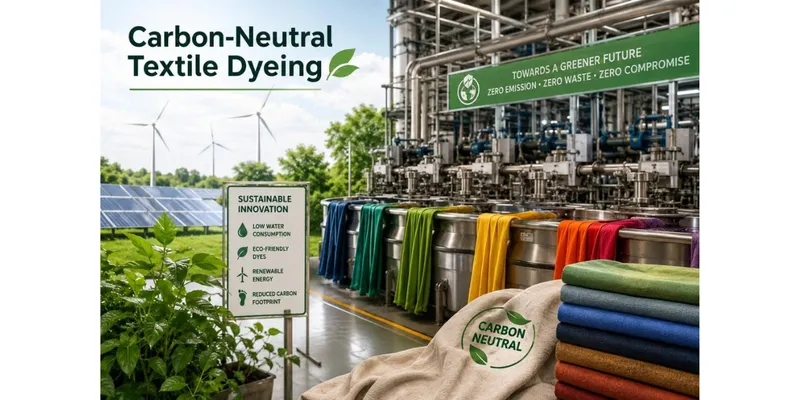
Carbon-neutral textile dyeing refers to manufacturing processes that minimize greenhouse gas emissions through energy-efficient technologies, renewable energy integration, low-impact dye chemistry, circular water systems, and verified carbon offset strategies. Rather than focusing solely on reducing emissions, modern dyeing facilities aim to eliminate their carbon footprint throughout the production cycle, from raw material preparation to finished fabric processing.
Today, textile manufacturers are discovering that sustainability is no longer simply a compliance requirement—it has become a competitive advantage capable of strengthening brand value, attracting environmentally conscious customers, and improving long-term operational resilience.
What Is Carbon-Neutral Textile Dyeing?
Carbon-neutral textile dyeing is an environmentally responsible manufacturing approach designed to ensure that the total greenhouse gas emissions generated during the dyeing process are reduced as much as possible and balanced through renewable practices or certified carbon removal initiatives.
Instead of relying on fossil fuel-powered boilers and conventional chemical-intensive dye baths, carbon-neutral facilities integrate advanced technologies such as renewable electricity, heat recovery systems, digital process optimization, low-temperature dyeing, enzymatic treatments, and water recycling infrastructure.
The objective is not merely to reduce emissions but to redesign textile coloration into a cleaner, smarter, and more resource-efficient industrial process.
Why the Market Is Expanding Worldwide
Several global trends are accelerating investments in carbon-neutral dyeing technologies.
International apparel brands are setting ambitious net-zero emission goals that extend beyond their own operations into supplier networks. Textile manufacturers must therefore upgrade production capabilities to remain eligible suppliers for premium global brands.
Government policies supporting industrial decarbonization are creating financial incentives for clean manufacturing technologies. Carbon pricing mechanisms, renewable energy subsidies, and stricter wastewater regulations further encourage modernization across textile-producing regions.
Meanwhile, investors increasingly evaluate environmental performance when funding manufacturing businesses, making sustainable production an attractive long-term investment strategy.
Major Technologies Driving Carbon-Neutral Textile Dyeing
Renewable Energy Integration
Solar power, biomass boilers, wind energy, and renewable electricity contracts are replacing conventional fossil-fuel energy sources in dyeing facilities. This significantly reduces operational carbon emissions while stabilizing long-term energy costs.
Low-Liquor Ratio Dyeing Machines
Modern dyeing equipment requires substantially less water than traditional systems. Lower water usage automatically reduces heating energy requirements, chemical consumption, and wastewater treatment costs.
The combination creates environmental and economic benefits simultaneously.
Digital Process Automation
Artificial intelligence, industrial IoT sensors, and automated process controls continuously optimize dye temperatures, chemical dosing, processing times, and water usage.
These intelligent systems minimize production waste while maintaining consistent color quality across large manufacturing batches.
Closed-Loop Water Recycling
Advanced filtration technologies allow dye houses to recycle large portions of process water instead of continuously drawing freshwater supplies.
This innovation reduces freshwater consumption while decreasing the energy required for wastewater treatment.
Bio-Based and Natural Dye Technologies
Research into plant-derived dyes, microbial pigments, algae-based colorants, and biodegradable chemicals is opening entirely new opportunities for sustainable textile coloration.
Although still evolving commercially, bio-based dyes are expected to play an increasingly important role in future carbon-neutral manufacturing.
How Artificial Intelligence Is Revolutionizing Sustainable Dyeing
Artificial Intelligence is becoming one of the most valuable tools in textile manufacturing.
AI-powered software analyzes historical production data to recommend optimal dye formulas, predict machine performance, reduce color variation, and eliminate unnecessary production cycles.
Instead of relying on repeated trial-and-error adjustments, manufacturers can achieve first-time-right dyeing with greater accuracy. This reduces fabric waste, chemical usage, electricity consumption, and overall production costs.
Machine learning models also forecast equipment maintenance needs, preventing unexpected downtime and improving operational efficiency.
Emerging Trends Shaping the Carbon-Neutral Textile Dyeing Market
Several innovations are expected to define the industry's future:
- Waterless dyeing technologies that virtually eliminate process water consumption.
- Digital twin simulations for optimizing dyeing operations before production begins.
- Carbon footprint tracking integrated into textile production software.
- Blockchain-enabled sustainability verification across textile supply chains.
- Green hydrogen replacing fossil fuels for industrial heating applications.
- Circular textile recycling systems that minimize virgin fiber dependence.
- Smart dye formulations requiring lower processing temperatures.
- AI-driven color prediction that reduces sampling waste.
These innovations collectively represent a significant shift toward intelligent, resource-efficient manufacturing.
Opportunities for Textile Manufacturers
Carbon-neutral dyeing creates multiple long-term business opportunities beyond environmental benefits.
Manufacturers adopting sustainable technologies often experience improved operational efficiency, lower utility costs, stronger relationships with international brands, and increased access to environmentally focused investment.
Premium fashion companies increasingly prefer suppliers capable of demonstrating measurable reductions in carbon emissions, creating valuable differentiation in a highly competitive global market.
As sustainability reporting becomes standard practice, carbon-neutral capabilities may become a prerequisite rather than an optional advantage.
Challenges Facing Market Growth
Despite strong momentum, several challenges remain.
Transitioning to carbon-neutral operations requires substantial capital investment in advanced machinery, renewable energy systems, water recycling infrastructure, and digital technologies.
Small and medium-sized textile manufacturers may face financial barriers during modernization.
Additionally, integrating new technologies with existing production lines requires specialized technical expertise, employee training, and continuous process optimization.
However, declining technology costs and increasing government support are gradually reducing these obstacles.
Future Outlook
According to our Growth Market Report, The Carbon-Neutral Textile Dyeing Market represents far more than an environmental initiative—it signals a fundamental transformation in how textiles are manufactured for a climate-conscious world. By combining renewable energy, digital intelligence, advanced chemistry, and circular resource management, the industry is redefining productivity without compromising sustainability.
In the coming decade, carbon-neutral dyeing is expected to become an industry benchmark rather than a niche practice. Manufacturers that invest early in clean technologies, automation, and transparent sustainability reporting will be better positioned to meet evolving consumer expectations, comply with stricter regulations, and strengthen their role within global textile value chains. As innovation continues to accelerate, carbon-neutral textile dyeing will play a pivotal role in shaping a more resilient, efficient, and environmentally responsible future for the worldwide textile industry.
Source:- https://growthmarketreports.com/report/carbon-neutral-textile-dyeing-market